

Embark on a captivating Mediterranean journey
Experience the rich cultures and captivating history of the Mediterranean. Read on to learn more about the diverse countries that comprise this region and discover the enriching experiences that await you in France, Croatia, Turkey and beyond. Uncover the Mediterranean’s iconic landmarks, browse a list of Top 5 Mediterranean dishes and explore the legacy of the region’s famous ancient civilizations.
Mediterranean
The Mediterranean Sea, which occupies an area of approximately 970,000 sq mi. (2,510,000 sq km), stretches from the Atlantic Ocean on the west to Asia on the east and separates Europe from Africa. In geography, the Mediterranean Basin refers to the lands around the Mediterranean Sea that share a climate characterized by mild winters and calm, dry and hot summers. Notable Mediterranean countries include Spain, France, Monaco, Italy, Malta, Croatia, Greece and Turkey.
Often referred to as the “cradle of Western civilization,” this region is home to iconic landmarks, historic architecture and artistic masterpieces, including:
- La Sagrada Família in Barcelona, a UNESCO World Heritage Site designed by Spanish architect Antoni Gaudí
- The Prince’s Palace of Monaco, home to the House of Grimaldi since 1297 and the former residence of the late American actress-turned-princess Grace Kelly
- Rome’s legendary Colosseum, Palatine Hill and the Arch of Constantine
- The Sistine Chapel’s renowned Renaissance frescoes, painted by Michelangelo, in Vatican City
- The Roman Palace of Emperor Diocletian in Split, one of Croatia’s oldest cities
- Ephesus, one of the best-preserved cities of antiquity, dating back to the 10th century BC
Unforgettable Mediterranean experiences
With such a rich historical legacy, it is little wonder that the Mediterranean is home to some of the most iconic landmarks and captivating cultural traditions in the world. Here are some memorable experiences you can enjoy when you explore this storied region:
- Admire Notre Dame de la Garde—This neo-Byzantine basilica is perched on a hill overlooking Marseille, France’s oldest city. With stunning views, a Romanesque crypt and intricate mosaics and murals, this sacred site has become the most visited landmark in the city.
- Sample Fresh Croatian Oysters—Enjoy the bounty of Croatia’s stunning Dalmatian Coast during a visit to a traditional oyster farm. Learn about the local industry from knowledgeable experts and savor these delicious gems of the sea.
- Visit a Traditional Hammam—Experience the long-cherished cultural tradition of the Turkish bath. In the steam room, stretch out on a warm marble table before allowing an attendant to exfoliate your skin. Finish your visit with a leisurely soak while you listen to music designed to transport you to the golden era of the Ottoman Empire.
- Attend a Flamenco Performance—Celebrate the spirit of Spain with a passionate performance of the country’s most famous art form. Immerse yourself in a timeless tradition as dancers, guitarists and other classically trained musicians in colorful costumes entertain you with their lively talent.

-
Architecture
Barcelona is a truly exceptional city for any fans of architecture. Not only is it home to multiple works by Antoni Gaudí but it also offers a walkable architectural timeline spanning from Roman times through the Catalan modernisme movement to the contemporary buildings of the present day. Many of the city’s varied structures can be seen in just a few hours.
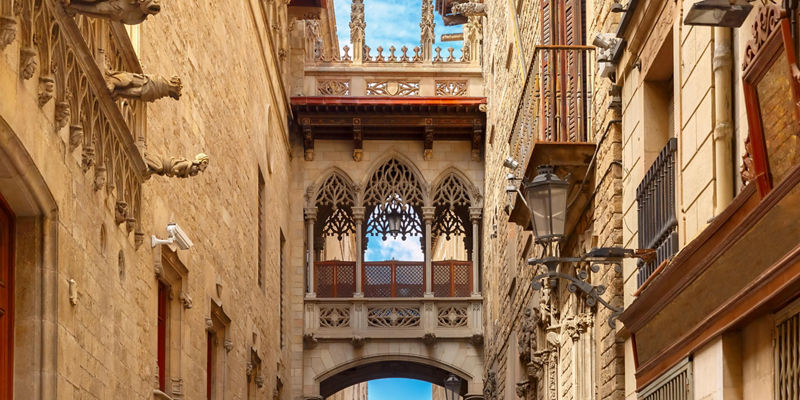
Barcelona’s remarkable architectural heritage begins with the Gothic Quarter, where Roman foundations stand among medieval structures showcasing a variety of period features including gargoyles, pointed arches and rose windows. Among this district’s narrow stone streets, visitors will find signature landmarks, including the Barcelona Cathedral with its soaring central nave and iconic facade, and the striking Pont del Bisbe, an ornate neo-Gothic bridge constructed for the 1929 Barcelona International Exposition.
Of course, it was modernisme, Catalonia’s version of art nouveau, that really left its mark on the city. Two figures stand out: Antoni Gaudí and his rival Lluís Domènech i Montaner, who, between them, have nine structures on the list of UNESCO World Heritage Sites.
Gaudí’s most famous work is perhaps the Sagrada Família, which fuses the soaring verticality of Gothic architecture with organic modernist forms. It is the most visited monument in Spain. Park Güell, meanwhile, is a public space like no other—an artfully landscaped site full of mosaic benches, fountains and nature-inspired structures. Ciutadella Park features a majestic fountain designed in part by a young Gaudí. Domènech i Montaner’s listed work includes Hospital de Sant Pau, a network of scenic pavilions and gardens, and Palau de la Música Catalana, a concert hall in the Catalan modernist style.
During the 21st century, architects have embraced functionalism and rationalism to rethink the city’s contours, and the 1992 Olympics saw a wave of innovation and redevelopment, particularly along the waterfront. International visionaries such as Frank Gehry and Jean Nouvel have also left their mark. Barcelona today offers a fascinating melange of styles and approaches. -
Barcelona’s creative legacy
Barcelona has been home to many creative figures in the worlds of art, architecture and cuisine. The following five individuals have all been shaped by the city and have left a lasting mark on the world.
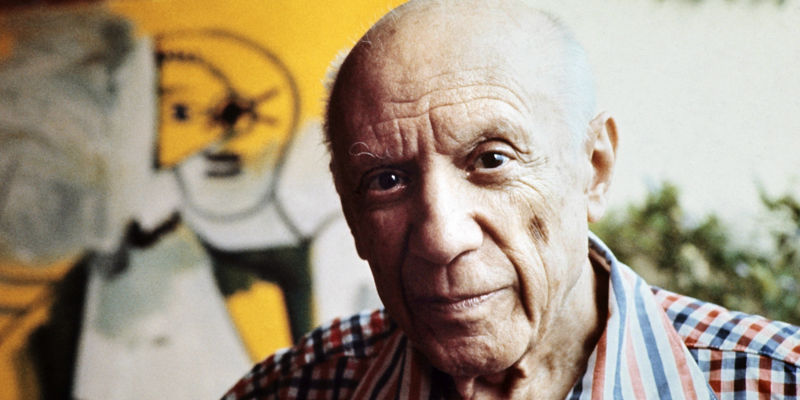
- Pablo Picasso (1881–1973)—Picasso was one of the most remarkable artists of the 20th century, with a body of work that included painting, ceramics, sculpture and printmaking. He also worked within several different schools of art during his career, experimenting with neoclassical and surrealist forms after founding cubism. His famous work Guernica (1937) was a response to the bombing of the titular town during the Spanish Civil War. Picasso arrived in Barcelona as a teenager and joined the avant-garde circle at Els Quatre Gats café before hosting his first solo exhibition in the city. The Picasso Museum in El Born holds much of his important early work.
- Joan Miró (1893–1983)—Barcelona-born Miró’s colorful and often dreamlike canvases represented a playful expression of 20th-century modernism and had a profound influence on the surrealist movement. Primary colors and floating shapes became his signature motifs. Miró also worked across disciplines as a painter, sculptor, tapestry artist and ceramicist. The Fundació Joan Miró on Montjuïc houses one of the world’s largest Miró collections.
- Salvador Dalí (1904–1989)—The surrealist movement’s mustachioed poster child, Salvador Dalí grew up in the Catalan town of Figueres in Girona and studied in Madrid. However, he was quickly drawn to Barcelona’s avant-garde creative scene, and the city acted as both crucible for his artistic growth and springboard for his fame. His 1931 work, The Persistence of Memory, with its melting clocks is perhaps the most iconic image in surrealism. The Museu Nacional d’Art de Catalunya (MNAC) in Barcelona displays several of his formative works including Girl from Figueres (1926).
- Montserrat Caballé (1933–2018)—The feted operatic soprano is perhaps best known internationally for her duet with Freddie Mercury, “Barcelona,” which was used for the 1992 Olympic games. However, Caballé is also fondly remembered for her roles in works by Verdi, Rossini and Bellini. Born in humble circumstances in the post-Civil War years, she studied at the Conservatori Superior de Música del Liceu. Her breakthrough came in 1965 when she accepted a last-minute role in Donizetti’s Lucrezia Borgia at New York’s Carnegie Hall.
- Ferran Adrià (b. 1962) —The legendary Catalan cook, author and educator is renowned for his time as head chef at El Bulli, where his pioneering molecular gastronomy techniques earned the restaurant three Michelin stars and worldwide acclaim. Adrià—who learned his craft in several Barcelona restaurants including Finisterre and the Hotel Playafels—closed El Bulli in 2011 to focus on El Bulli Foundation, a center for culinary innovation. While the restaurant was housed in nearby Girona, Adrià has become a major cultural ambassador for the city.
-
Contributions from Ancient Greece & Italy
The origins of many of today’s most beloved artistic and architectural traditions can be traced back to various countries, including Spain, France, Italy, Greece and beyond. This article highlights the significant contributions to art and architecture made by two ancient civilizations—Greece and Italy.
Architecture—Greece’s innovative contributions
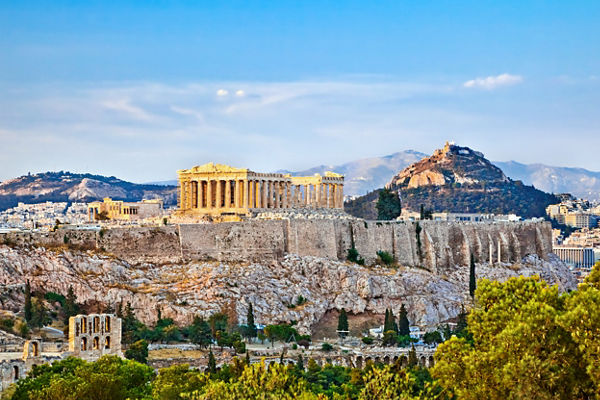
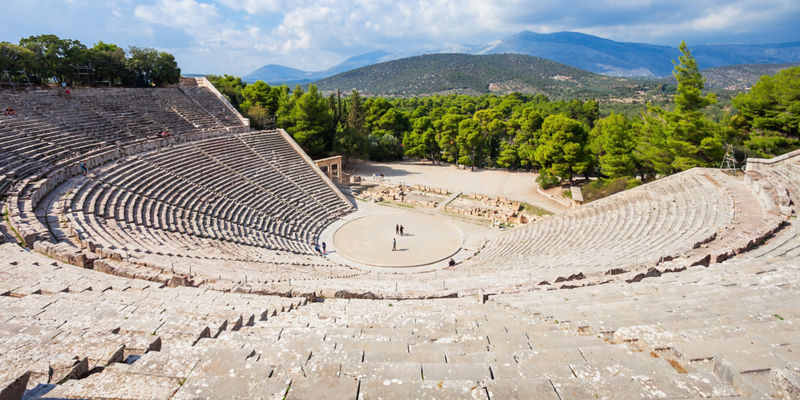
Ancient Greek cities demonstrated their wealth and power by building monumental temples to their preferred deities. These temples were designed as earthly homes for the gods, so early Greek temples roughly followed the design of Greek homes. Most temples were one-room buildings with columnar porches, which protected a statue of the deity. The Parthenon in Athens is a key example of these temples. It was built in the mid-5th century BC on the Acropolis Hill in honor of the Greek goddess of war, Athena.The Greeks also constructed large, open air theaters. One example is the massive Theater of Epidaurus, which can seat up to 12,000 spectators. Built into natural hillsides, these theaters offered impressive acoustics and panoramic views.
Finally, the Greeks developed the concept of the agora, a central public space designed for gathering, commerce and socializing. Today, visitors can still explore the Agora of the Competaliasts on Delos, an island in the Cyclades that was reputed to be the birthplace of the god Apollo.
Arts & culture—Italy’s place in art history
Ancient Roman frescoes and mosaics can be found today in UNESCO World Heritage Sites like Pompeii and ancient Herculaneum. These meticulous artworks depict daily life and mythological stories in vivid color and detail.Italy was also the birthplace of the Renaissance, a period of remarkable artistic achievement that took place between the 14th and 17th centuries. Renaissance artwork is marked by an increased awareness of nature, a revival of classical learning and humanist values. Artists like Leonardo da Vinci and Raphael mastered the use of perspective and anatomical realism, while Caravaggio and Titian perfected the use of light, shadow and color.
In Florence, the Palazzo Pitti contains more than 500 principally Renaissance works in the renowned Palatine Gallery, including paintings by Raphael, Titian and Caravaggio. Michelangelo’s famous marble statue David stands in Florence’s Galleria dell'Accademia, and visitors can marvel at his iconic Sistine Chapel ceiling frescoes during a visit to Vatican City.
During the Renaissance, Venice was also a center of artistic innovation. Venetian artists like Tintoretto and Titian were known for their dramatic compositions and dynamic use of colors. Today, you can see two of Tintoretto’s large-scale masterpieces at the breathtaking 16th-century San Giorgi Maggiore church, and the Scuola Grande di San Rocco also contains a fine collection of Tintoretto’s work.
-
Discover Rhodes, island of knights
Old Town
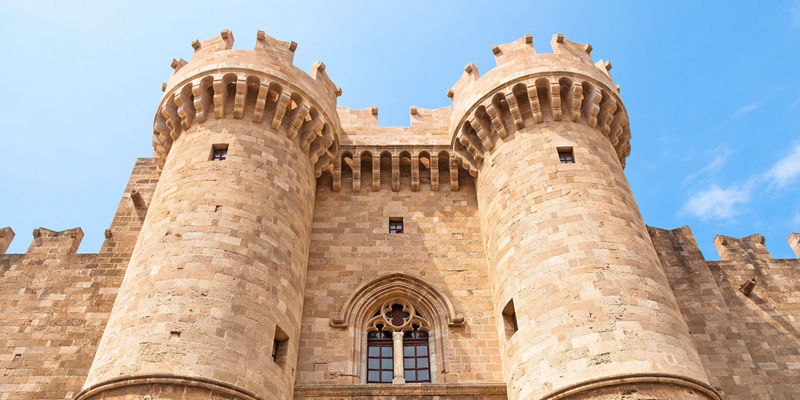
The knights’ legacy is still on display in the Old Town of Rhodes, Europe’s largest medieval city. Inside its walls, visitors can walk narrow streets and encounter bastions, minarets, houses, fountains, busy squares—and 24 centuries of history. The Palace of the Grand Masters stands at the end of the Street of the Knights. Once a Byzantine fortress, then a royal residence, the colossal palace now houses a museum.
Beyond the walls
Rhodes's so-called “new city” offers architectural treasures from the island’s Italian period, including Venetian, Neoclassical and modern structures. The Italian Governor’s Palace—now the Prefecture of the Dodecanese—evokes the Doge’s Palace in Venice.
-
Discover the sun-drenched allure of Mykonos
Hóra
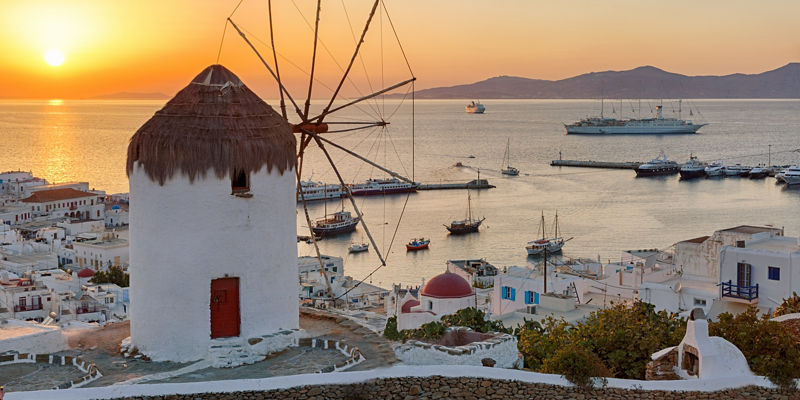
This capital town is one of the best examples of Cycladic architecture. Famous for its uniqueness and charm, some of the most distinctive features of this architectural style are completely white buildings with vibrant gardens, stone-paved roads and light blue churches. You can stroll Hóra’s labyrinth of narrow streets and admire the whitewashed houses with colorful doors and window frames. You can also visit churches and museums, and stylish Matoyianni Street is lined with stores, cafés and restaurants.
Little Venice
Alefkándra, or “Little Venice,” is one of the most picturesque areas on the island. The 18th-century district features waterfront buildings with colorful balconies overlooking the sea. A short walk brings you to the Kato Mili—whitewashed windmills with thatched roofs. If you are lucky, you might even meet Petros the Pelican, the island’s official mascot.
-
Explore Rome’s basilicas off the beaten path
When you think of Roman basilicas, you probably think of St. Peter’s. And you are not alone—every day, up to 20,000 people visit this iconic church in Vatican City. But there are other spectacular basilicas in Rome where you can take in the splendor of sacred spaces with less company.
San Paolo Fuori le Mura
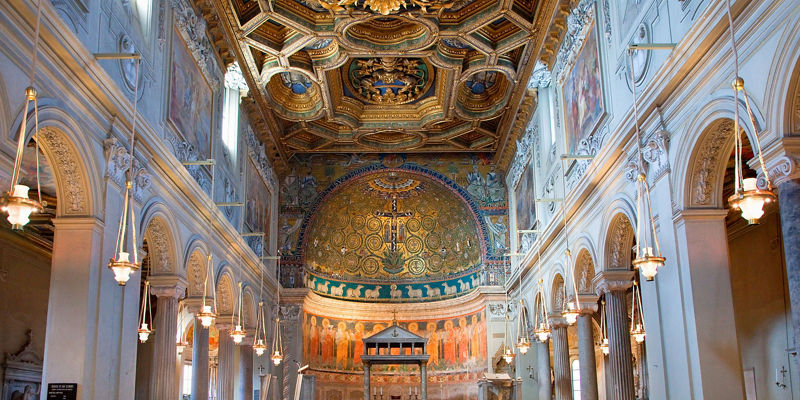
Built near the traditional site of St. Paul’s tomb, San Paolo Fuori le Mura is the third largest church in Christendom. While much of the architecture is from the 19th century, its magnificent triumphal arch was built in the 5th century. The church features a vast nave, medieval Cosmati mosaics and a marble paschal candlestick from the 12th century that stands more than 15 feet tall.
San Lorenzo Fuori le Mura
This ancient basilica was built over the grave of St. Lawrence, a Roman deacon martyred in 258 AD. An original Byzantine mosaic still adorns the triumphal arch. San Lorenzo is one of Rome’s five patriarchal basilicas and one of the city’s seven pilgrimage churches.
Church of St. Ignatius Loyola
Dedicated to the founder of the Jesuit order, this 17th-century church is best known for its ingenious ceiling frescoes, painted by Jesuit artist Andrea Pozzo. Pozzo's frescoes use perspective to create the illusion of a vaulted ceiling.
-
Explore the vibrant flea and “gypsy” markets of Athens
Monastiraki flea market
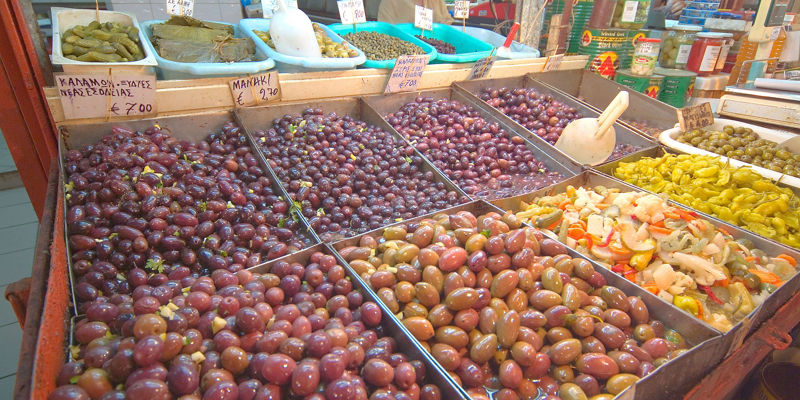
People come from far and wide to buy and sell at this popular Sunday flea market. You will find a wide variety of goods ranging in quality, from antiques and books to transistor radios and socks. Musicians playing in the cafés and streets form a vibrant soundtrack, adding ambience to the experience.
“Gypsy” market
A little more than a mile from the Monastiraki flea market is a lesser-known and equally worthwhile market. The “gypsy” market, held in an abandoned open-air warehouse, brings together locals and tourists to haggle with merchants displaying their wares on tables and blankets. When shopping, keep etiquette in mind: Romani people do not like to have their picture taken, so please be courteous with your cameras and phones.
-
Get the scoop on gelato’s history
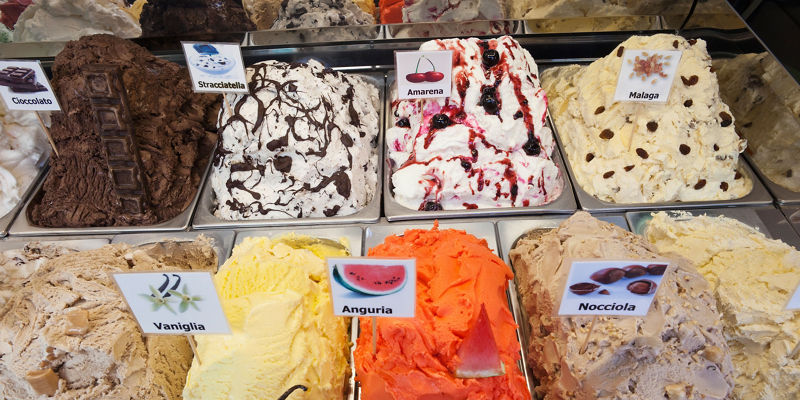
Gelato is one of the world’s favorite Italian exports. It is made with milk—sometimes nonfat milk—rather than cream. The milk’s lower fat content helps the flavors in gelato stand out. Gelato also has less air in it than ice cream, making it denser.
Italy’s 5,000-plus gelato shops and 15,000 gelato vendors produce more than half of the world’s supply. While the exact origins of this popular dessert are debated, fans of the sweet treat owe a debt of gratitude to the three inventive Italians highlighted below.
The chicken farmer
It is said that during the Italian Renaissance, the Medici family in Florence held a contest to find the best frozen dessert. A chicken farmer (and cook in his spare time) named Ruggeri won the competition with his frozen concoction of sweet fruit juice and ice—the forerunner of modern sorbet.
The artist and architect
In the late 1500s, the Medici family commissioned Bernardo Buontalenti, an artist and architect with considerable culinary skills, to prepare a feast for the visiting King of Spain. Legend has it that Buontalenti created a creamy frozen dessert—and gelato was born.
The restaurateur
Francesco Procopio dei Coltelli, a restaurateur, is credited with introducing Europe to gelato. Procopio moved from Palermo to Paris and opened a café that served gelato in small glasses resembling egg cups. Gelato’s popularity soon spread throughout France and across Europe.
-
Historic figures associated with Naples
Naples has long been shaped by remarkable figures who have contributed to the city’s identity as a place of passion, creativity and resilience. Here are six of the most prominent individuals associated with this storied city:
- San Gennaro (3rd–early 4th century AD)
The patron saint of Naples, San Gennaro is a central figure in the city’s spiritual life. Also known as Saint Januarius, he was a Christian martyr who was executed by the Romans for his faith. Three times a year, his devotees attend a ceremony at Naples Cathedral to witness the miraculous liquefaction of a vial of his preserved blood. This event has become a powerful symbol of faith and protection, deeply embedded in Neapolitan identity.
- Caravaggio (1571–1610)
This revolutionary baroque painter, also known as Michelangelo Merisi, spent part of his turbulent life in Naples after fleeing Rome to escape charges for killing a man in a duel. During his stay in the city, he produced masterpieces such as The Seven Works of Mercy (c. 1607), which is still housed at the church of Pio Monte della Misericordia. His dramatic use of light and shadow transformed local art and helped define the Neapolitan school of painting for generations.
- Giambattista Vico (1668–1744)
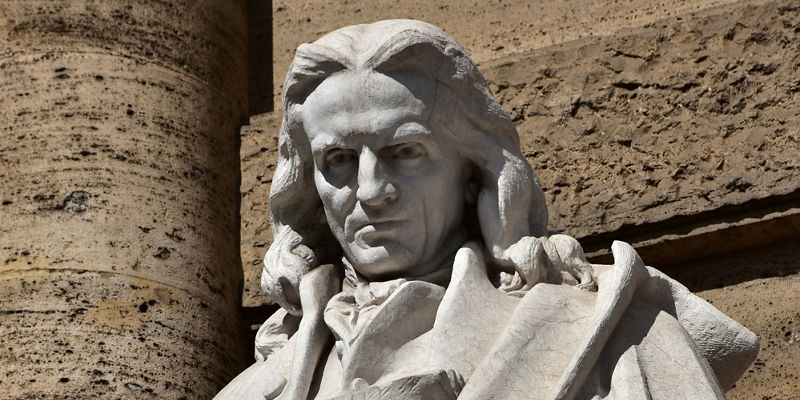
A pioneering philosopher and rhetorician, Vico proposed that human societies repeatedly cycle through three distinct stages: 1) the age of gods—characterized by religious and mythological explanations of the world; 2) the age of heroes—marked by the emergence of rigid social classes and 3) the age of men—a period of equal rights, reason and individualism that eventually gives rise to corruption and a reversion to barbarism. His seminal work, The New Science (1725), laid the groundwork for modern disciplines such as cultural anthropology, sociology and historiography.
- Charles VII of Naples (1716–1788)
A visionary Bourbon ruler, Charles VII ushered in a cultural golden age. He commissioned major architectural and artistic projects, including the Royal Palace of Capodimonte, the Royal Palace of Caserta and the Teatro di San Carlo—one of Europe’s oldest opera houses. His patronage elevated Naples as a major cultural capital.
- Giuseppe Sanmartino (1720–1793)
An extraordinary sculptor, Sanmartino is best known for The Veiled Christ (1753), a masterpiece carved from a single block of marble. The sculpture’s delicate “veil” appears almost transparent, demonstrating unparalleled technical skill and artistic sensitivity. The piece was commissioned by the nobleman Raimondo di Sangro for the nave of the Cappella Sansevero, where it can still be viewed today.
- Benedetto Croce (1866–1952)
Croce was an influential Italian philosopher, historian and cultural critic. Born in the town of Pescasseroli in Abruzzo, he spent most of his life in Naples, where he produced extensive works on aesthetics, history and philosophy. He founded the journal La Critica in 1903 and helped revive interest in thinkers like Giambattista Vico. A committed liberal and antifascist, Croce also played a key role in restoring democratic institutions in Italy after World War II.
- San Gennaro (3rd–early 4th century AD)
-
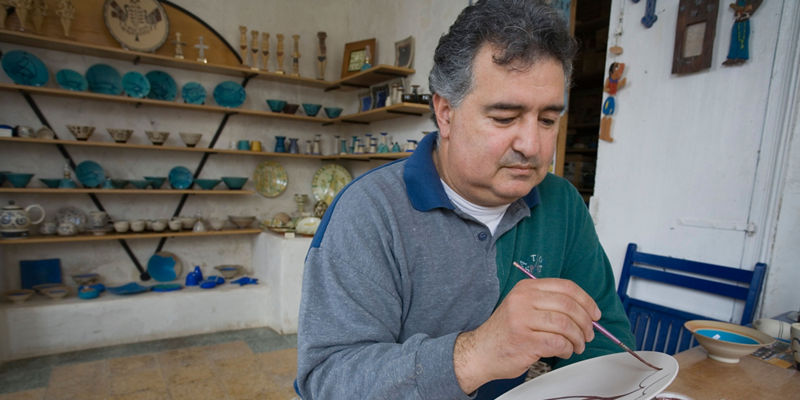
Learn the artistry of pottery from a Cypriot master
A venerable tradition
Ancient ceramics have been uncovered throughout Cyprus, from the ruins at Kourion to the old Hellenistic capital of Paphos. During the Bronze Age, prehistoric Cypriots crafted pottery featuring innovative shapes and decorations. Because of Cyprus’s location along Mediterranean trade routes, the island’s pottery was influenced by diverse cultures, including Asia Minor, Greece, Rome, Egypt and Phoenicia.
A living art form
In Limassol’s Old Town, you can witness the craft of pottery from a local artisan. Visit a pottery workshop to see how these practical, often decorative pieces are made.
-
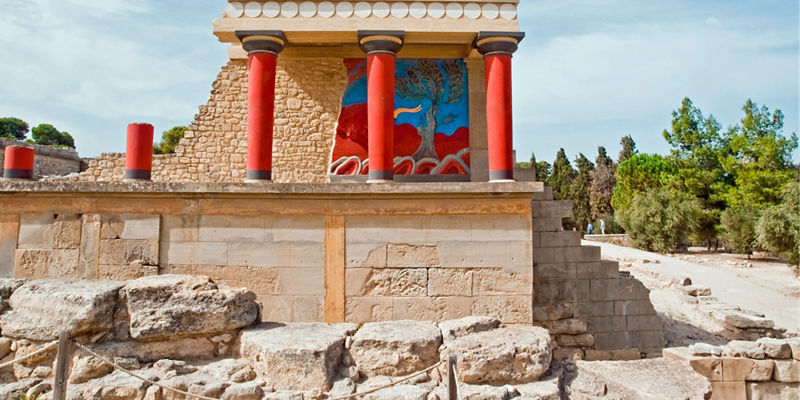
Marvel at the Minoan palaces of Crete
Cultural centers
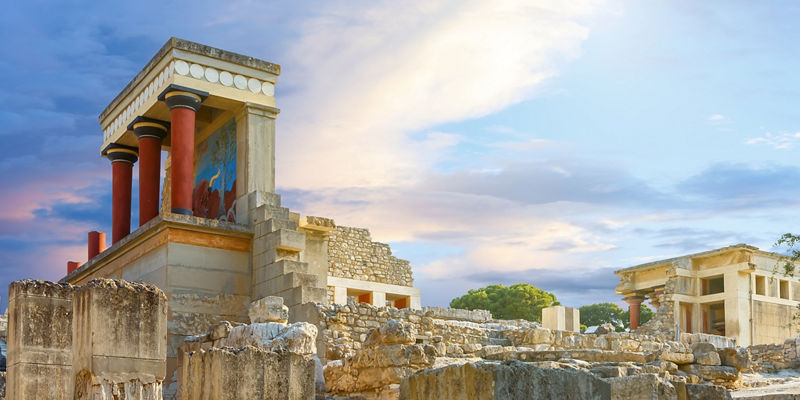
Minoan palaces hosted a variety of activities, from religious ceremonies to the production of decorated pottery and other exported goods. Frescoes in the Palace of Knossos depict scenes of daily life—as well as Minoans jumping over bulls, which may have been a sporting event or sacred ritual. Bulls appear to have been important in Minoan religion, which may have influenced the Greek legend of the Minotaur on Crete.
Palace amenities
Minoan palaces were multistory structures with large staircases. Many were adorned with elaborate paintings and frescoes. The palaces featured complex plumbing systems, including running water and flushed lavatories. Aqueducts brought water from springs, which was carried by pipes to spigots and fountains throughout the palace.
-
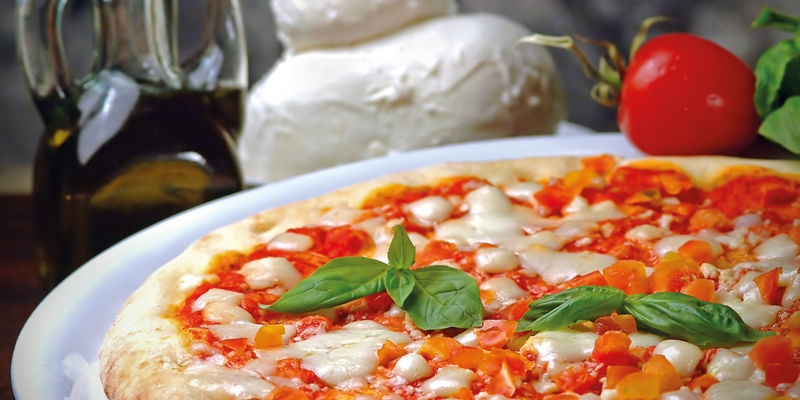
Neapolitan pizza
Neapolitan pizza, or pizza Napoletana, is one of Italy’s most iconic culinary traditions, deeply rooted in the history of Naples. Its origins can be traced to the late 18th century, when flatbreads topped with simple ingredients were sold by street vendors to the city’s working class. They were an effective way to use ingredients that were going bad or that would otherwise be wasted. Tomatoes—initially suspected of being poisonous when they were introduced to Europe in the 16th century—were gradually embraced, becoming a defining element of the dish over time.
The most famous version of Neapolitan pizza took shape during the 19th century. According to popular legend, in 1889, a pizzaiolo (pizza maker) named Raffaele Esposito created a pizza for Queen Margherita of Savoy, who had traveled to Naples with King Umberto I. Esposito topped his pizza with tomatoes, mozzarella and fresh basil to represent the colors of the Italian flag. This creation, later known as the pizza Margherita, helped elevate pizza from humble street food to a symbol of national pride.
The craft of Neapolitan pizza is defined by simplicity, precision and time-honored techniques. Authentic versions adhere to strict standards set by organizations like the Associazione Verace Pizza Napoletana (AVPN). The dough is made from only four ingredients: wheat flour, water, salt and yeast. It is kneaded by hand or with low-speed mixers and left to ferment slowly, sometimes for up to 24 hours, allowing it to develop a light, airy texture.
Shaping the dough is an art. Unlike many modern pizza styles, Neapolitan pizza is never rolled with a pin; instead, it is gently stretched by hand to preserve the air bubbles, which create the dish’s characteristic soft, puffy crust, or cornicione. Toppings are deliberately minimal to highlight quality over quantity. In addition to olive oil and basil, they typically include fresh buffalo mozzarella or fior di latte (produced from the milk of Agerolese cows) and San Marzano tomatoes or pomodorino vesuviano, a locally produced grape tomato.
The baking process is equally crucial. Neapolitan pizza is cooked in a wood-fired oven at temperatures exceeding 840 °F (450 °C), often in just 60 to 90 seconds. This intense heat produces a tender yet slightly charred crust, with a smoky aroma that defines the style.
In 2017, UNESCO inscribed the art of Neapolitan pizza-making on its Intangible Cultural Heritage list, celebrating not only the dish but also the tradition and community behind it. Today, pizza Napoletana remains a favorite, admired for its balance of history, craftsmanship and simple flavors.
-
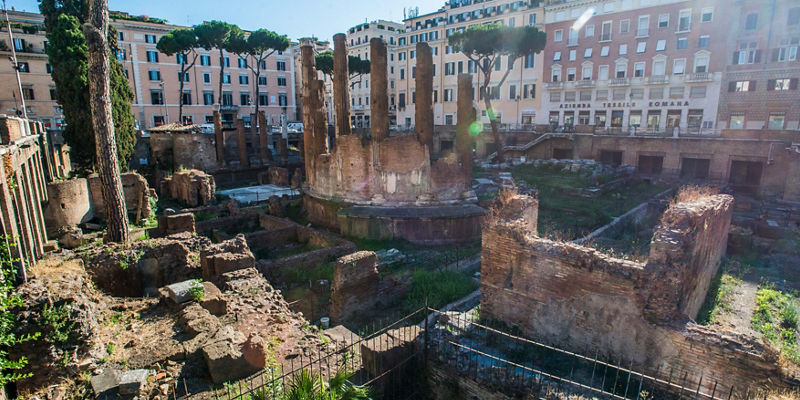
Rome’s Torre Argentina Cat Sanctuary
It is estimated that more than 300,000 cats live in Rome. Hundreds of them have made excavated site Torre Argentina their home.
Where Julius Caesar was murdered
Torre Argentina is an extensive temple complex that was excavated in 1929 as part of Mussolini’s rebuilding initiative. The site includes part of the Theater of Pompey—on the steps of which Julius Caesar was betrayed and stabbed to death.
Where cats are pampered
Soon after it was excavated, many of the city’s feral cats moved in. The gatarre, or cat ladies, began feeding and caring for them. In the 1990s, a cat shelter was opened at the historic site. Volunteers feed the cats seven days a week, and a spay and neuter program keeps the feral population in check.
Temples and tabbies
Visitors are welcome at the Cat Sanctuary, which is open from noon to 4:30 PM. If you go, it may take you a few moments to spot the fine, furry residents. But soon you will see them lounging throughout the ruins. Do exercise some caution, as these kitties are still wild. While it may not have been a hospitable place for one Roman ruler, today the temple site is a haven for cats and cat lovers alike.
-
Tapas in Barcelona
Sampling tapas is a quintessential Barcelona experience. It involves trying a variety of different dishes served on small plates accompanied by drinks, with diners often moving between different bars or restaurants between courses. The word tapas literally means “covers” or “lids” in Spanish and refers to the practice of covering drinks with small plates of bread, cheese or ham to keep flies and dust away.
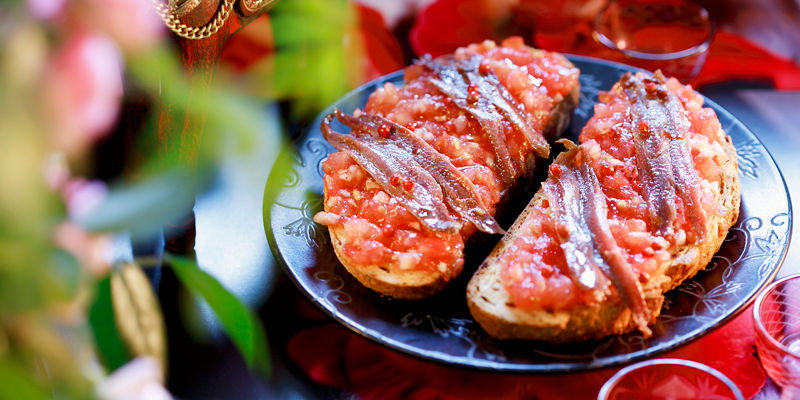
Today, you will encounter a range of different flavors during an afternoon or an evening eating tapas. Plates might include gambas al ajillo (shrimp in garlic and chili-flavored olive oil), patatas bravas (fried potatoes accompanied by a spicy, smoky sauce) or pimientos de Padrón (green peppers). Other popular options include bread rubbed with tomato known as pan con tomate and ham croquettes referred to as croquetas de jamón. Squid, anchovies, small omelettes and a range of sliced meats and cheeses often complete a meal.
Diners might choose to pair their tapas plates with a chilled cerveza (draft beer) or a glass of cava, a sparkling wine from the Catalonia region. A vino tinto (red wine, such as a Rioja or Ribera del Duero) or vino blanco (white wine like Albariño) are other options—or choose sparkling water or a kombucha for a nonalcoholic treat.
A wide variety of bars and restaurants across the city serve tapas, from bodegas (traditional wine bars that are often lively and filled with locals) to tapas bars (sit down spots with broader menus) and marisquerías (seafood tapas restaurants). Some are casual places, others reflect modern approaches to the cuisine and a few even have Michelin stars.
Tapas is a little different to pintxos, the similarly bite-sized dining experience in Spain’s Basque Country. Pintxos are usually one- or two-bite snacks, often held onto a slice of bread with a toothpick (pintxo means “spike”). Diners sometimes pay at the end by how many toothpicks they have left. Pintxos are for individual consumption while tapas are meant to be shared. A good tapas spread offers an exquisite sampling of Catalan flavors and acts as a true expression of the region’s gastronomic history. -
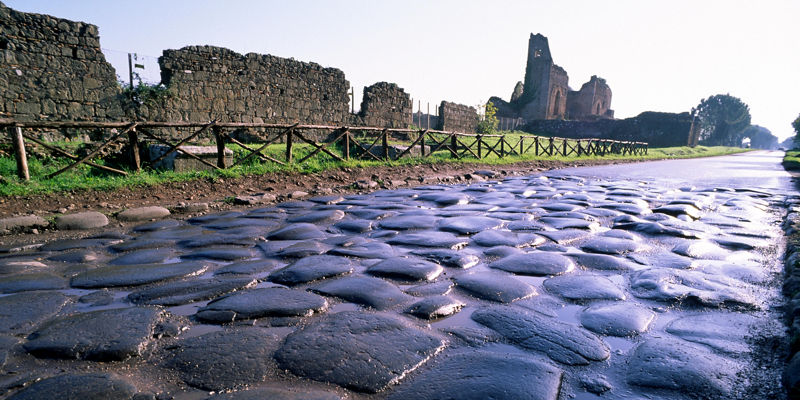
The Appian Way
From aqueducts to roads, Roman engineering is legendary. Rome’s Appian Way, or Via Appia Antica in Latin and Italian, is the world’s first paved road.
Road to the south
The Appian Way was built to transport troops from Rome to Brindisi in the south. It is named after Appius Claudius Caecus, who began and completed the first section in 312 BC during the Samnite Wars. It was extended over the decades, and by 191 BC it connected Rome and the port of Brindisi.
“Queen of Roads”
Named the “Queen of Roads”, the Appian Way stretches approximately 318 mi (511 km). It starts in Rome at the Baths of Caracalla, passing beautiful villas, ancient ruins and catacombs—including the Catacombs of San Callisto, where more than 50 martyrs and 16 popes are buried.
History you can walk on
You can walk the Appian Way yourself and admire the ingenuity of early Roman engineering. Much of the section in Rome is part of a nature and archeological park. The road is attractive, peaceful and atmospheric, with plenty of grassy areas that are perfect for picnicking.
-
The artistic legacy of Naples
Naples is a city rich in artistic heritage, where centuries of cultural exchange have shaped an extraordinary collection of artworks and masterpieces. Visitors to Naples can explore a vibrant artistic legacy that spans the ancient world, Renaissance era, baroque period and beyond.
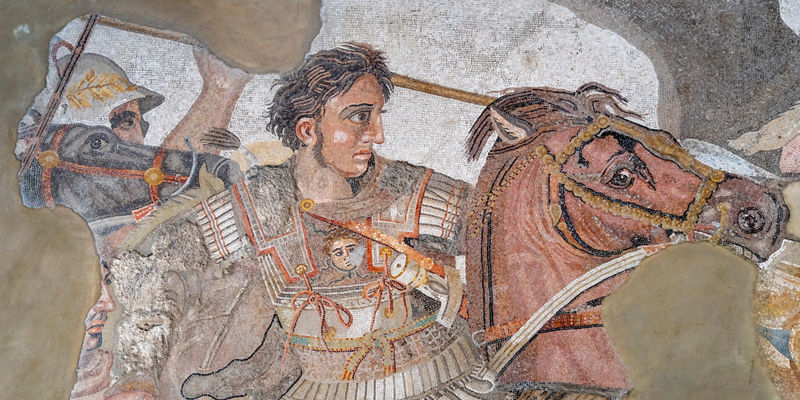
The Naples National Archaeological Museum is a highlight for art enthusiasts. It is home to an extensive collection of Roman art recovered from Pompeii and Herculaneum, offering unique insight into ancient craftsmanship, including mosaics, sculptures and frescoes. The museum’s most famous pieces include the Alexander Mosaic (c. 120–100 BC), a stunning depiction of Alexander the Great in battle, and the Farnese Hercules (early 3rd century AD), a colossal marble statue of the hero resting after his labors.
One of the most celebrated painters associated with Naples is Caravaggio, the groundbreaking baroque artist renowned for his dramatic use of light and shadow. During his turbulent life, Caravaggio fled to Naples twice, first in 1606 after committing a murder in Rome, and again in 1609 while still evading justice. These periods of exile were remarkably productive. In addition to The Seven Works of Mercy (c. 1607), housed in the Pio Monte della Misericordia, he painted The Flagellation of Christ (1607)—now in the Museo di Capodimonte—and The Martyrdom of Saint Ursula (1610), widely considered his final work. His Neapolitan paintings are darker in tone and more emotionally intense, reflecting his personal struggles and precarious circumstances. While in Naples, he gained influential patrons and helped inspire a generation of local artists, leaving a profound and lasting impact on the city’s artistic identity.
Another major figure linked to Naples is Artemisia Gentileschi, a pioneering baroque painter renowned for her bold, emotionally charged portrayals of women and her mastery of dramatic light and realism. Born in Rome in 1593, she endured a difficult early life but rose to prominence through her extraordinary talent and determination. In the 1630s, drawn by the city’s vibrant artistic environment and wealthy patrons, she settled in Naples, which became a central base for her later career. During this period, she created important works such as The Annunciation (c. 1630), now preserved in the Museo di Capodimonte.
Luca Giordano (1634–1705), another of the city’s renowned artists, was one of the most prolific painters of the baroque era. He is celebrated for his vibrant colors, fluid compositions and the extraordinary speed at which he worked. Born in Naples in 1634, Giordano’s astonishing productivity earned him the nickname “Luca fa presto” (“Luca works quickly”), reflecting both his technical mastery and the vast number of works he produced. Many of Giordano’s works in Naples suffered significant loss or damage during World War II, but some important pieces endured, including Christ Expelling the Traders from the Temple (1684), which can still be seen in the Church of the Gerolomini.
Together, these artworks offer not only visual beauty but also a deeper connection to the region's dynamic cultural history. This enduring artistic legacy continues to define the city’s identity as one of Italy’s most compelling centers of art.
-
The Mediterranean’s famous ancient civilizations
The Mediterranean Sea was the major hub for transport, trade and cultural exchange for peoples on three continents: Western Asia, North Africa and Southern Europe. The earliest complex civilizations in the region emerged during the Stone Age (7000-3000 BC) and Bronze Age (3000-1000 BC) near the Aegean Sea. This area consists of Crete, the Cyclades Islands and the Greek mainland.
The Minoan civilization in Crete, which flourished between 3000 BC and 1100 BC, was Europe’s earliest recorded civilization. It boasted ornate palaces, fine craftsmanship and a developed system of writing.
After the fall of the Minoans, Mycenae became the dominant power in the Aegean, and the Late Mycenaean period (1400–1100 BC) was one of great prosperity. Today, you can explore the ancient site of Mycenae and visit the tomb of King Agamemnon, who was immortalized by the Greek poet Homer in The Iliad and The Odyssey.
Ancient Greek civilization (1200 BC to 323 BC) marked a vibrant period of political, philosophical, artistic and scientific flourishing. The first Olympic Games were held in 776 BC, and during the 5th century BC, the term “democracy” was coined to refer to Athens’ novel political system.
Ancient Rome was founded in 753 BC, and over the course of centuries, it grew from a small town on the Tiber River into the Roman Republic (509 BCE) before becoming the Roman Empire (27 BC)—a vast imperial territory covering large swaths of Europe, Asia and Africa. Many notable Roman landmarks can be seen across the Mediterranean today, including the Colosseum in Rome and Les Arènes, an ancient amphitheater in Arles, France.
-
Top 5 dishes of the Mediterranean region
In addition to its stunning scenery, the Mediterranean coastline has supported life for millennia, providing its inhabitants with an abundant supply of seafood, such as prawns, squid, fish and oysters. The soil of the Mediterranean region is well suited to vineyards, olive groves and fruit orchards, particularly citrus. Most of the world’s supply of olive oil is produced in the countries of the Mediterranean Basin.
While all Mediterranean cuisines share these common ingredients, there are many regional variations and specialties. Here are some of the most renowned dishes from the region:
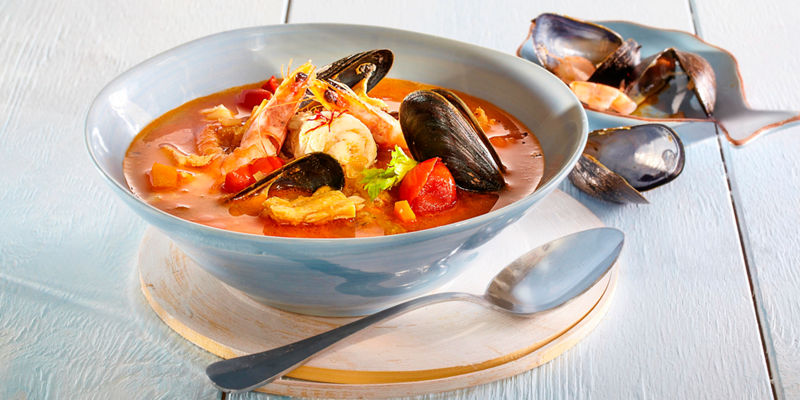
- Bouillabaisse (France)
Originally cooked by fishermen using unwanted fish from their catch, this traditional Provençal fish stew often features racasse (a bony rockfish), whiting, mullet or other Mediterranean fish. The stew is garnished with rouille—a creamy, saffron- and garlic-scented condiment designed to heighten the flavor. Although there are many recipes for bouillabaisse, the Marseille version is typically acknowledged as the most authentic. Aside from fish and shellfish, it includes characteristic Mediterranean ingredients like olive oil, tomatoes, garlic, parsley, thyme, bay leaf, fennel and saffron.
- Gyro (Greece)
Gyro, pronounced YEE-ro, is a Greek dish consisting of roasted meat served in pita bread, typically with tomato, onion and tzatziki, a creamy sauce made from yogurt, garlic and cucumber. Gyro meat—typically, lamb, beef or chicken—roasts on a vertical skewer and is shaved off in thin, crispy slices as it cooks.
- Neapolitan Pizza (Italy)
The world’s first pizzeria opened in Naples in 1830. The popularity of Neapolitan-style pies is thanks to their mouthwatering combination of soft dough, flavorful tomatoes, fresh mozzarella and sweet basil. Neapolitan pizza, or Naples-style pizza, is made specifically with buffalo mozzarella (produced from the milk of Italian Mediterranean buffalo) or fior di latte (mozzarella produced from the milk of prized Agerolese cows) and San Marzano tomatoes or pomodorino vesuviano (a variety of grape tomato grown in Naples).
- Pastizzi (Malta)
Maltese cuisine is influenced by Spanish, French and other Mediterranean cuisines. One of the most popular street foods is pastizzi, which consists of a flaky layered pastry dough similar to Greek phyllo, stuffed with a savory filling. While there are many types of pastizzi fillings, the two most common are ricotta or curried peas.
- Dagnje na Buzaru, or Steamed Mussels (Croatia)
Croatia’s stunning Dalmatian Coast offers a bounty of fresh oysters and mussels. This classic dish, popular with locals, consists of steaming mussels with garlic, white wine and parsley and topped with breadcrumbs before serving. Crusty bread is a typical accompaniment, perfect for sopping up extra sauce. A family-run oyster farm in Dubrovnik recommends trying a rich variation, which involves steaming the mussels with garlic, shallots, fennel, saffron and cream.
- Bouillabaisse (France)
Mediterranean Highlights
Whether as the birthplace of democracy or science or with the refinement of wine or art, Western civilization is said to have begun and evolved on Mediterranean shores. From the sun-soaked coasts of Spain and Sicily to the ancient ruins of Greece and Italy, you can discover millennia of history during a journey along these fabled waters. Here is a sample of what you can look forward to:
- Rome’s monumental Colosseum and Pantheon
- Vatican City’s St. Peter’s Basilica & the Sistine Chapel
- Tuscany’s hilltop medieval towns
- Athens, the “birthplace of democracy” & home to the Parthenon
- Sample fresh seafood at a sidewalk café in Monte Carlo
- The rich flavors of Italy’s Chianti and Portugal’s port
- Venice’s historic campanile & winding canals
- The magnificently preserved walled city of Dubrovnik
- The breathtaking beauty of the Greek Islands
- Malta’s Blue Grotto, a series of majestic sea caverns
Destination Insight Videos

Antoni Gaudí’s Architecture (3:53)
Step into the mind of Antoni Gaudí, the colorful Barcelona artist whose passion for nature led him to create astounding biomimetic architecture and seven UNESCO World Heritage Sites.


Mediterranean Travel FAQ
All-Inclusive Itineraries—Mediterranean
Choose one of our enriching, all-inclusive voyages and discover the many benefits of exploring in Viking comfort.
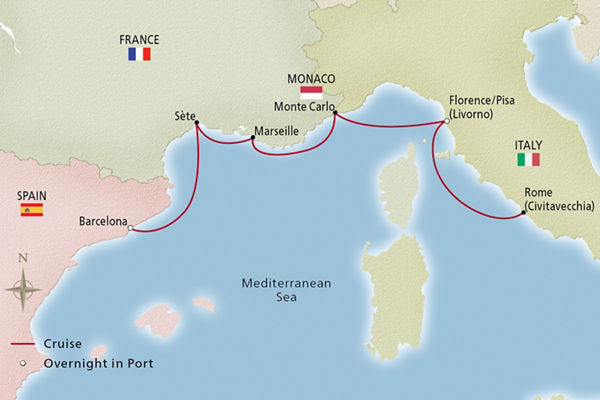
Iconic Western Mediterranean
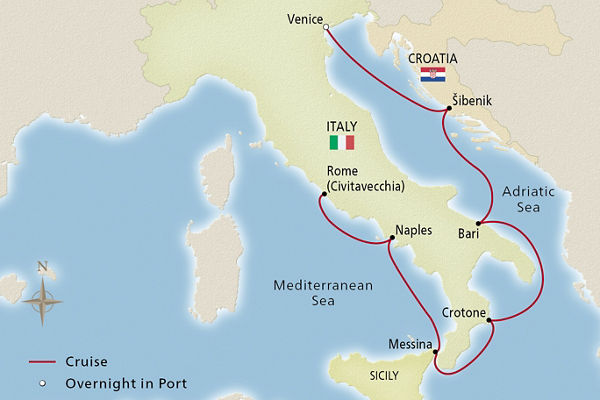
Italian Sojourn
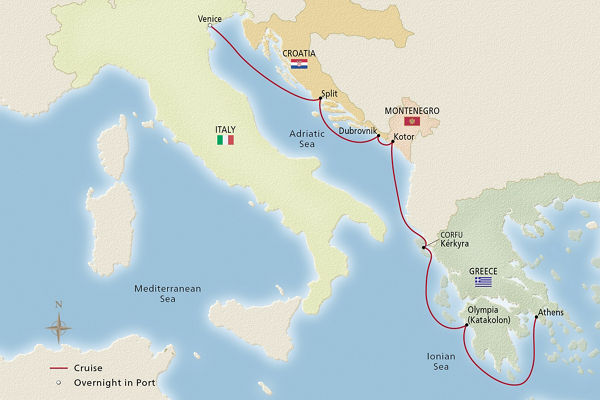
Venice, the Adriatic & Greece