

Experience the highlights of Barcelona
Barcelona is renowned for its temperate climate, tempting Catalan cuisine and distinctive neighborhoods. Read on to delve into the culture of tapas, learn more about the striking architecture on display and explore the legacies of some of the city’s most creative figures.
Barcelona
Barcelona sits on Spain’s northeastern coast on the shores of the Mediterranean Sea, some 90 mi (150 km) south of the French border. Its coastline spans several miles and encompasses a series of beaches including Barceloneta and Nova Icaria. The proximity of the water often provides a cooling sea breeze.
Much of the city is laid out on a relatively flat plain between the sea and the Collserola mountain range, and it is walkable and tightly knit. The Gothic Quarter, which dates back to the 1st century BC, is characterized by narrow, winding streets, while other neighborhoods—including charming Eixample—are comprised of octagonal blocks designed in the 19th century.
Barcelona has a Mediterranean climate, with an annual average temperature in the low 60s °F (around 16–17 °C). Summers are warm and dry, while winters are mild, though occasional cold spells do occur.
The history of Barcelona dates back several millennia; archaeological remains from the Neolithic period (around 5000 BC) have been found in what is now the central district of El Raval. The Romans established a presence in the region in the 2nd century BC and later founded the colony of Barcino on Mont Tàber in the late 1st century BC. Roman ruins can still be seen in the Gothic Quarter.
The urban area changed hands several times in the following centuries. It became an early Christian center during the 4th century and was under Visigoth rule, with King Ataulf on the throne, by 414. The Muslim Conquest of 713–718 saw it become part of Al-Andalus, and in 801, Franks captured the city during the Carolingian conquest and created the county of Barcelona.
The city expanded in the medieval era, becoming part of the Crown of Aragon in 1137, but was beset with plague, famine and instability during the 14th and 15th centuries. The Siege of Barcelona that took place from 1713 to 1714 saw the city fall to the Bourbon troops of Philip V during the War of the Spanish Succession. Between 1808 and 1813, French troops controlled the city as part of the Napoleonic occupation.
As with much of the rest of Europe, the latter half of the 19th century saw rapid industrialization. The Barcelona to Mataró railway line was the first in the country in 1848. This period also marked the beginning of Catalan modernisme—an artistic movement also known as “Catalan modernism” that was heavily informed by Catalonia’s regional identity and characterized by dynamic shapes, lively colors and innovative uses of modern materials. Construction began on Antoni Gaudí’s magnificent La Sagrada Família basilica, one of the movement’s most iconic buildings, in 1882. Two major international expositions, in 1888 and 1929, profoundly reshaped the city. Parc de la Ciutadella and the Arc de Triomf owe their existence to the first; the urbanization of Montjuïc hill was a result of the second.
The 1930s were dominated by the Spanish Civil War (1936-1939)—Barcelona was bombed and captured by Franco’s forces in 1939, and Catalan culture was suppressed until the restoration of democracy in the 1970s.
As the new millennium approached, Barcelona went through a process of urban renewal—most notably around the 1992 Summer Olympics—that ushered in the modern, globally connected city that travelers see today. Below are some of the key landmarks and cultural destinations you can experience during your time in Barcelona:
- La Sagrada Família—Antoni Gaudí’s unfinished basilica is Barcelona’s most iconic monument. Begun in 1882, it blends Gothic inspiration with Gaudí’s distinctive organic forms. Its soaring towers, sculpted facades and luminous interior make it one of the most extraordinary religious buildings in the world.
- Park Güell—Originally conceived as a garden city, Gaudí’s hilltop park features whimsical architecture, colorful mosaics, serpentine benches and panoramic views over Barcelona. The park’s Monumental Zone showcases some of Gaudí’s most imaginative designs.
- Casa Batlló—Located on Passeig de Gràcia, this modernist residence redesigned by Gaudí is known for its undulating facade, vibrant ceramic tiles and mask-shaped balconies.
- Gothic Quarter (Barri Gòtic)—This historic heart of Barcelona is a maze of medieval streets, Roman remains and atmospheric squares. Highlights include the Barcelona Cathedral, Plaça del Rei and remnants of the ancient city walls.
- Picasso Museum—Housed in a series of medieval palaces in the El Born district, this museum contains one of the most extensive collections of Pablo Picasso’s early work. It offers a unique look at the artist’s formative years and his deep connection to Barcelona.
- Montjuïc—Montjuïc, the most famous hill in Barcelona, is home to gardens, museums and the Magic Fountain—a spectacular attraction known for its evening light-and-music shows. The area was transformed for the 1929 International Exposition and again for the 1992 Olympic Games.
- Museu Nacional d’Art de Catalunya (MNAC)—Located in the Palau Nacional on Montjuïc, MNAC holds an exceptional collection of Catalan art, including one of the world’s finest collections of Romanesque mural paintings. Its terrace offers sweeping views of the city.
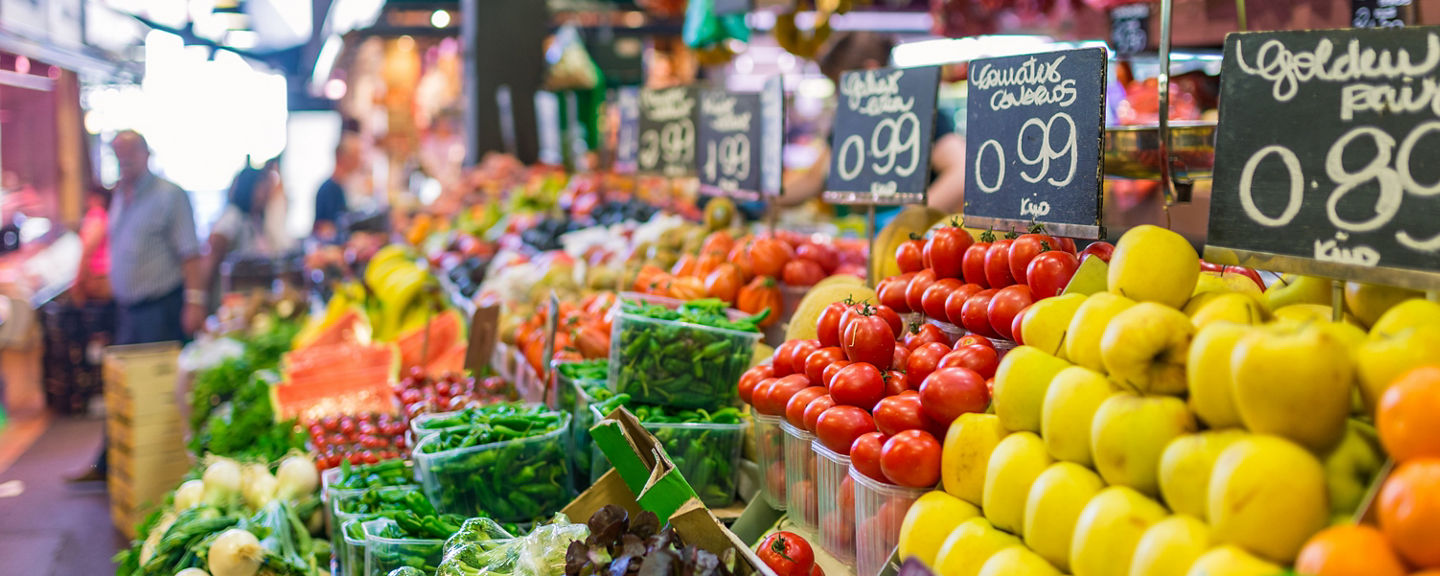
- La Rambla—Barcelona’s most famous promenade, La Rambla stretches from Plaça de Catalunya to the waterfront. Along the way lies La Boqueria, a vibrant 19th-century market known for its fresh produce, tapas stalls and lively atmosphere.

-
Architecture
Barcelona is a truly exceptional city for any fans of architecture. Not only is it home to multiple works by Antoni Gaudí but it also offers a walkable architectural timeline spanning from Roman times through the Catalan modernisme movement to the contemporary buildings of the present day. Many of the city’s varied structures can be seen in just a few hours.
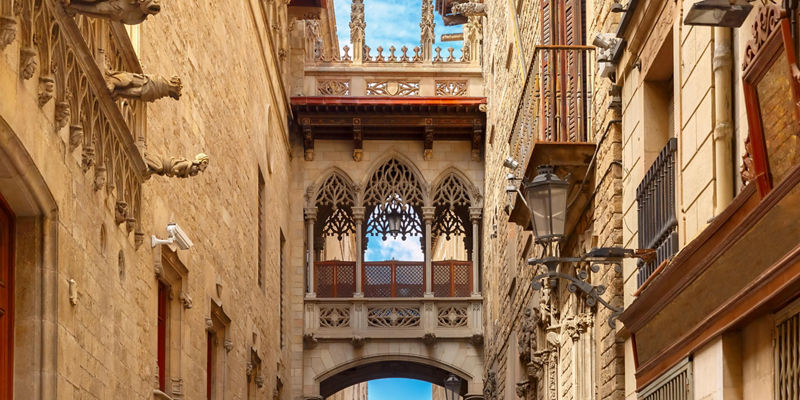
Barcelona’s remarkable architectural heritage begins with the Gothic Quarter, where Roman foundations stand among medieval structures showcasing a variety of period features including gargoyles, pointed arches and rose windows. Among this district’s narrow stone streets, visitors will find signature landmarks, including the Barcelona Cathedral with its soaring central nave and iconic facade, and the striking Pont del Bisbe, an ornate neo-Gothic bridge constructed for the 1929 Barcelona International Exposition.
Of course, it was modernisme, Catalonia’s version of art nouveau, that really left its mark on the city. Two figures stand out: Antoni Gaudí and his rival Lluís Domènech i Montaner, who, between them, have nine structures on the list of UNESCO World Heritage Sites.
Gaudí’s most famous work is perhaps the Sagrada Família, which fuses the soaring verticality of Gothic architecture with organic modernist forms. It is the most visited monument in Spain. Park Güell, meanwhile, is a public space like no other—an artfully landscaped site full of mosaic benches, fountains and nature-inspired structures. Ciutadella Park features a majestic fountain designed in part by a young Gaudí. Domènech i Montaner’s listed work includes Hospital de Sant Pau, a network of scenic pavilions and gardens, and Palau de la Música Catalana, a concert hall in the Catalan modernist style.
During the 21st century, architects have embraced functionalism and rationalism to rethink the city’s contours, and the 1992 Olympics saw a wave of innovation and redevelopment, particularly along the waterfront. International visionaries such as Frank Gehry and Jean Nouvel have also left their mark. Barcelona today offers a fascinating melange of styles and approaches. -
Barcelona’s creative legacy
Barcelona has been home to many creative figures in the worlds of art, architecture and cuisine. The following five individuals have all been shaped by the city and have left a lasting mark on the world.
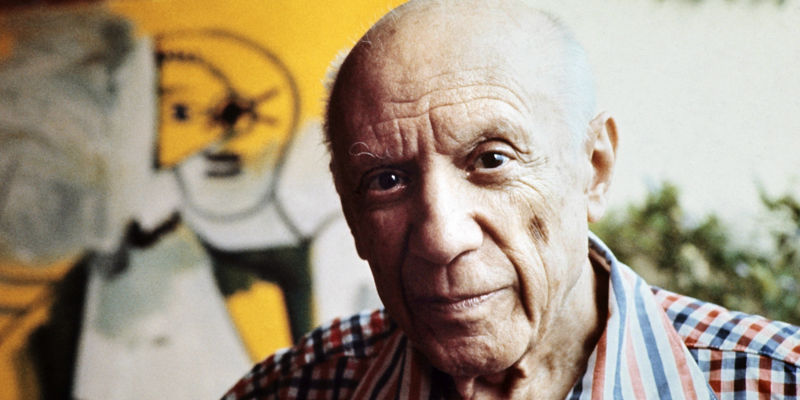
- Pablo Picasso (1881–1973)—Picasso was one of the most remarkable artists of the 20th century, with a body of work that included painting, ceramics, sculpture and printmaking. He also worked within several different schools of art during his career, experimenting with neoclassical and surrealist forms after founding cubism. His famous work Guernica (1937) was a response to the bombing of the titular town during the Spanish Civil War. Picasso arrived in Barcelona as a teenager and joined the avant-garde circle at Els Quatre Gats café before hosting his first solo exhibition in the city. The Picasso Museum in El Born holds much of his important early work.
- Joan Miró (1893–1983)—Barcelona-born Miró’s colorful and often dreamlike canvases represented a playful expression of 20th-century modernism and had a profound influence on the surrealist movement. Primary colors and floating shapes became his signature motifs. Miró also worked across disciplines as a painter, sculptor, tapestry artist and ceramicist. The Fundació Joan Miró on Montjuïc houses one of the world’s largest Miró collections.
- Salvador Dalí (1904–1989)—The surrealist movement’s mustachioed poster child, Salvador Dalí grew up in the Catalan town of Figueres in Girona and studied in Madrid. However, he was quickly drawn to Barcelona’s avant-garde creative scene, and the city acted as both crucible for his artistic growth and springboard for his fame. His 1931 work, The Persistence of Memory, with its melting clocks is perhaps the most iconic image in surrealism. The Museu Nacional d’Art de Catalunya (MNAC) in Barcelona displays several of his formative works including Girl from Figueres (1926).
- Montserrat Caballé (1933–2018)—The feted operatic soprano is perhaps best known internationally for her duet with Freddie Mercury, “Barcelona,” which was used for the 1992 Olympic games. However, Caballé is also fondly remembered for her roles in works by Verdi, Rossini and Bellini. Born in humble circumstances in the post-Civil War years, she studied at the Conservatori Superior de Música del Liceu. Her breakthrough came in 1965 when she accepted a last-minute role in Donizetti’s Lucrezia Borgia at New York’s Carnegie Hall.
- Ferran Adrià (b. 1962) —The legendary Catalan cook, author and educator is renowned for his time as head chef at El Bulli, where his pioneering molecular gastronomy techniques earned the restaurant three Michelin stars and worldwide acclaim. Adrià—who learned his craft in several Barcelona restaurants including Finisterre and the Hotel Playafels—closed El Bulli in 2011 to focus on El Bulli Foundation, a center for culinary innovation. While the restaurant was housed in nearby Girona, Adrià has become a major cultural ambassador for the city.
-
Tapas in Barcelona
Sampling tapas is a quintessential Barcelona experience. It involves trying a variety of different dishes served on small plates accompanied by drinks, with diners often moving between different bars or restaurants between courses. The word tapas literally means “covers” or “lids” in Spanish and refers to the practice of covering drinks with small plates of bread, cheese or ham to keep flies and dust away.
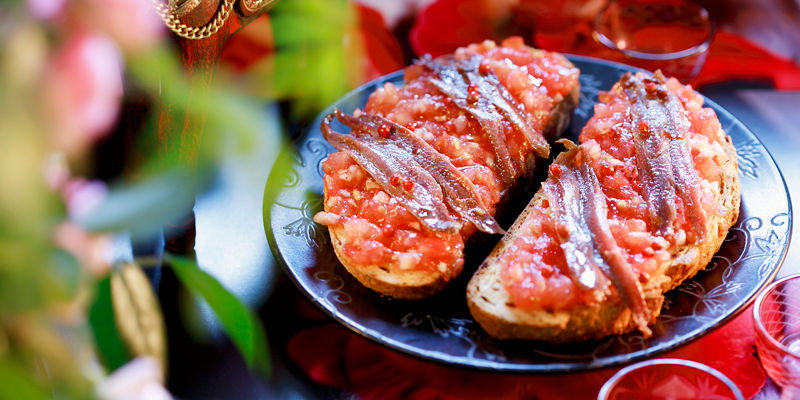
Today, you will encounter a range of different flavors during an afternoon or an evening eating tapas. Plates might include gambas al ajillo (shrimp in garlic and chili-flavored olive oil), patatas bravas (fried potatoes accompanied by a spicy, smoky sauce) or pimientos de Padrón (green peppers). Other popular options include bread rubbed with tomato known as pan con tomate and ham croquettes referred to as croquetas de jamón. Squid, anchovies, small omelettes and a range of sliced meats and cheeses often complete a meal.
Diners might choose to pair their tapas plates with a chilled cerveza (draft beer) or a glass of cava, a sparkling wine from the Catalonia region. A vino tinto (red wine, such as a Rioja or Ribera del Duero) or vino blanco (white wine like Albariño) are other options—or choose sparkling water or a kombucha for a nonalcoholic treat.
A wide variety of bars and restaurants across the city serve tapas, from bodegas (traditional wine bars that are often lively and filled with locals) to tapas bars (sit down spots with broader menus) and marisquerías (seafood tapas restaurants). Some are casual places, others reflect modern approaches to the cuisine and a few even have Michelin stars.
Tapas is a little different to pintxos, the similarly bite-sized dining experience in Spain’s Basque Country. Pintxos are usually one- or two-bite snacks, often held onto a slice of bread with a toothpick (pintxo means “spike”). Diners sometimes pay at the end by how many toothpicks they have left. Pintxos are for individual consumption while tapas are meant to be shared. A good tapas spread offers an exquisite sampling of Catalan flavors and acts as a true expression of the region’s gastronomic history.
Barcelona Highlights
A voyage to Barcelona offers the opportunity to discover captivating art and architecture, uncover fascinating history and sample a range of regional delicacies. Here are some of the highlights you may experience in this remarkable city:
- Discover ancient Roman walls in the Gothic Quarter
- Marvel at the historic Barcelona Cathedral
- Explore Antoni Gaudí’s architectural legacy
- Enjoy an evening of Spanish flamenco dancing
- Sample tapas dishes with a glass of cava sparkling wine
- Stroll along the famed La Rambla boulevard
- Peruse the shops along Passeig de Gràcia
- Find examples of the Catalan modernisme style of architecture
- Take a day trip to Santa Maria de Montserrat Abbey
- View artworks at the Picasso Museum
- See surrealist pieces at the Joan Miró Foundation
Barcelona Travel FAQ
All-Inclusive Itineraries—Barcelona
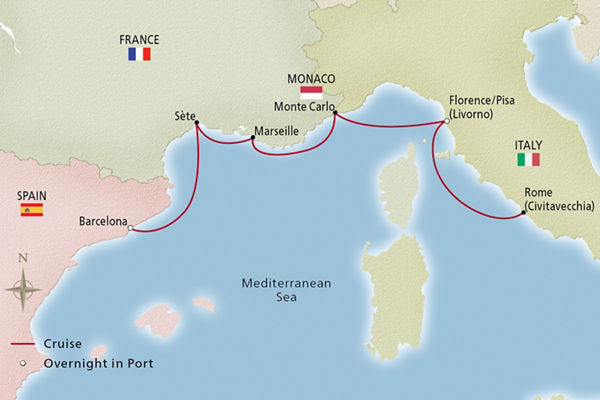
Choose one of our enriching, all-inclusive voyages and discover the many benefits of exploring in Viking comfort.
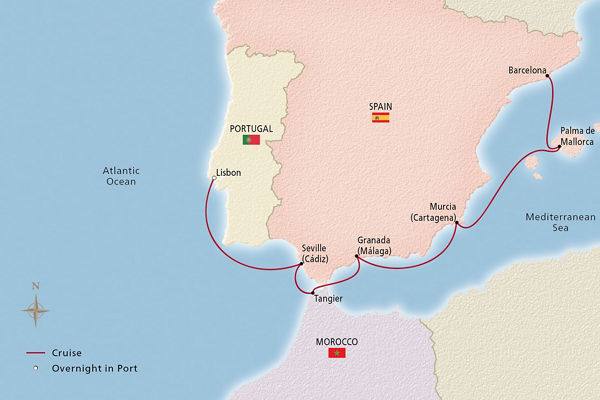
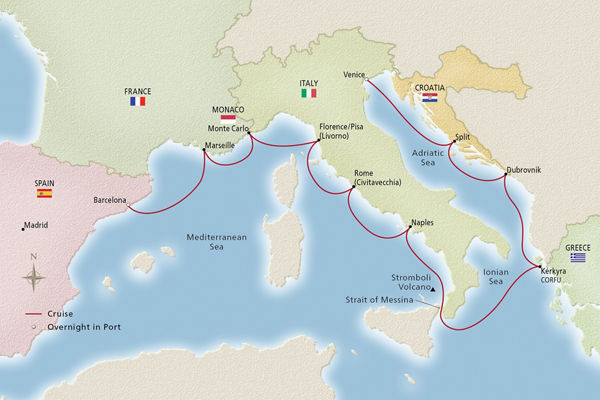
Iconic Western Mediterranean