1. Rivers
  2. Oceans
  3. Expeditions
  1. Complimentary Brochures
Call Viking at 1-800-304-9616 or Contact Your Travel Advisor
Viking Viking Viking
Please fill out this field
Menu
  1. Rivers
  2. Expeditions
Please fill out this field
Use enter or spacebar key to select the link
Use enter or spacebar key to expand or collapse the menu
    • Find A Cruise
    • Destination Map
    • Special Offers
    • New Itineraries
    • Regions

      Europe

      • British Isles & Ireland
      • Mediterranean
      • Scandinavia
      • Other Destinations

      Africa & Middle East

      North America

      • Alaska
      • Canada
      • Mexico
      • United States
      • Other Destinations

      Caribbean & Central America

      South America

      Asia

      Australia & New Zealand

    • Waterways
      • Mediterranean Sea
      • North & Baltic Seas
      • Caribbean Sea
      • Panama Canal
      • Atlantic Ocean
      • Pacific Ocean
      • Indian Ocean
      • Arctic Ocean
    • Seasonal & Combination
      • Italy: Always in Season
      • Quiet Season Mediterranean
      • Northern Lights
      • Panama Canal
      • World Cruises
      • Grand Journeys
      • Ocean Crossings
      • River + Ocean Combinations
    • Other Cruise Types
      • Expeditions
      • Rivers
    • Fleet Overview
    • 360° Ship Tour
    • Ocean Ships
      • Viking Astrea
      • Viking Jupiter
      • Viking Leda
      • Viking Libra
      • Viking Lyra
      • Viking Mars
      • Viking Mira
      • Viking Neptune
      • Viking Orion
      • Viking Saturn
      • Viking Sea
      • Viking Sky
      • Viking Star
      • Viking Vega
      • Viking Vela
      • Viking Venus
      • Viking Vesta
    • The Viking Difference
    • Webinars
    • Did You Know?
    • Cultural Partners
    • Awards
    • My Viking Story
    • Community
    • News
    • Complimentary Brochures
    • One Viking
    • Pre & Post Extensions Overview
    • Shore Excursions Overview
    • My Viking Journey
    • Viking Air
    • Updates on Current Sailings
    • Travel Information
    • Travel Protection Plan
    • Frequently Asked Questions
    • Silver Spirits Beverage Package
    • Why Viking
    • Cruise Itineraries
    • Destination Insights
    • Ships
    • All
Please fill out this field
Speak with a Viking agent to get expert help in building your journey.
Call Now 1-800-304-9616
Gondolas Moored at Sunrise in Venice, Italy

Experience the beauty and culture of Venice

Shaped by water, trade and centuries of cultural exchange, Venice is a city unlike any other. Read on to discover a beloved local culinary tradition, learn about the history of gondolas and delve into the lives of five influential Venetians.
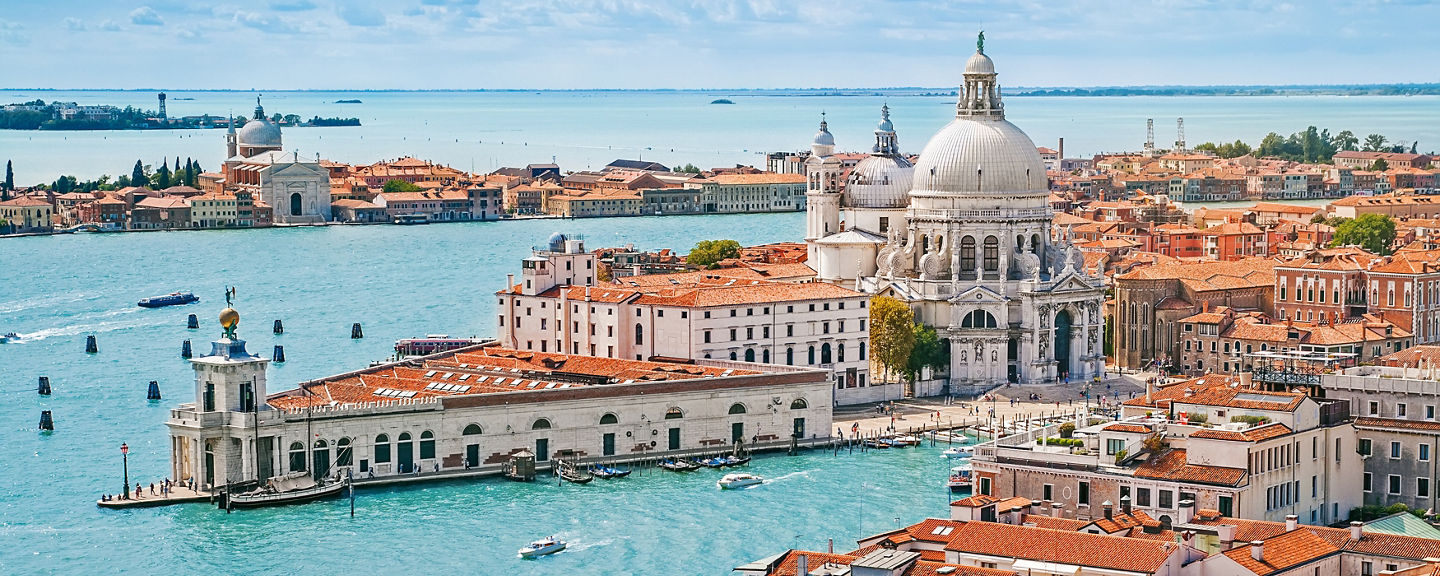
Panoramic view of historic Venice waterfront

Venice

Venice is a singular city, built across a lagoon at the head of the Adriatic Sea in northeastern Italy. Spread over 118 small islands and linked by a network of canals and bridges, it is renowned for its unique urban landscape and maritime heritage. Instead of roads, Venice’s historic center is defined by waterways such as the Grand Canal, which curves through its heart, serving as the main thoroughfare. This distinctive setting helped shape Venice into one of the most prosperous and influential trading powers of the medieval and Renaissance worlds.

At the core of Venice lies a compact historic area divided into six districts, or sestieri: San Marco, Cannaregio, Dorsoduro, San Polo, Santa Croce and Castello. These neighborhoods are woven together by narrow alleyways (calli), charming squares (campi), and hundreds of bridges. The city is a cultural and architectural treasure, with its entire historic center recognized as a UNESCO World Heritage Site.

Venice’s climate is influenced by both the Adriatic Sea and northern Italian weather patterns. Summers are typically warm and can be humid, with average temperatures ranging from roughly 75 °F to 85 °F (24 °C to 29 °C). Winters are cool, with temperatures between 35 °F and 45 °F (2 °C to 7 °C).

The origins of Venice date back to the early Middle Ages, when communities moved to the islands to seek refuge from invasions following the fall of the Western Roman Empire. By the 9th century, Venice had emerged as an independent republic, governed by an elected leader known as the Doge. Officially known as the Most Serene Republic of Venice, but traditionally known as La Serenissima, the Venetian Republic grew into a powerful maritime empire over the following centuries, dominating trade routes between Europe and the East. Venetian merchants brought back spices, silk and other luxury goods, contributing to the city’s immense wealth and cosmopolitan culture.

During the Renaissance of the early 15th century through the late 16th century, Venice became a major center of art, music and printing. Its strategic location and naval strength ensured prosperity, while its political stability allowed culture to flourish. Artists such as Titian (c. 1488/90–1576) and Tintoretto (1518–1594) helped define the city’s artistic legacy. Though Venice’s power gradually declined after new sea routes shifted global trade patterns, it remained an important cultural hub well into the modern era.

In 1797, the Venetian Republic came to an end when Napoleon Bonaparte captured the city, marking the end of more than a thousand years of independence. Venice later fell under Austrian control before becoming part of a unified Italy in 1866. In the centuries since, it has evolved from a mercantile powerhouse into one of the world’s most iconic cultural destinations, celebrated for its history, art and architectural beauty.

Today, layers of Byzantine, Gothic and Renaissance influence can be seen throughout the city where ornate palaces rise directly from the water and centuries-old churches house some of Europe’s greatest artistic masterpieces. Below are some of the key landmarks and cultural destinations you can experience during your visit:

  • St. Mark’s Basilica (Basilica di San Marco)—Originally constructed in the 9th century, then rebuilt in 1071 following a popular uprising, St. Mark’s Basilica is one of Venice’s most famous landmarks. Its design reflects strong Byzantine influences, with domes, intricate mosaics and richly decorated interiors. Located on the vast St. Mark’s Square (Piazza San Marco), it symbolizes both the city’s religious heritage and its historic ties to the Eastern Roman Empire.
  • Doge’s Palace (Palazzo Ducale)—Adjacent to St. Mark’s Basilica, the Doge’s Palace served as the political heart of the Venetian Republic. This Gothic masterpiece functioned as the residence of the Doge as well as the seat of government and courts. Today, it is a museum showcasing grand halls, historic chambers and remarkable works of art. The Bridge of Sighs, which once connected the palace to the state prisons, spans a narrow canal on the east side.
  • Grand Canal (Canal Grande)—The Grand Canal is Venice’s main waterway, lined with magnificent palaces that date primarily from the 13th to 18th centuries. Traveling along it—by vaporetto (water bus) or gondola—offers one of the most memorable ways to experience the city’s architecture and atmosphere.
  • Rialto Bridge (Ponte di Rialto)—Designed by Antonio da Ponte (c. 1590), the Rialto Bridge is the oldest and most iconic bridge spanning the Grand Canal. Lined with shops, this engineering marvel has been a center of commerce for centuries. Nearby, the Rialto Market continues the tradition, offering fresh fish, produce and a lively glimpse into daily Venetian life.
  • Gallerie dell’Accademia—This renowned museum houses an exceptional collection of Venetian paintings from the 14th to 18th centuries, including masterpieces by Titian, Veronese and Tintoretto. It is an essential destination for understanding the development of Venetian art.
  • Peggy Guggenheim Collection—Located in the Dorsoduro district, this modern art museum is housed in an unfinished 18th-century palace along the Grand Canal. Its collection includes works by Pablo Picasso, Jackson Pollock, Salvador Dalí, offering a striking contrast to the city’s classical heritage.
  • Scuola Grande di San Rocco—This historic confraternity building is famed for its extraordinary pictorial cycle of 16th-century paintings by Tintoretto, often referred to as the pinnacle of his achievements. The richly decorated halls provide a vivid and immersive artistic experience.
  • Teatro La Fenice—Founded in 1792, La Fenice is one of Italy’s most prestigious opera houses. It has hosted premieres of works by renowned composers such as Verdi and Rossini. Rebuilt after two fires—in 1836 and 1996—it remains a symbol of Venice’s enduring cultural vitality.
  • Murano and Burano Islands—Just beyond the main city, these lagoon islands offer unique perspectives on Venetian life and craftsmanship. Murano is famous for its centuries-old glassmaking tradition, while Burano is known for its brightly colored houses and lacemaking heritage.
St Mark’s Basilica at sunrise in Venice
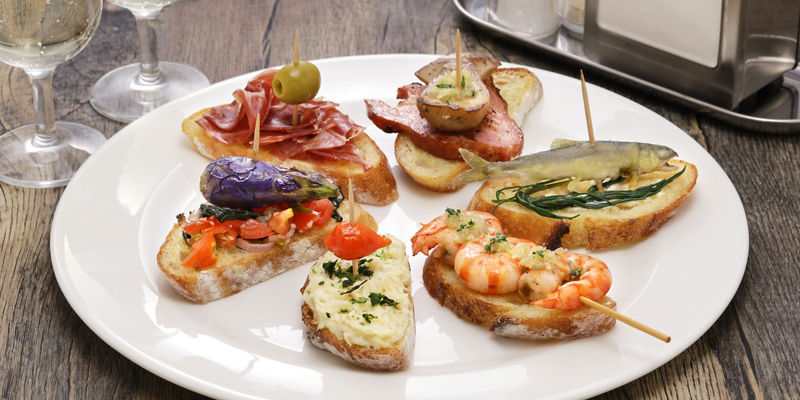
  • Assorted Spanish tapas with white wine

    Cicchetti

    Cicchetti are a beloved part of Venetian culinary tradition, consisting of small, savory bites served in informal wine bars known as bacari. Displayed along the counter, these bite-sized dishes are enjoyed standing or perched at a small table. They may include slices of crusty bread topped with creamy cod (baccalà mantecato), marinated seafood, cured meats or seasonal vegetables.

    This style of dining has deep roots in Venice’s social and maritime history. As a bustling trading hub, the city fostered a culture of quick, flavorful meals that could be enjoyed between business dealings or while moving from one canal-side stop to another. Over time, cicchetti evolved into a culinary ritual, paired with a small glass of local wine—called an ombra, or “shade.” The name originated from merchants who followed the shifting shadows in St. Mark’s Square to keep their wine cool.

    Unlike a formal meal, enjoying cicchetti is meant to be a relaxed and sociable experience. Venetians often visit several bacari in succession, sampling different specialties at each stop. This practice, sometimes referred to as a bacaro crawl, allows diners to experience a wide range of flavors while immersing themselves in the rhythms of everyday life.

    Today, cicchetti remain an essential part of Venice’s identity, blending tradition with creativity. While classic offerings endure, many establishments introduce modern interpretations alongside time-honored recipes. Whether simple or refined, cicchetti capture the spirit of Venetian cuisine—fresh, convivial and deeply connected to the city’s rich cultural heritage.

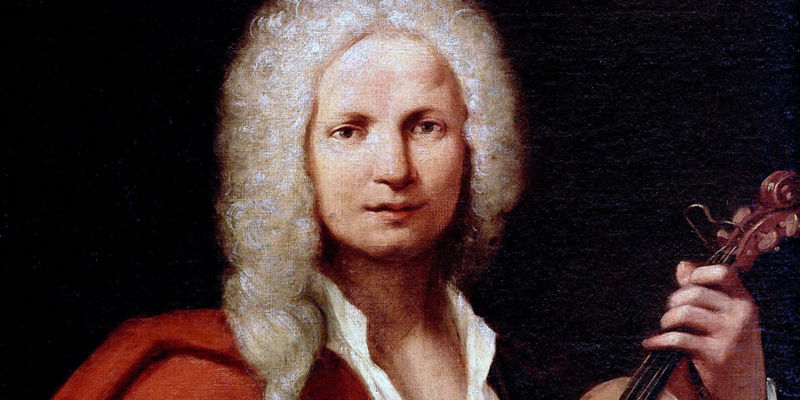
  • Baroque musician holding violin in portrait

    5 Venetian historical figures

    Venice has long been a city of extraordinary influence, producing figures who shaped exploration, art, music and culture. The following five individuals span centuries of Venetian history, each leaving a lasting mark on both the city and the wider world.

    • Marco Polo (1254–1324)
      Marco Polo was one of history’s most famous explorers and among the earliest Europeans to travel extensively across Asia. Born into a Venetian merchant family, he journeyed along the Silk Road to the court of Kublai Khan in China, where he spent many years in service. His accounts, compiled in Il Milione (The Travels of Marco Polo), introduced Europeans to distant cultures, economies and landscapes with unprecedented detail. His stories helped inspire future explorers and cemented Venice’s reputation as a gateway between East and West.
    • Titian (c. 1488/90–1576)
      Titian was the leading painter of the Venetian Renaissance and is often celebrated as one of the most influential artists in Western art history. Known for his masterful use of color and expressive brushwork, he redefined portraiture and religious painting. His works—such as Assumption of the Virgin (1515-1518) and Venus of Urbino (c. 1532-1538)—demonstrate a remarkable ability to convey emotion, movement and richness of texture.
    • Tintoretto (1518–1594)
      A generation after Titian, the Mannerist painter Tintoretto brought a dramatic new energy to Venetian painting. Renowned for his bold compositions, dynamic perspectives and dramatic use of light and shadow, he sought to combine Michelangelo’s sculptural forms with Titian’s color. His vast body of work includes masterpieces in the Scuola Grande di San Rocco and the Doge’s Palace. Tintoretto’s innovative style helped pave the way for the Baroque period and solidified Venice’s artistic legacy.
    • Antonio Vivaldi (1678–1741)
      Antonio Vivaldi, a Baroque composer and virtuoso violinist, is one of Venice’s most celebrated musical figures. Known as Il Prete Rosso (the Red Priest) due to his distinctive hair color and clerical training, he composed hundreds of works, including concertos, operas and sacred music. His most famous composition, The Four Seasons, vividly captures the moods of nature through music and remains one of the most recognizable pieces of classical repertoire. Vivaldi spent much of his career teaching and composing at the Ospedale della Pietà, a Venetian institution for orphaned girls.
    • Giacomo Casanova (1725–1798)
      Giacomo Casanova is remembered as one of history’s most intriguing and charismatic personalities. Born in Venice, he led a life marked by adventure, intellect and notoriety. Although best known for his romantic exploits, Casanova was also a writer, diplomat and keen observer of 18th-century society. His memoir, Histoire de ma vie (The Story of My Life), provides a vivid and detailed portrait of Venetian life and European culture during his era, making him an enduring symbol of Venice’s cosmopolitan spirit.
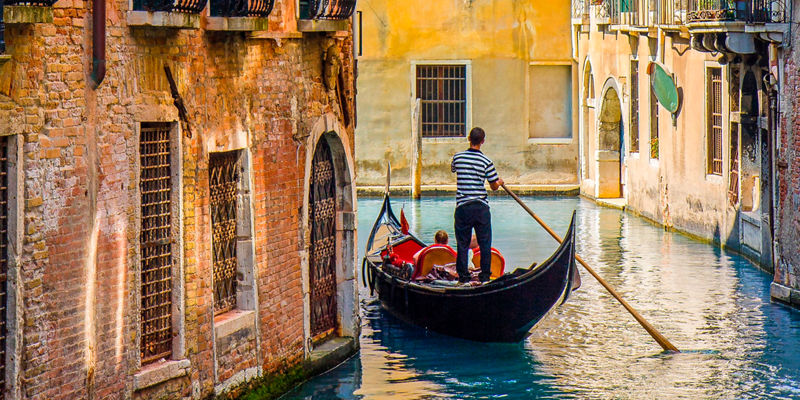
  • Gondola ride through Venice canal scenery

    Gondolas

    Gliding silently along Venice’s canals, gondolas are among one of the city’s most iconic symbols, closely tied to its history, craftsmanship and way of life. Sleek and asymmetrical, these traditional boats have been used for centuries to navigate the narrow waterways that define Venice. While gondolas once served as everyday transportation for residents, today they are more commonly associated with leisurely journeys, offering a unique perspective on the city’s architecture and atmosphere.

    The design of the gondola has evolved into a highly specialized form. Built primarily from wood and carefully balanced to offset the gondolier’s weight, it features a distinctive curved prow adorned with a metal ornament called the ferro. This element is both decorative and symbolic, representing the Doge’s cap perched atop six horizontal lines that reference Venice’s historic districts. Painted uniformly black—a regulation introduced in the 16th century to curb displays of wealth—the gondola’s elegant simplicity reflects a long tradition of craftsmanship passed down through generations of skilled boatbuilders.

    Gondoliers themselves are an essential part of this tradition. Easily recognized by their striped shirts and straw hats, they are highly trained professionals who must master not only the technical skill of rowing while standing, but also an extensive knowledge of Venice’s canals, history and culture. To earn a license, candidates undergo rigorous training and examinations, ensuring that the profession maintains its high standards. Many gondoliers come from families with long histories in the trade, preserving a deep connection to the city’s maritime heritage.

    Rowing with a single oar, the gondolier propels the boat using a distinctive technique that combines strength, balance and precision. This method allows for smooth navigation through narrow passages and beneath low bridges, often with remarkable grace and control.
Venice Highlights

Aside from its iconic canals, Venice is known for its labyrinthine streets, grand architecture and rich cultural traditions. Here are some highlights you may experience during your time in this enchanting city:

  • Embark on a picturesque gondola ride through charming canals
  • Explore legendary St. Mark’s Square, the city’s largest piazza
  • Attend an exclusive opera performance at the lavish Palazzo Zeno
  • Take a Privileged Access tour of the grand Palazzo Nani Bernardo
  • Enjoy a scenic boat ride on the Venice Lagoon
  • Discover the city’s hidden gems on foot with a local guide
  • See the Doge’s Palace, a masterpiece of Gothic architecture
  • Watch master glassmakers at work on the island of Murano
  • Sample local culinary delights at the Rialto Market
  • Learn about traditional lacemaking on the island of Burano

Venice Travel FAQ

With its Mediterranean climate, charming canals and impressive artistic heritage, Venice is a rewarding destination year-round. The “quiet season”—spanning from autumn to spring—offers comfortable temperatures and fewer crowds. Summer (July and August) brings warmer weather and long daylight hours, perfect for lingering in piazzas, taking gondola rides and enjoying the lagoon at its liveliest.

Gliding through the city’s narrow canals on a gondola is a quintessential Venetian experience. As the gondolier navigates the quiet backwaters, you can gain a different perspective on the city’s architecture. You may also wish to visit a squero, a traditional boatyard, to see how these iconic wooden vessels are carefully handcrafted and maintained.

To delve into Venetian artisanal traditions, you may wish to visit the island of Murano, where centuries-old glassblowing techniques come to life. Inside a private foundry, master artisans skillfully transform molten glass into delicate works of art. You can also explore the Glass Museum (Museo del Vetro) to trace the evolution of this remarkable craft.

In nearby Burano, wander among the island’s brightly painted houses and discover the delicate tradition of lacemaking, watching skilled artisans at work in studios or at the Lace Museum (Museo del Merletto).

Venice also celebrates creativity through the famed Carnival, held in the weeks leading up to Lent, usually in February or early March. During this time, the city transforms into a stage of elaborate costumes and ornate masks. Step inside a mascherero’s workshop to observe the crafting of traditional papier-mâché masks—an art form that has defined Venetian culture for centuries.

Yes. The entire city—comprising 118 islands and the Venice Lagoon—was designated a UNESCO World Heritage Site in 1987. Venice is a masterpiece of architecture and engineering, and its elegant streets and monuments have inspired some of the world’s greatest artists, including the Renaissance master Titian (c. 1490–1576) and the landscape painter Canaletto (1697–1768).

San Marco is the historic and symbolic heart of Venice. Centered around the iconic Piazza San Marco, this district is home to some of the city’s most celebrated landmarks, including St. Mark’s Basilica and the Doge’s Palace. Its grand architecture, elegant arcades and proximity to the Grand Canal make it one of the most impressive areas to explore on foot.

Cannaregio, located in the northern part of the city, offers a more relaxed and authentic atmosphere. Known for its quiet canals, neighborhood restaurants and local character, it is also home to the Venetian Ghetto, a historic area where the Venetian Republic required Jews to live between 1516 and 1797. Today, it is home to the Jewish Museum of Venice and several active synagogues.

Dorsoduro is a lively and artistic district situated along the southern edge of Venice. It is known for its cultural landmarks, including the Gallerie dell’Accademia and the Peggy Guggenheim Collection. With its waterfront promenades, charming squares and large student population, Dorsoduro is dynamic and inviting.

San Polo, one of Venice’s smallest districts, is rich in history and local color. It is home to the famous Rialto Market, where Venetians have shopped for fresh produce and seafood for centuries. Its narrow streets and traditional shops offer an authentic Venetian experience, while its central location makes it an easy addition to any walking itinerary.

Castello, Venice’s largest district, stretches east from San Marco and offers a quieter, more residential feel. This area is ideal for leisurely exploration, with peaceful canals, hidden churches and local cafés. It is also home to the Arsenale, the historic shipyard that once powered Venice’s maritime empire.

Cicchetti are among Venice’s most beloved culinary traditions. These small, savory snacks—similar to Spanish tapas—are typically enjoyed standing at a bar, known locally as a bacaro, making them a perfect option for casual, social dining.

Sarde in saor
is a classic Venetian dish that reflects the city’s maritime heritage. It features sardines prepared in a sweet-and-sour style with onions, vinegar, pine nuts and raisins. Originally created as a preservation method for fishermen at sea, it remains a flavorful staple that blends savory and subtly sweet notes.

Risotto al nero di seppia
is one of Venice’s most distinctive dishes. This rich, creamy risotto is infused with cuttlefish ink, giving it a striking black color and a deep, briny flavor. Fegato alla Venezia is another local favorite. This dish of sautéed calf liver and onions is often served with polenta.

Venice is also known for its iconic drinks. The spritz Veneziano is the quintessential local aperitif, made with prosecco, a splash of soda water and bitters such as Aperol. Light, refreshing, and slightly bitter, it is a staple of early evening gatherings. The Bellini, another world-famous Venetian cocktail, was created at the legendary Harry’s Bar. It combines prosecco with white peach purée, resulting in a delicate, fruity drink that is both elegant and refreshing.

For those seeking immersive food experiences, a visit to the Rialto Market offers a glimpse into Venice’s culinary traditions. This historic market has been the city’s primary hub for fresh fish and produce for centuries and remains a vital part of local life.

All-Inclusive Itineraries—Venice

Choose one of our enriching, all-inclusive voyages and discover the many benefits of exploring in Viking comfort.
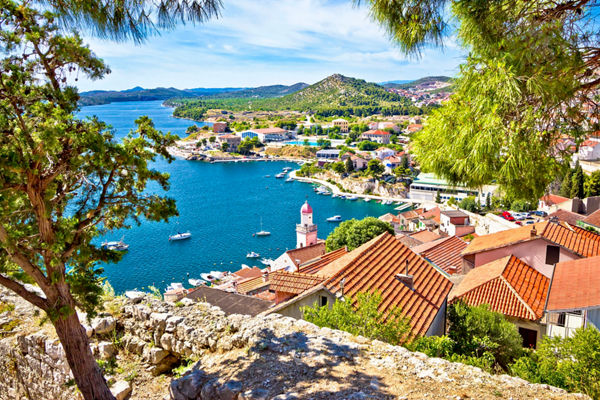
Scenic coastal town with red rooftops
Hide map Show map

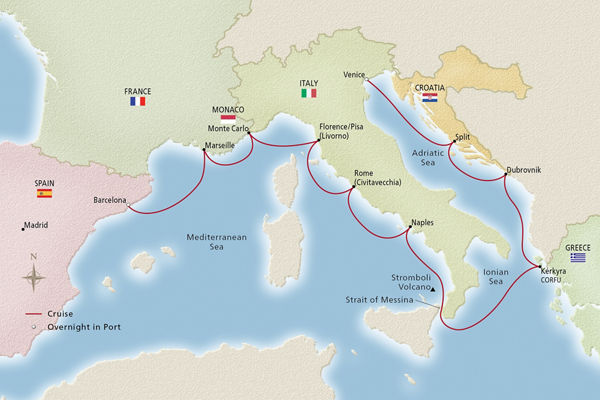
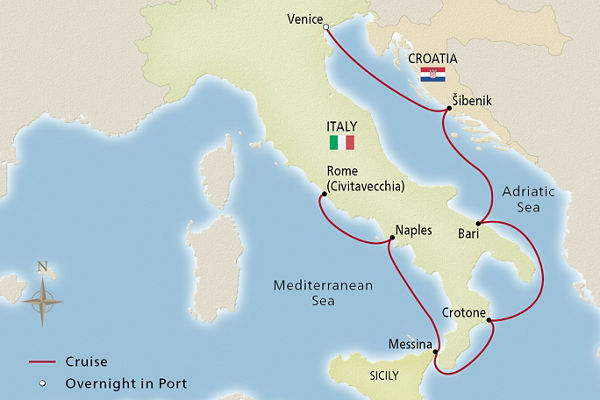
Italian Sojourn

Rome (Civitavecchia) to Venice (Chioggia)
Reduced Airfare | Special Fares | $25 Deposit

8 days
2 countries
$2,999 from
  • Learn More
  • Request a Quote
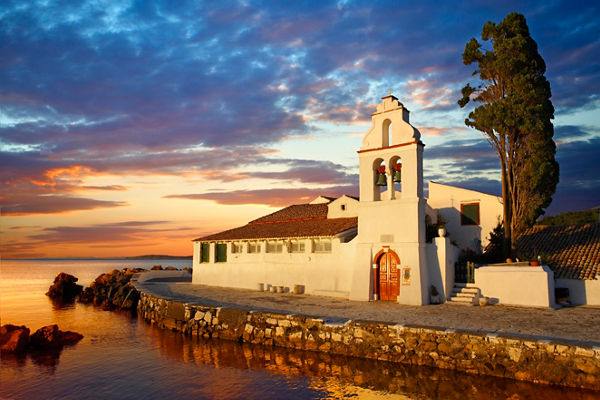
Sunset View of Coastal Bell Tower
Hide map Show map

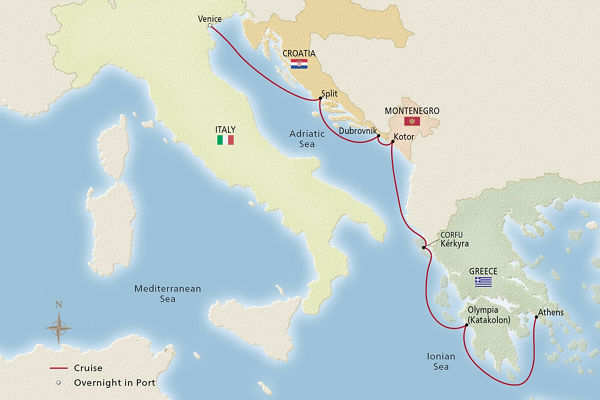
Venice, the Adriatic & Greece

Venice (Chioggia) to Athens (Piraeus)
Reduced Airfare | Special Fares | $25 Deposit

8 days
4 countries
$3,399 from
  • Learn More
  • Request a Quote
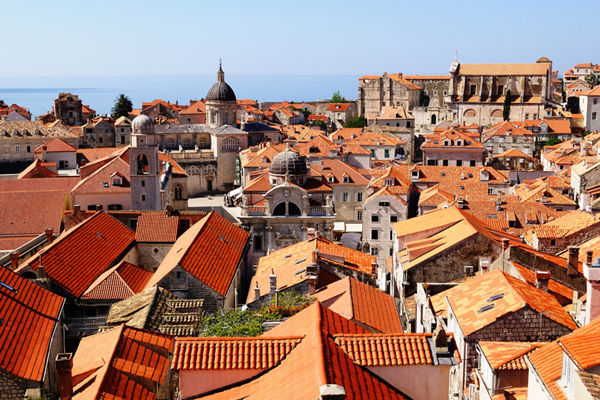
Historic rooftops of Dubrovnik, Croatia
Hide map Show map

Mediterranean Odyssey

Barcelona to Venice (Chioggia)
Reduced Airfare | Special Fares | $25 Deposit

13 days
6 countries
$5,299 from
  • Learn More
  • Request a Quote
Santorini village at sunset with glowing lights
Hide map Show map

Empires of the Mediterranean

Venice (Chioggia) to Athens (Piraeus)
Reduced Airfare | Special Fares | $25 Deposit

10 days
5 countries
$3,999 from
  • Learn More
  • Request a Quote
View Cruises

Sign up to receive updates from Viking

Stay current with special offers, news and destination-focused content.

SIGN UP
Call Viking at
Call Viking at 1-800-304-9616
1-800-304-9616
TAP TO CALL
Viking Cruises Viking

Footnote

Ocean Cruising - Up to 35% off cruise price based on select departures and categories of Iberian Explorer; Iconic Western Mediterranean; Italian Sojourn; Mediterranean Antiquities; Trade Routes of the Middle Ages; Venice, the Adriatic & Greece.

River Cruising - Up to 35% off cruise price based on select departures and categories of Lyon & Provence, Paris & the Heart of Normandy, Holland & Belgium and other itineraries, dates and categories may vary.

Expedition Cruising - Up to 15% off cruise price based on select departures and categories of Antarctic Explorer and Panama Canal & the Americas.
  • Company Information

    • Contact Us
    • Speak with a Viking Agent
    • Order a Brochure
    • Special Offers
    • Sweepstakes
    • Travel Advisors
    • FAQ
    • Media Center
    • About Us
    • Investor Relations
    • Careers
    • Site Map
    • Legal
    • Terms of Use
    • Privacy Policy
    • Cookie Policy
  • Viking River Cruises

    • Europe
    • Asia
    • Egypt
    • Mississippi
  • Viking Ocean Cruises

    • Scandinavia
    • British Isles & Ireland
    • North America
    • Caribbean & Central America
    • South America
    • Mediterranean
    • Quiet Season Mediterranean
    • Asia
    • Australia & New Zealand
    • World Cruises
    • Grand Journeys
  • Viking Expeditions

    • Antarctica
    • The Arctic
    • Great Lakes
    • North America
    • South America
    • Grand Journeys
    • Longitudinal World Cruises

© Viking Cruises, 2026. All Rights Reserved.

Footnote

Ocean Cruising - Up to 35% off cruise price based on select departures and categories of Iberian Explorer; Iconic Western Mediterranean; Italian Sojourn; Mediterranean Antiquities; Trade Routes of the Middle Ages; Venice, the Adriatic & Greece.

River Cruising - Up to 35% off cruise price based on select departures and categories of Lyon & Provence, Paris & the Heart of Normandy, Holland & Belgium and other itineraries, dates and categories may vary.

Expedition Cruising - Up to 15% off cruise price based on select departures and categories of Antarctic Explorer and Panama Canal & the Americas.

Company Information

  • Contact Us
  • Speak with a Viking Agent
  • Order a Brochure
  • Special Offers
  • Sweepstakes
  • Travel Advisors
  • FAQ
  • Media Center
  • About Us
  • Investor Relations
  • Careers
  • Site Map
  • Legal
  • Terms of Use
  • Privacy Policy
  • Cookie Policy

Viking River Cruises

  • Europe
  • Asia
  • Egypt
  • Mississippi

Viking Ocean Cruises

  • Scandinavia
  • British Isles & Ireland
  • North America
  • Caribbean & Central America
  • South America
  • Mediterranean
  • Quiet Season Mediterranean
  • Asia
  • Australia & New Zealand
  • World Cruises
  • Grand Journeys

Viking Expeditions

  • Antarctica
  • The Arctic
  • Great Lakes
  • North America
  • South America
  • Grand Journeys
  • Longitudinal World Cruises

Call Viking at Call Viking at 1-800-304-9616 1-800-304-9616 Viking Cruises Viking
© Viking Cruises, 2026. All Rights Reserved.

2026-2029 OCEAN CRUISE AND AIR FARES: Offer applies to bookings made from November 1-30, 2026. Terms & conditions for select promotions may vary. $25 deposit is applicable to all itineraries except World Cruise products. All prices are in US dollars and for US residents only. Additional restrictions may apply.

Airfares may vary on other gateways & departures. Airfare does not have to be purchased to get cruise\cruisetour offer. All prices are in US dollars and for US residents only. Additional restrictions may apply.

2026: Pay in full by November 30, 2026 or 120 days prior to departure (whichever comes first).
2027: Pay in full by December 17, 2026 or 120 days prior to departure (whichever comes first). 
2028: Pay in full by June 10, 2027.
2029: Pay in full by February 17, 2028.

Offer may be withdrawn at any time without prior notice. Offers Expires November 30, 2026.

$25 DEPOSIT: For itineraries 35 days or less, a $25 deposit applies to April 2027 & onward departures; for itineraries greater than 35 days, a $25 deposit applies to June 2027 & onward departures; World Cruise products excluded; call for details.

AIR UPGRADE: Upgrade to Premium Economy or Business at additional cost based on select gateways and dates. Additional airline-imposed baggage charges may apply; for more information visit Airline Luggage Restrictions. Air prices are per person based on cruise/cruisetour check-in date and include transfers plus all government taxes/fees of approximately $160 and air fuel surcharges. Air seats are limited; airfares are subject to change and are not guaranteed until full payment of air is received. For more information about customized air services and US gateways, visit the Viking Air Plus page.

GENERAL RESTRICTIONS: Cruise fares listed are cruise only in U.S. dollars, per person, based on double occupancy. Single supplement savings are off applicable rates. Cruise fares listed are valid for U.S. residents only. All fares and offers are for new bookings only and are subject to availability, may not combinable with other offers except Viking Explorer Society Travel Credits, are capacity-controlled and may be withdrawn at any time without prior notice. Special fares are based upon published full brochure fares; cruise fares do not include pre-paid charges, optional facilities, and personal charges, as defined in the terms and conditions of the Passenger Ticket Contract which may be viewed elsewhere on this website. Full brochure fares may not have resulted in actual sales in all stateroom categories and may not have been in effect during the last 90 days. Promotional fares may remain in effect after the expiration date. Air promotion applies to roundtrip flights only from select Viking Cruises U.S. gateways and includes airport-to-ship or hotel transfers, air taxes and air fuel surcharges. Roundtrip airport transfers are included when air is purchased with a cruise or cruisetour package; if air is not purchased from Viking, transfers may be purchased separately. All transfers must be in conjunction with a Viking-purchased cruise, cruisetour, land extension or extra hotel nights. Viking reserves the right to correct errors or omissions and to change any and all fares at any time. For up-to-date prices, please call Viking or your Travel Agent. Additional terms and conditions may apply. Complete terms and conditions may be found in the Passenger Ticket Contract.

NOTE: International flights depart the U.S. one day prior to check-in date. Paid Business or Premium Economy Class may require travel in economy on flights within North America or Europe. Premium economy is limited to specific airlines and we may not be able to accommodate based on aircraft type and availability. Roundtrip airport transfers are included when air is purchased with a cruise or cruisetour package; if air is not purchased from Viking, transfers may be purchased separately. All transfers must be in conjunction with a Viking-purchased cruise, cruisetour, land extension or extra hotel nights.