
1. Rivers
  2. Oceans
  3. Expeditions
  1. Complimentary Brochures
Call Viking at 1-800-304-9616 or Contact Your Travel Advisor
Viking Viking Viking
Please fill out this field
Menu
  1. Rivers
  2. Expeditions
Please fill out this field
Use enter or spacebar key to select the link
Use enter or spacebar key to expand or collapse the menu
    • Find A Cruise
    • Special Offers
    • New Itineraries
    • Regions

      Europe

      • British Isles & Ireland
      • Mediterranean
      • Scandinavia
      • Other Destinations

      Africa & Middle East

      North America

      • Alaska
      • Canada
      • Hawaii
      • Mexico
      • United States
      • Other Destinations

      Caribbean & Central America

      South America

      Asia

      Australia & New Zealand

    • Waterways
      • Mediterranean Sea
      • North & Baltic Seas
      • Caribbean Sea
      • Panama Canal
      • Atlantic Ocean
      • Pacific Ocean
      • Indian Ocean
      • Arctic Ocean
    • Seasonal & Combination
      • Italy: Always in Season
      • Quiet Season Mediterranean
      • Northern Lights
      • Panama Canal
      • World Cruises
      • Grand Journeys
      • Ocean Crossings
      • River + Ocean Combinations
    • Other Cruise Types
      • Expeditions
      • Rivers
    • Fleet Overview
    • 360° Ship Tour
    • Ocean Ships
      • Viking Astrea
      • Viking Jupiter
      • Viking Leda
      • Viking Libra
      • Viking Lyra
      • Viking Mars
      • Viking Mira
      • Viking Neptune
      • Viking Orion
      • Viking Saturn
      • Viking Sea
      • Viking Sky
      • Viking Star
      • Viking Vega
      • Viking Vela
      • Viking Venus
      • Viking Vesta
    • The Viking Difference
    • Webinars
    • Did You Know?
    • Cultural Partners
    • Awards
    • My Viking Story
    • Community
    • News
    • Complimentary Brochures
    • One Viking
    • Pre & Post Extensions Overview
    • Shore Excursions Overview
    • My Viking Journey
    • Viking Air
    • Updates on Current Sailings
    • Travel Information
    • Travel Protection Plan
    • Frequently Asked Questions
    • Silver Spirits Beverage Package
    • Why Viking
    • Cruise Itineraries
    • Destination Insights
    • Ships
    • All
Please fill out this field
Speak with a Viking agent to get expert help in building your journey.
Call Now 1-800-304-9616
Ancient Roman Forum with Ruins and Columns

Experience the history and culture of Rome

Rome’s enduring legacy lies not only in its monuments but in the way its past remains interwoven with daily life. With ancient stone streets and bustling piazzas, the city offers a continuous dialogue between history and the present. Read on to learn more about one of Rome’s signature pastas, enhance your knowledge of art throughout the city and delve into the lives of some of the most captivating leaders of the Roman Empire.
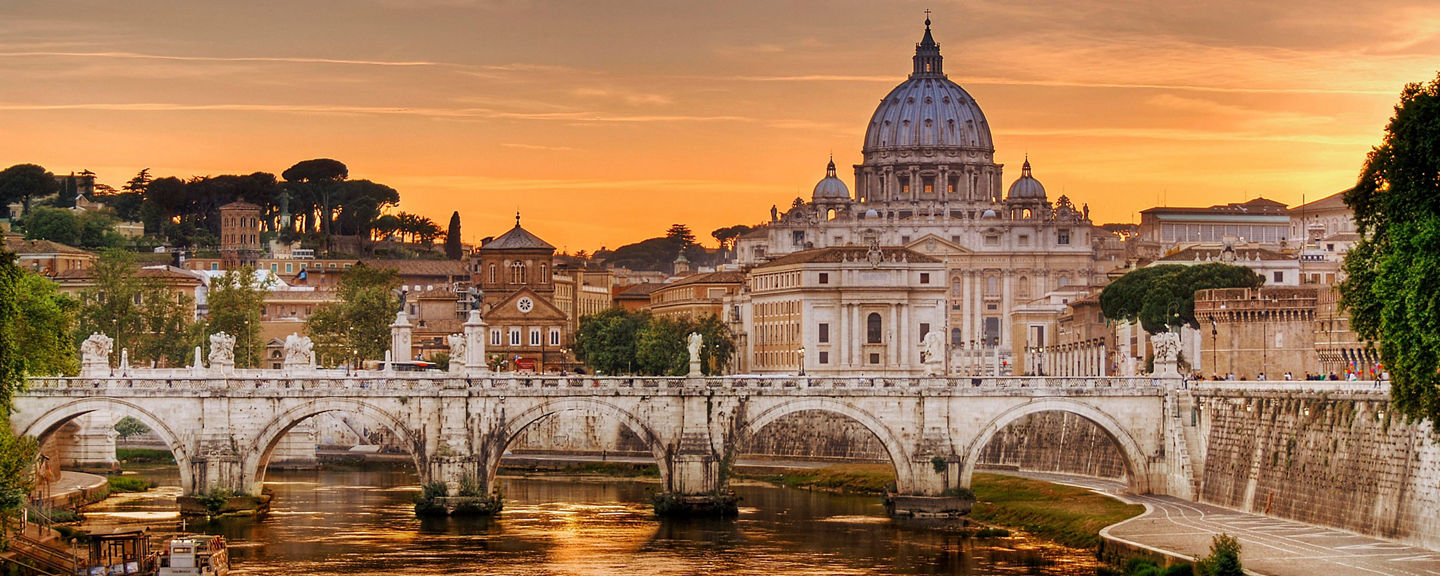
St. Peter's Basilica at Sunset, Rome

Rome (Civitavecchia)

Rome, often referred to as the “Eternal City,” is situated in central Italy along the banks of the Tiber River, roughly 15 mi (24 km) inland from the Tyrrhenian Sea. As the capital of Italy and the Lazio region, Rome occupies a strategic location within the Mediterranean world. For more than two millennia, its position, institutions and culture have made it one of the most influential cities in Western history.

The historic center was built upon a series of hills that rise above the Tiber—the renowned Seven Hills of Rome. Over time, Rome expanded outward through successive layers of development, integrating medieval quarters, Renaissance palaces and modern neighborhoods. Vatican City, an independent city-state, is enclosed entirely within Rome’s urban fabric.

Rome has a Mediterranean climate characterized by hot, dry summers and mild winters. Summer temperatures sometimes reach above 75 °F (24 °C), but afternoons are frequently cooled by a westerly wind rising from the Tyrrhenian Sea. Winters are generally cool with average highs in the low- to mid-50s °F (12–14 °C). Snowfall is rare, and spring and autumn are the rainiest seasons. The city enjoys abundant sunshine throughout much of the year.

Ancient Romans dated the founding of their city to 753 BC, but archaeological evidence reveals that the city’s political unification may have occurred in the early 6th century BC. Rome grew from a small kingdom into a powerful republic and, eventually, the capital of the Roman Empire. At its height, the empire controlled vast territories across Europe, North Africa and the Middle East, making Rome a major political, legal and cultural center of the ancient world.

After the decline of the Western Roman Empire in the 5th century AD, Rome’s political influence diminished but its spiritual importance increased. Rome had long been accorded a place of honor within the Catholic Church because of its claim to house the graves of Saint Peter and Saint Paul, and the city took center stage as the seat of the papacy. Throughout the Middle Ages, Rome became a focal point of Christian pilgrimage.

During the Renaissance of the 15th and early 16th centuries, Rome experienced a cultural revival. Popes and noble families commissioned artists, architects and scholars whose work reshaped the city, such as Michelangelo and Raphael.

In 1870, Rome was incorporated into the newly unified Kingdom of Italy, and in 1871 it was declared the nation’s capital. Ancient, medieval, Renaissance and modern layers coexist throughout the city, creating an urban landscape where classical ruins appear beside lively streets. Below are some of the key landmarks and cultural destinations you can experience during your time in Rome:

  • The Colosseum—Completed in 80 AD under Emperor Titus, the Colosseum is the largest amphitheater ever built in the Roman world. It was used for gladiatorial contests, public spectacles and imperial displays of power. Today, it stands as one of the most recognizable symbols of ancient Rome.
  • The Pantheon—Renowned for its massive concrete dome and central oculus, this magnificent building was begun in 27 BC by the statesman Marcus Vipsanius Agrippa and rebuilt during the reign of Emperor Hadrian in the 2nd century AD. Remarkably well preserved, it was converted into a Christian church during the 7th century and remains in active use today.
  • The Roman Forum—Located between the Palatine and Capitoline hills, the Roman Forum was the political, religious and commercial heart of ancient Rome. Its ruins include temples, basilicas, triumphal arches and public meeting spaces that once hosted the affairs of a powerful empire.
  • Trevi Fountain—Completed in 1762, the Trevi Fountain is the largest Baroque fountain in Rome. Tradition holds that tossing a coin into the fountain ensures a return visit to the city. Its dramatic sculptural composition makes it one of Rome’s most beloved landmarks.
  • Spanish Steps—The Spanish Steps form a grand, 135-step staircase linking Piazza di Spagna to the historic Trinità dei Monti church. Renowned for their elegant Baroque design, the steps feature sweeping curves, changing perspectives and wide terraces that invite lingering views over the city.
  • Capitoline Museums—The Capitoline Museums house an extensive collection of ancient Roman sculpture, inscriptions and art. One of their most famous pieces is a bronze sculpture of a she-wolf suckling Romulus and Remus, the legendary founders of Rome.
  • Borghese Gallery—Housed within the 17th-century Villa Borghese, this renowned art museum was created to display the remarkable collection assembled by Pope Paul V and his nephew, Cardinal Scipione Borghese, who was a passionate patron of the arts and early supporter of the renowned sculptor Gian Lorenzo Bernini. The museum is celebrated for its exceptional concentration of masterpieces, including paintings by Caravaggio, Raphael and Titian.
  • Vatican City & the Vatican Museums—Vatican City is the smallest independent state in the world and the spiritual center of the Roman Catholic Church. St. Peter’s Basilica, built over the traditional burial site of the Apostle Peter, is one of the largest and most important churches in Christianity, and the Vatican Museums house one of the world’s greatest art collections, amassed over centuries by the papacy.
Historic Colosseum under clear blue sky
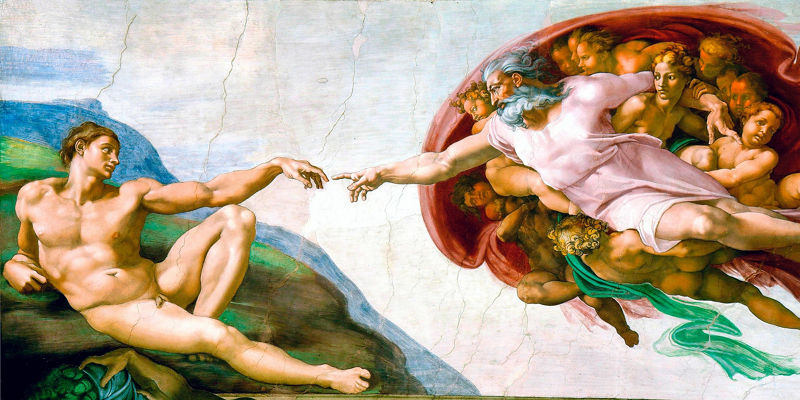
  • Michelangelo's Creation of Adam fresco artwork

    Art in Rome

    Rome is often called the “Eternal City,” but it could just as easily be described as an open-air gallery where art is woven into everyday life. While the Vatican Museums hold some of the most famous masterpieces, the broader city reflects an even richer continuity of artistic achievement, from the Renaissance to the Baroque.

    One of the most influential figures in Rome’s artistic landscape is Michelangelo (1475–1564), whose impact extends far beyond his famous Sistine Chapel frescoes in the Vatican. His presence is felt in projects like the design of the Capitoline Hill, where he reshaped a central civic space into a harmonious Renaissance piazza. He also designed the Basilica of Santa Maria degli Angeli e dei Martiri, a magnificent church built on the ancient site of the Baths of Diocletian. Michelangelo’s works demonstrate a powerful blend of classical inspiration and Renaissance emotional intensity.

    Another defining figure of Rome’s artistic heritage is Raphael (1483–1520), whose refined style symbolizes the harmony of the High Renaissance. Although best known for the "Raphael Rooms” in the Vatican—a suite of four reception rooms painted for Pope Julius II—Raphael’s impact extends across Rome through his architectural designs and commissions for private patrons. Some of his most stunning frescoes can be seen at Villa Farnesina, which were commissioned by the prominent banker Agostino Chigi. Raphael died on his 37th birthday and was buried with honor in the Pantheon.

    The Baroque era added another dramatic layer to the city’s appearance, largely through the work of Gian Lorenzo Bernini (1598-1680). His expressive sculptures and fountains transformed public spaces into theatrical displays of movement and emotion. The Fountain of the Four Rivers in the UNESCO-listed Piazza Navona is a prime example, combining dynamic figures and flowing water to create a vivid sense of energy. Bernini’s work shows how art in Rome is not confined to museums but also exists in bustling public squares.

    Together, these artists contributed to Rome’s evolution into a global center of art. Their works invite visitors to encounter beauty and history at every turn, making Rome a living testament to artistic innovation.

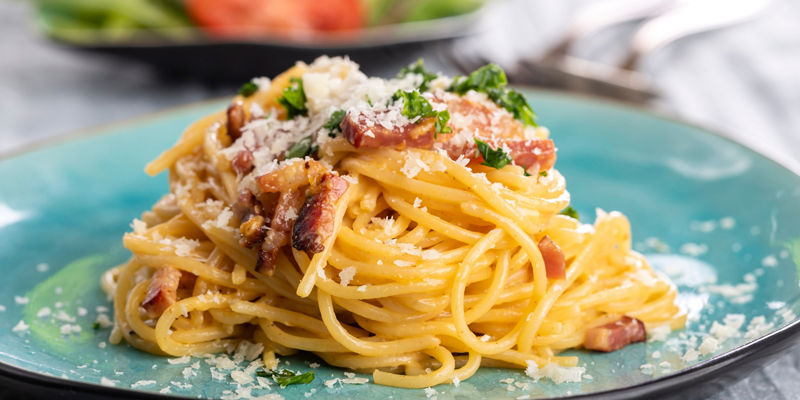
  • Classic spaghetti carbonara with fresh garnish

    Pasta carbonara

    Pasta carbonara, or pasta alla carbonara, is one of Italy’s most beloved dishes, celebrated for its simplicity and rich, comforting flavor. Originating from the Lazio region, particularly Rome, carbonara showcases how a handful of high-quality ingredients can create a deeply satisfying meal.

    Traditionally, the ingredients for carbonara sauce include egg, a hard Italian cheese such as Pecorino Romano or Parmigiano-Reggiano, guanciale (salt-cured pork cheek) and freshly ground black pepper. The guanciale is sautéed until the meat becomes crispy, releasing its flavorful fat. It is then combined with warm, al dente pasta—typically, spaghetti—followed by the remaining ingredients. The skillful addition of the eggs, cheese and, if necessary, a spoonful of pasta cooking water creates the dish’s signature velvety texture. While some variations outside Italy include cream, the silkiness of authentic carbonara can be achieved without it.

    While there is no consensus as to the origins of carbonara, there are several possible theories. The dish may have been invented by Italian carbonai (coal workers), who cooked over open fires. Another prevalent explanation is that carbonara was developed shortly after World War II, marking a fusion between traditional Italian cooking techniques and the bacon and egg rations of American soldiers stationed near Rome.

    Regardless of the dish’s exact origin, pasta carbonara has become a symbol of Roman cuisine and Italian culinary philosophy—emphasizing quality ingredients, balance and technique.

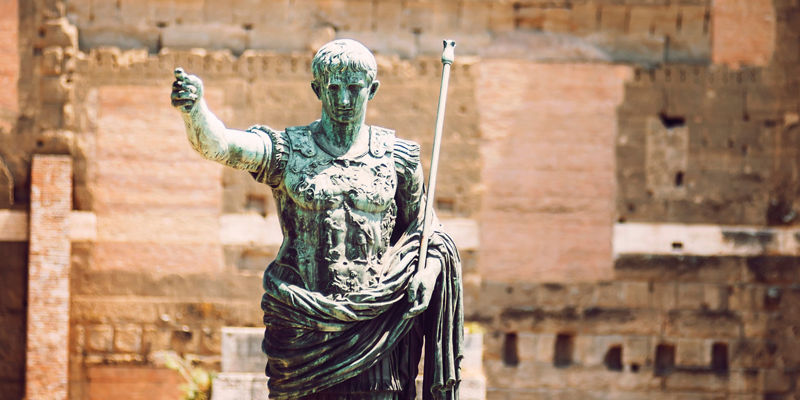
  • Ancient Roman bronze statue in ruins

    The Founding of Imperial Rome

    The founding of Imperial Rome was a gradual process rooted in the earlier history of the Roman Kingdom and Republic. According to tradition, Rome was founded in 753 BC by Romulus, who became its first king. Over time, Rome transitioned from monarchy to republic in 509 BC, establishing a system in which elected officials and the Senate governed.

    The Republic expanded its power across the Italian peninsula and eventually dominated the Mediterranean world. However, as Rome grew, internal tensions increased, including conflicts between social classes, the strain of governing vast territories and competition among powerful military leaders. These pressures weakened republican institutions and set the stage for the rise of imperial rule.

    Julius Caesar (c. 100 BC–44 BC) played a pivotal role in this transformation. A brilliant general and politician, Caesar expanded Rome’s territories, most notably through his conquest of Gaul. Rising tensions between Caesar and the Senate eventually erupted into a civil war between Caesar and his rival Pompey. After emerging victorious, Caesar declared himself “dictator for life” in 44 BC, effectively ending the traditional balance of power within the Republic. His accumulation of power alarmed many senators, leading to his assassination later that year.

    The aftermath of Caesar’s death led to another series of civil wars, ultimately resulting in the rise of his adopted heir, Octavian (63 BC–14 AD). In 27 BC, Octavian—later known as Augustus—established the Roman Empire by consolidating power over his rivals. Unlike Julius Caesar, Augustus established a more stable system of rule, carefully maintaining the appearance of republican traditions while holding ultimate authority. He ushered in the Pax Romana, a long period of peace and prosperity that allowed the empire to flourish.

    Augustus also transformed Rome’s physical landscape. He famously claimed to have found Rome “a city of brick” and left it “a city of marble.” Under his rule, temples, forums and public buildings were constructed or restored, reinforcing Rome’s status as a grand imperial capital.

    Together, Caesar and Augustus symbolize the end of one era and the beginning of another. Their leadership reshaped Rome’s political system and laid the foundations for an empire that endured for centuries.
Rome (Civitavecchia) Highlights

A voyage to Rome offers the opportunity to immerse yourself in one of the world’s greatest repositories of history and civilization. Here are some highlights you may experience during your time in this legendary city:

  • Step inside the Roman Forum, once the heart of ancient Rome
  • Imagine the cheers of 80,000 spectators at the mighty Colosseum
  • View the iconic, 18th-century Trevi Fountain
  • Ascend the Spanish Steps, a renowned Baroque landmark
  • Enjoy a panoramic drive along the elegant Via Veneto
  • Discover historic gems during a tour along the Tiber River
  • Sample authentic Italian pasta and superb local wines
  • Embark on a day trip to the Etruscan Necropolises of Tarquinia
  • Admire the magnificent Arch of Constantine, built in 315 AD
  • Stroll along the Appian Way, ancient Rome’s most important road
  • Explore the picturesque, UNESCO-listed square of Piazza Navona
  • See the treasures of Vatican City, including the Sistine Chapel

Rome (Civitavecchia) Travel FAQ

With its Mediterranean climate and extraordinary concentration of history, art and cuisine, Rome is a compelling destination in any season. Summer (July and August) brings sunny days and long evenings, ideal for outdoor dining and nighttime strolls. The “quiet season” spans from autumn to spring. This time of year offers cooler temperatures, fewer crowds, and a more tranquil pace for exploring popular sites like the Colosseum, Roman Forum and Vatican Museums.

One of the most popular experiences in Rome is exploring the city’s ancient landmarks, including the Colosseum, Roman Forum and Palatine Hill. Walking through these archaeological sites provides a vivid glimpse into the grandeur of the Roman Empire and is a must for any first-time visitor.

Another essential activity is discovering artistic and architectural masterpieces. The Vatican Museums and the Sistine Chapel house world-renowned works by Michelangelo and Raphael, while St. Peter’s Basilica impresses with its scale and beauty. Throughout Rome, churches and galleries reveal priceless art in unexpected places, making exploration both enriching and surprising.

Strolling through grand piazzas and taking in the city’s many fountains is an equally rewarding experience. Iconic sites such as Piazza Navona and the Spanish Steps invite leisurely walks and people-watching. Tossing a coin into the Trevi Fountain has become a beloved tradition, symbolizing a promise to return to the Eternal City.

Yes. The "Historic Center of Rome” was designated a UNESCO World Heritage Site in 1980. This comprises the major monuments of antiquity, such as the Roman Forum, the Pantheon and the Colosseum. It also includes the religious and public buildings of papal Rome, such as the early Christian basilicas of Saint Mary Major, Saint John Lateran and Saint Paul Outside the Walls. This area offers an immersive experience of Rome’s layered history alongside elegant shops, cafés and palaces.

The Appian Way, a Roman Republic-era road, connects Rome to the port of Brindisi in the south. Dating from 312 BC, it was designated as a UNESCO World Heritage Site in 2024.

Vatican City is, in its entirety, a UNESCO World Heritage Site, and it contains the world’s most significant collection of Renaissance art and religious architecture. While Vatican City is a separate sovereign state, it is easily accessible to guests visiting Rome.

The UNESCO-listed Etruscan Necropolis of Tarquinia also makes for an excellent day trip from Rome. The ancient city of Tarquinia was one of the principal cities of the Etruscan League that thrived in the area before the rise of the Roman Empire. The Necropolis is home to more than 6,000 graves carved into rock, dating from the 7th to the 2nd centuries BC.

You may also enjoy spending a day exploring Villa Adriana and Villa D’Este, two UNESCO-listed villas. Take a guided stroll through Villa Adriana, the ruins of Emperor Hadrian’s country estate, built in the early 2nd century AD. After lunch, discover the incredible 16th-century Villa d’Este and see its lush Renaissance gardens adorned with sculptures.

Located on the west bank of the Tiber River, Trastevere is one of Rome’s most atmospheric neighborhoods, known for its cobblestone streets, ivy-clad buildings and vibrant nightlife. This historic quarter offers a blend of medieval charm and contemporary energy, with lively piazzas, traditional trattorias and landmarks such as the Basilica di Santa Maria in Trastevere.

Monti, situated on the east side of the Tiber, is one of Rome’s oldest districts and among its trendiest today. Once a working-class area, it has evolved into a hub of boutique shops, artisan studios and stylish cafés. It is also full of archaeological treasures, including the Colosseum, the Baths of Trajan and part of the Roman Forum.

Prati, located just across the Tiber from the Historic Center of Rome and adjacent to Vatican City, is known for its orderly streets and refined character. Designed in the late 19th century, the neighborhood provides a quieter, more residential atmosphere while still offering easy access to St. Peter’s Basilica and the Vatican Museums.

Testaccio, situated in the city’s southern area, is celebrated as the heart of traditional Roman cuisine. Historically a working-class district, it retains a strong local identity, reflected in its markets, trattorias and lively nightlife.

Aventine Hill & Ripa, located along a peaceful stretch of the Tiber, offer a more tranquil perspective on Rome. The Aventine is one of the city’s most elegant hills, known for its gardens, churches and the famous keyhole view at the Knights of Malta gate. Nearby Ripa blends ancient Roman heritage—with sites near the Circus Maximus—with a quieter residential feel, making this area ideal for those seeking beauty and calm.

Rome is home to some of Italy’s most iconic pasta dishes, including pasta all’Amatriciana—which features a savory sauce made with tomatoes, guanciale (cured pork cheek), Pecorino cheese, black pepper and olive oil—and pasta carbonara, a rich dish consisting of eggs, guanciale, Pecorino cheese and black pepper. Another local favorite is cacio e pepe, a deceptively simple, creamy pasta made with Pecorino cheese and black pepper. These decadent pastas are all delightful when paired with a glass of Frascati, a crisp white wine from the nearby Castelli Romani region.

Supplì
are Rome’s signature street snacks. These small, fried rice croquettes are filled with tomato sauce. When they were introduced in the 19th century, they were typically also filled with chicken giblets, mincemeat or local provatura cheese, but today, it is more common to find supplì with a melted mozzarella core. If you prefer a version without tomato sauce, you can order supplì in bianco, or “white supplì.”

Pizza al taglio
is a traditional Roman pizza featuring seasonal toppings from local markets. Cut into rectangles, it is sold by the slice and priced by weight. Pizza al taglio tends to be a casual, takeaway dish that can be eaten outside.

Carciofi
(artichokes) are another local, seasonal delicacy, only available in the spring. They may be served alla giudia (fried) or alla romana (stewed).

In Rome, coffee is not just a beverage; it is a lifestyle. Italians’ passion for coffee extends far beyond breakfast, and many locals prefer to drink their espresso standing at a bar. If you prefer a more leisurely experience and do not mind paying a slightly higher price, you can sit and while away the time at a streetside café.

Aperol spritz is a quintessential sunset aperitif, which has also become synonymous with the lively atmosphere of Roman piazzas even though it originated in Venice. This beverage is prepared with prosecco wine, Aperol (a brightly colored, bitter liqueur), and a dash of sparkling water or club soda.

All-Inclusive Itineraries—Rome (Civitavecchia)

Choose one of our enriching, all-inclusive voyages and discover the many benefits of exploring in Viking comfort.
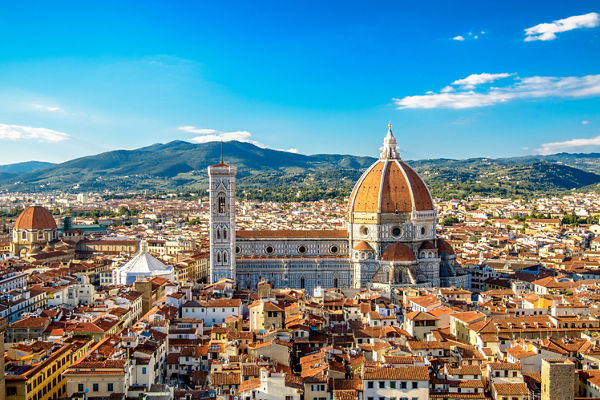
Florence Cathedral and Cityscape Under Blue Sky
Hide map Show map

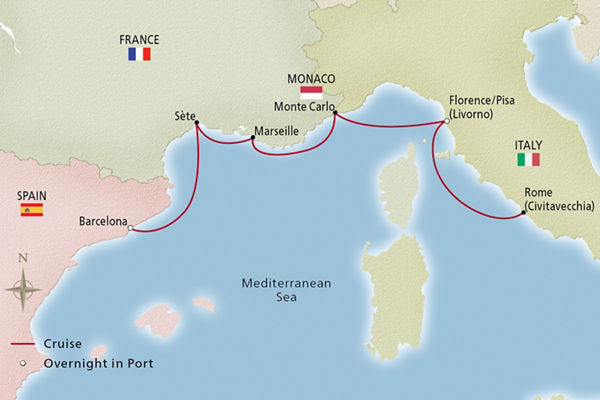
Iconic Western Mediterranean

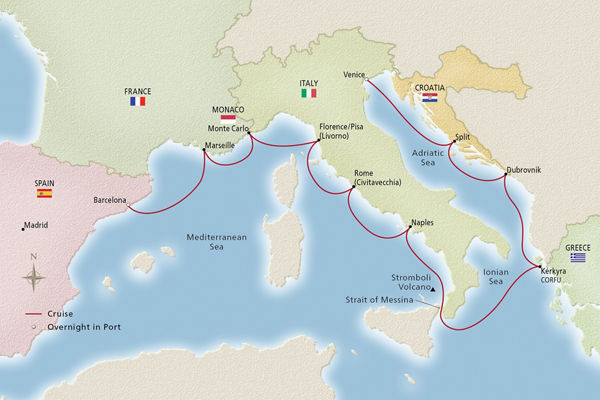
Barcelona to Rome (Civitavecchia)
Reduced Airfare | Special Fares | $25 Deposit

8 days
5 tours
4 countries
$2,599 from
  • Learn More
  • PRICE & BUILD
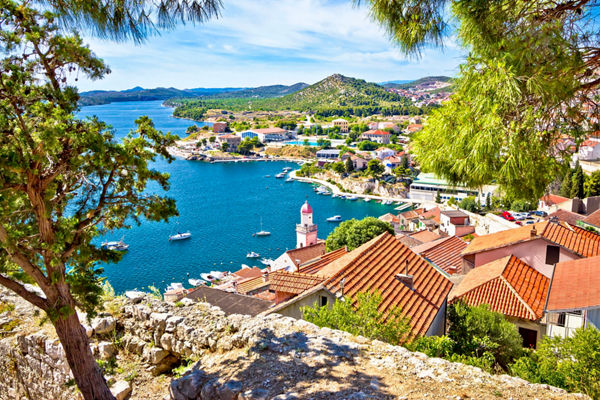
Scenic coastal town with red rooftops
Hide map Show map

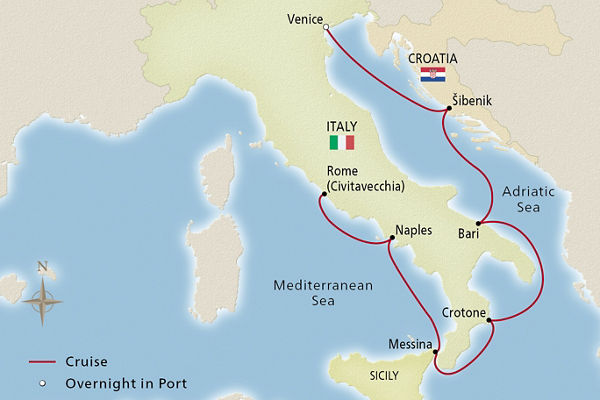
Italian Sojourn

Rome (Civitavecchia) to Venice (Chioggia)
Reduced Airfare | Special Fares | $25 Deposit

8 days
6 tours
2 countries
$3,299 from
  • Learn More
  • PRICE & BUILD
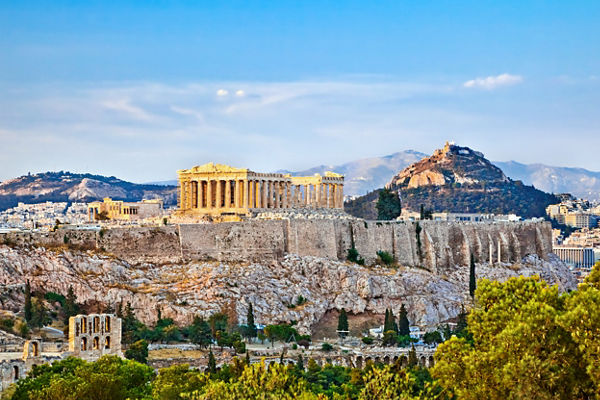
Ancient Acropolis with Parthenon in Athens
Hide map Show map

Journey to Antiquities

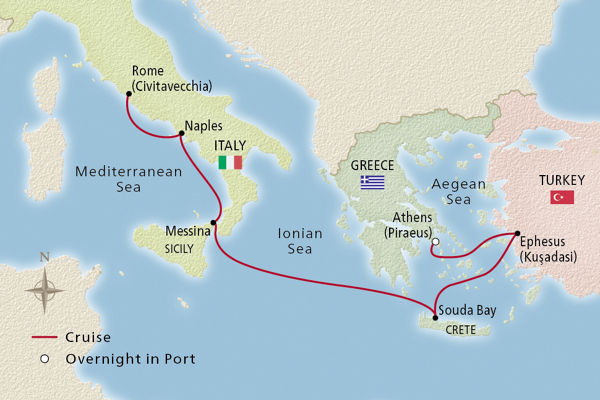
Rome (Civitavecchia) to Athens (Piraeus)
Reduced Airfare | Special Fares | $25 Deposit

8 days
5 tours
3 countries
$2,699 from
  • Learn More
  • PRICE & BUILD
Historic rooftops of Dubrovnik, Croatia
Hide map Show map

Mediterranean Odyssey

Barcelona to Venice (Chioggia)
Reduced Airfare | Special Fares | $25 Deposit

13 days
10 tours
6 countries
$5,299 from
  • Learn More
  • PRICE & BUILD
View Cruises

Sign up to receive updates from Viking

Stay current with special offers, news and destination-focused content.

SIGN UP
Call Viking at
Call Viking at 1-800-304-9616
1-800-304-9616
TAP TO CALL
Viking Cruises Viking

Footnote

Ocean Cruising - Up to 35% off cruise price based on select departures and categories of Ancient Mediterranean Treasures; Iconic Western Mediterranean; Italian Sojourn; Italy, the Adriatic & Greece; Mediterranean & Adriatic Odyssey; Venice, the Adriatic & Greece; Iberian Explorer.

River Cruising - Up to 35% off cruise price based on select departures and categories of Rhine Getaway, Danube Waltz, Paris to the Swiss Alps, Passage to Eastern Europe;  other itineraries, dates and categories may vary.

Expedition Cruising - Up to 20% off cruise price based on select departures and categories of Panama Canal & the Americas.
  • Company Information

    • Contact Us
    • Speak with a Viking Agent
    • Order a Brochure
    • Special Offers
    • Sweepstakes
    • Travel Advisors
    • FAQ
    • Media Center
    • About Us
    • Investor Relations
    • Careers
    • Site Map
    • Legal
    • Terms of Use
    • Privacy Policy
    • Cookie Policy
  • Viking River Cruises

    • Europe
    • Asia
    • Egypt
    • Mississippi
  • Viking Ocean Cruises

    • Scandinavia
    • British Isles & Ireland
    • North America
    • Caribbean & Central America
    • South America
    • Mediterranean
    • Quiet Season Mediterranean
    • Asia
    • Australia & New Zealand
    • World Cruises
    • Grand Journeys
  • Viking Expeditions

    • Antarctica
    • The Arctic
    • Great Lakes
    • North America
    • South America
    • Grand Journeys
    • Longitudinal World Cruises

© Viking Cruises, 2026. All Rights Reserved.

Footnote

Ocean Cruising - Up to 35% off cruise price based on select departures and categories of Ancient Mediterranean Treasures; Iconic Western Mediterranean; Italian Sojourn; Italy, the Adriatic & Greece; Mediterranean & Adriatic Odyssey; Venice, the Adriatic & Greece; Iberian Explorer.

River Cruising - Up to 35% off cruise price based on select departures and categories of Rhine Getaway, Danube Waltz, Paris to the Swiss Alps, Passage to Eastern Europe;  other itineraries, dates and categories may vary.

Expedition Cruising - Up to 20% off cruise price based on select departures and categories of Panama Canal & the Americas.

Company Information

  • Contact Us
  • Speak with a Viking Agent
  • Order a Brochure
  • Special Offers
  • Sweepstakes
  • Travel Advisors
  • FAQ
  • Media Center
  • About Us
  • Investor Relations
  • Careers
  • Site Map
  • Legal
  • Terms of Use
  • Privacy Policy
  • Cookie Policy

Viking River Cruises

  • Europe
  • Asia
  • Egypt
  • Mississippi

Viking Ocean Cruises

  • Scandinavia
  • British Isles & Ireland
  • North America
  • Caribbean & Central America
  • South America
  • Mediterranean
  • Quiet Season Mediterranean
  • Asia
  • Australia & New Zealand
  • World Cruises
  • Grand Journeys

Viking Expeditions

  • Antarctica
  • The Arctic
  • Great Lakes
  • North America
  • South America
  • Grand Journeys
  • Longitudinal World Cruises

Call Viking at Call Viking at 1-800-304-9616 1-800-304-9616 Viking Cruises Viking
© Viking Cruises, 2026. All Rights Reserved.

2026-2029 OCEAN CRUISE AND AIR FARES: Offer applies to bookings made from September 1-30, 2026. Terms & conditions for select promotions may vary. $25 deposit is applicable to all itineraries except World Cruise products. All prices are in US dollars and for US residents only. Additional restrictions may apply.

Special fares plus FREE airfare valid on select departures of Grand Australia Circumnavigation

Airfares may vary on other gateways & departures. Airfare does not have to be purchased to get cruise\cruisetour offer. All prices are in US dollars and for US residents only. Additional restrictions may apply.

2026: Pay in full by September 30, 2026 or 120 days prior to departure (whichever comes first).
2027: Pay in full by November 19, 2026 or 120 days prior to departure (whichever comes first). 
2028: Pay in full by April 8, 2027.
2029: Pay in full by February 17, 2028.

Offer may be withdrawn at any time without prior notice. Offers Expires September 30, 2026.

$25 DEPOSIT: For itineraries 35 days or less, a $25 deposit applies to January 2027 & onward departures; for itineraries greater than 35 days, a $25 deposit applies to March 2027 & onward departures; World Cruise products excluded; call for details.

AIR UPGRADE: Upgrade to Premium Economy or Business at additional cost based on select gateways and dates. Additional airline-imposed baggage charges may apply; for more information visit Airline Luggage Restrictions. Air prices are per person based on cruise/cruisetour check-in date and include transfers plus all government taxes/fees of approximately $160 and air fuel surcharges. Air seats are limited; airfares are subject to change and are not guaranteed until full payment of air is received. For more information about customized air services and US gateways, visit the Viking Air Plus page.

GENERAL RESTRICTIONS: Cruise fares listed are cruise only in U.S. dollars, per person, based on double occupancy. Single supplement savings are off applicable rates. Cruise fares listed are valid for U.S. residents only. All fares and offers are for new bookings only and are subject to availability, may not combinable with other offers except Viking Explorer Society Travel Credits, are capacity-controlled and may be withdrawn at any time without prior notice. Special fares are based upon published full brochure fares; cruise fares do not include pre-paid charges, optional facilities, and personal charges, as defined in the terms and conditions of the Passenger Ticket Contract which may be viewed elsewhere on this website. Full brochure fares may not have resulted in actual sales in all stateroom categories and may not have been in effect during the last 90 days. Promotional fares may remain in effect after the expiration date. Air promotion applies to roundtrip flights only from select Viking Cruises U.S. gateways and includes airport-to-ship or hotel transfers, air taxes and air fuel surcharges. Roundtrip airport transfers are included when air is purchased with a cruise or cruisetour package; if air is not purchased from Viking, transfers may be purchased separately. All transfers must be in conjunction with a Viking-purchased cruise, cruisetour, land extension or extra hotel nights. Viking reserves the right to correct errors or omissions and to change any and all fares at any time. For up-to-date prices, please call Viking or your Travel Agent. Additional terms and conditions may apply. Complete terms and conditions may be found in the Passenger Ticket Contract.

NOTE: International flights depart the U.S. one day prior to check-in date. Paid Business or Premium Economy Class may require travel in economy on flights within North America or Europe. Premium economy is limited to specific airlines and we may not be able to accommodate based on aircraft type and availability. Roundtrip airport transfers are included when air is purchased with a cruise or cruisetour package; if air is not purchased from Viking, transfers may be purchased separately. All transfers must be in conjunction with a Viking-purchased cruise, cruisetour, land extension or extra hotel nights.