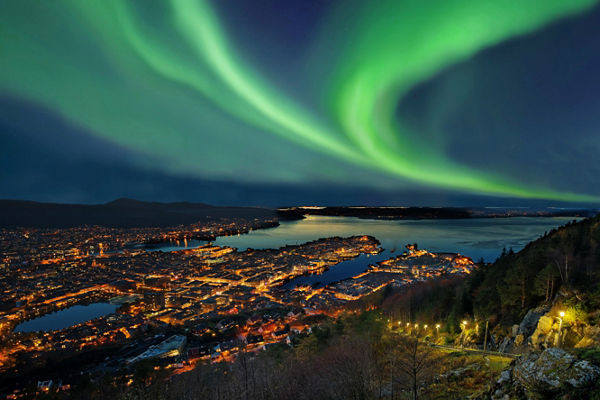


Keep watch for the awe-inspiring northern lights
Uncover the secrets of the ethereal aurora borealis, also known as the northern lights. Plus, learn about Norwegian cuisine, discover the traditions of the Sámi people and enhance your knowledge of two distinctive Arctic phenomena—polar nights and the midnight sun.
Northern Lights
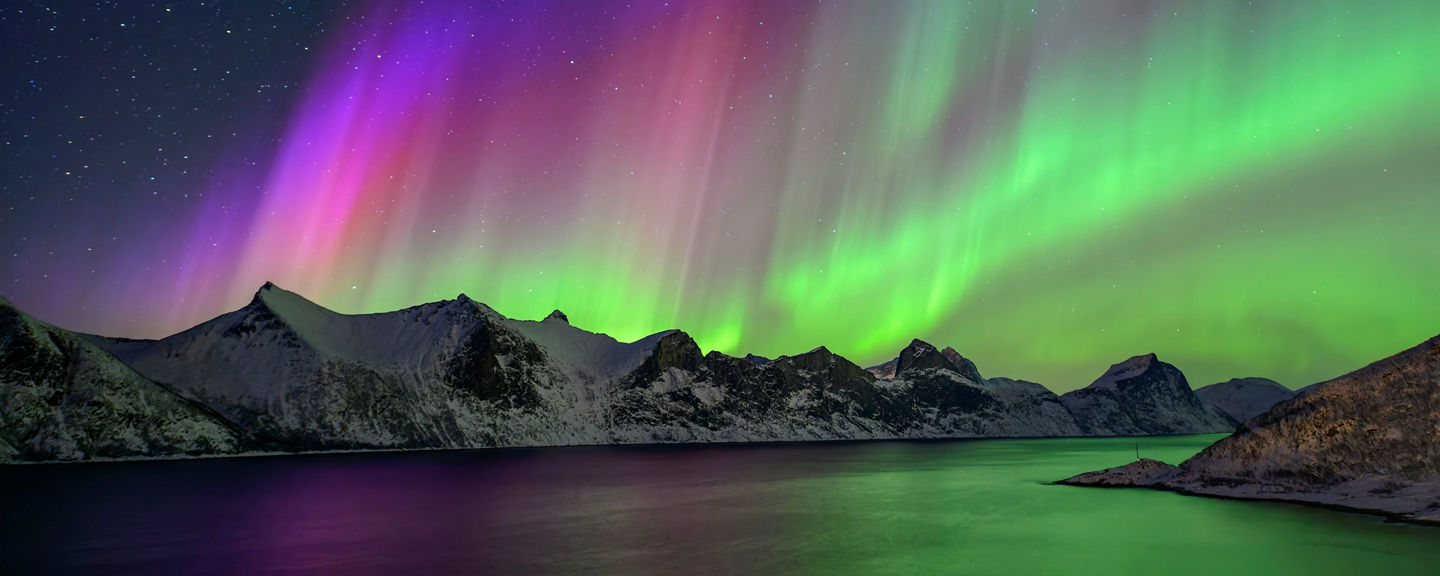
The aurora borealis, also known as the northern lights, is an atmospheric phenomenon that occurs in the night sky in the Northern Hemisphere, especially at higher latitudes. This spectacular display takes place when energized particles from the sun, carried on solar winds, collide with atoms in the earth’s upper atmosphere. Guided by our planet’s magnetic field toward the poles, these collisions create luminous, dancing curtains of green, purple and red light—a phenomenon that has inspired myths and legends for millennia.
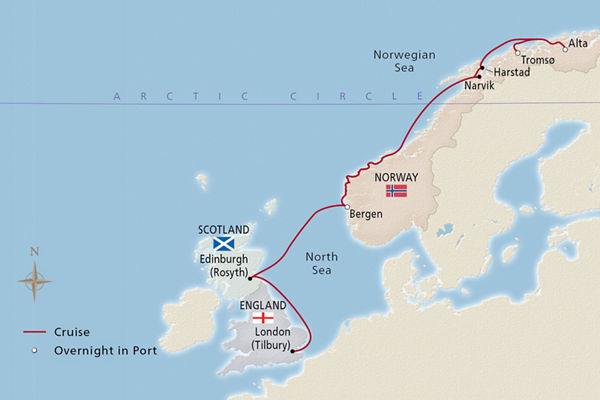
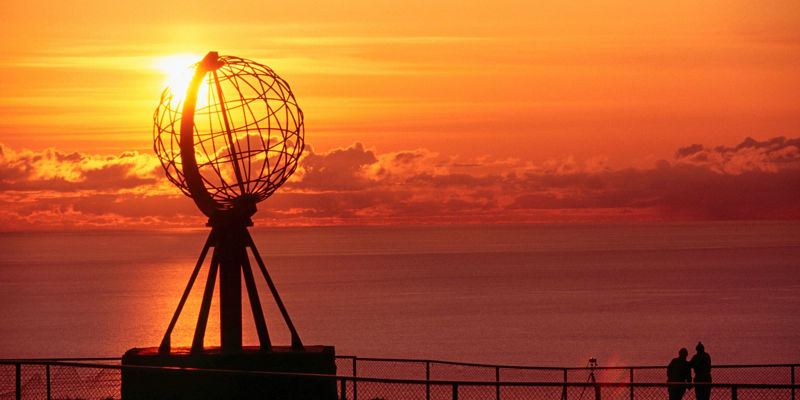
One of the most reliable places to see the northern lights is in northern Norway, above the Arctic Circle. The Arctic Circle refers to a latitude line set approximately 66.5° north of the equator. This pristine tundra landscape consists of a treeless expanse where the sky feels immense and the horizon stretches uninterrupted across a terrain of ancient bedrock, glaciers, ice sheets and the vast Arctic Ocean.
During the region’s brief summer, the tundra's unique flora covers the ground in a dense mat of hardy plants adapted to the harsh conditions, including spongy mosses and pale green reindeer lichen alongside dwarf birch and willow trees that rise only a few inches from the ground. This vegetation is the foundation of the Arctic ecosystem, providing an essential food source for reindeer and other Arctic wildlife that are central to the culture of the Sámi people.
In the winter, when the northern lights are most visible due to the long Arctic nights, the tundra becomes a serene world of snow and shadow. Coastal temperatures in winter often hover around freezing (0°C / 32°F). However, in the northern interior where the aurora is most visible, you should prepare for colder conditions, often ranging from -4 to 14°F (-20 to -10°C).
For centuries, Norway's waters have served as a vital highway for trade, exploration and culture, connecting remote fishing villages with bustling European ports. The Norwegian coastline has witnessed the dawn of the Viking Age and the resilience of communities thriving in a harsh but beautiful environment. This rich history is part of the landscape itself, from Bergen’s historic Bryggen wharf to the ancient rock carvings of Alta, which offer a glimpse into the lives of early inhabitants.

-
Pylsa
When visitors arrive in Reykjavík, they often expect dramatic landscapes, colorful architecture and rich Viking history. However, many are surprised to discover that one of the city’s most beloved cultural icons is a simple hot dog, known as the pylsa.
Unlike the hot dogs found in many other countries, the Icelandic pylsa is made primarily from a blend of lamb, along with pork and beef. Because Icelandic sheep are raised largely on open pastures and natural grazing lands, the meat has a distinctive flavor that reflects Iceland’s agricultural heritage and sets the pylsa apart.
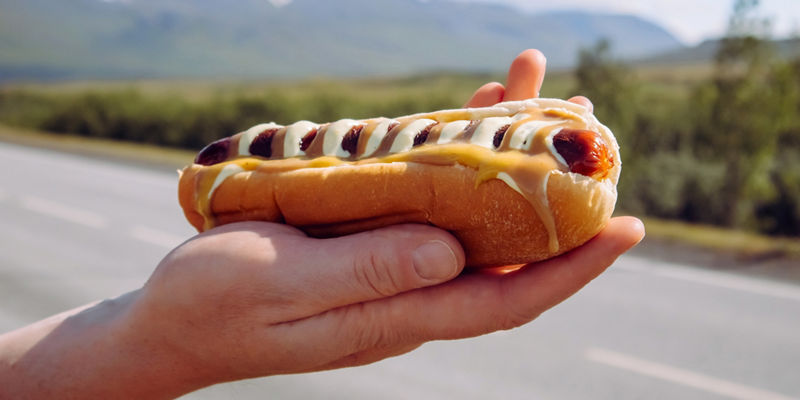
Pylsur (the plural of pylsa) are served in soft buns and topped with a combination of raw onions, crispy fried onions, sweet brown mustard (pylsusinnep), ketchup and remoulade—a creamy mayonnaise-based sauce. The sweetness of the sauces, the crunch of the onions and the savory taste of the sausage combine to create a balance of textures and flavors that locals and tourists find irresistible.
More than just a quick snack, the pylsa has become a symbol of Icelandic food culture and an essential part of the Reykjavík experience. Because Iceland is known for its relatively high cost of living, the hot dog remains one of the country's most affordable and accessible meals, making it popular among both locals and visitors. Residents often grab one for lunch, as a quick snack or after a night out.
One of the most famous places to enjoy a pylsa in Reykjavík is Bæjarins Beztu Pylsur, a small stand located near the city’s harbor. Founded in 1937, it has earned an international reputation, serving countless visitors over the decades. Today, long lines often form outside the stand, but many customers agree that the wait for this iconic street food is worthwhile.
-
Norwegian cuisine
Norwegian food is typically hearty and robust during the winter months, but the cuisine can be surprisingly delicate and subtle, thanks to the innovative use of spices, fresh seafood and berries.
With such a vast coastline, seafood plays an important part in local fare. Expect to see cured salmon and smoked salmon while traveling through the region. Cod and smoked mackerel are also popular.
Norwegians celebrate Krabbe Fests (crab festivals) every autumn, when this crustacean is in season. These local events feature everything from open sandwiches to krabbelag, a Norwegian seafood boil.
Herring is another type of fish enjoyed across the region. It can be pickled, smoked or fried, and you will see it featured on nearly every menu, from breakfast to dinner. One popular way to eat pickled herring is atop rye bread with a layer of fresh, creamy butter.
Norway is also known for its beloved national dish, fårikål. This hearty, slow-cooked stew consists of bone-in lamb layered with cabbage and whole black peppercorns, allowing simple, high-quality ingredients to shine. Traditionally enjoyed during the autumn, it is a comforting and communal meal, often prepared for gatherings of family and friends. Given the region's reputation for exceptional lamb, enjoying a bowl of fårikål offers a truly authentic taste of Norwegian culinary heritage.
When it comes to Scandinavian sweets, no spice combination is more popular than cinnamon and cardamom. Throughout Norway, yeast-raised cinnamon buns are a particular favorite, and the city of Bergen is famous for its signature cardamom-scented version, known as skillingsboller.
You will also find waffles served with many accompaniments, including fresh berries, sour cream or jam. The most traditional way to enjoy waffles is with a slice of brunost, a renowned Norwegian brown cheese with a distinctive sweet and salty flavor. Waffles are so popular, there is even an International Waffle Day called Våffeldagen. Celebrated primarily in Sweden and Norway, it historically signified the beginning of spring and is commemorated, delightfully, by eating waffles all day.
-
Notable figures associated with Reykjavík
Reykjavík has been home to many remarkable individuals whose contributions to politics, literature, social reform, culture and the arts have helped shape not only the identity of Iceland’s capital but also the nation itself. From influential statesmen and pioneering activists to Nobel Prize-winning authors and internationally celebrated artists, these figures reflect Reykjavík’s rich tradition of innovation, resilience and creativity.
- Skúli Magnússon (1711–1794)
Known as the “Father of Reykjavík,” Skúli Magnússon was an 18th-century royal treasurer and reformer whose efforts laid the foundations for the city’s development. At a time when Iceland’s economy was constrained by foreign trade monopolies, Skúli championed local industry and entrepreneurship. He established wool-processing workshops and other manufacturing enterprises in what is now central Reykjavík, helping transform a small settlement into a growing economic center. His vision for domestic production and self-sufficiency played a crucial role in the city’s early growth and earned him a lasting place in Icelandic history. Visitors can learn more about his life and work at Viðey House on nearby Viðey Island, his former residence and one of Iceland’s oldest stone buildings.
- Jón Sigurðsson (1811–1879)
One of Iceland’s most revered national figures, Jón Sigurðsson was a scholar, historian and statesman who led the peaceful movement for Icelandic independence from Danish rule during the 19th century. Through his writings, political leadership and advocacy for self-government, he became the foremost symbol of Icelandic nationalism. Although much of his work was conducted from Copenhagen, his legacy remains deeply connected to Reykjavík, where a prominent statue of him stands in Austurvöllur Square facing Alþingi, Iceland’s parliament.
- Bríet Bjarnhéðinsdóttir (1856–1940)
A pioneering journalist, suffragette and political activist, Bríet Bjarnhéðinsdóttir was one of the most significant figures in Iceland’s struggle for women’s rights. She founded the Icelandic Women’s Rights Association, edited influential publications promoting gender equality and tirelessly campaigned for women’s participation in public life. Her efforts helped secure voting rights for Icelandic women and paved the way for greater political representation. In 1908, she became one of the first women elected to the Reykjavík City Council.
- Halldór Laxness (1902–1998)
The most internationally acclaimed writer in Icelandic history, Halldór Laxness was awarded the Nobel Prize in Literature in 1955. His novels explored the realities of Icelandic life with extraordinary depth, examining themes of identity, social change, faith and economic struggle. Works such as Independent People (2 vol., 1934–35) and Iceland’s Bell (3 vol., 1943–46) captured the hardships and resilience of ordinary Icelanders while earning worldwide recognition.
- Vigdís Finnbogadóttir (b. 1930)
In 1980, Vigdís Finnbogadóttir made history as the world’s first democratically elected female head of state. Serving as President of Iceland for four consecutive terms, she became a respected national leader and an international advocate for education, language preservation and cultural heritage. Throughout her presidency, Vigdís promoted Icelandic arts and literature while enhancing Iceland’s global profile.
- Björk Guðmundsdóttir (b. 1965)
Known globally simply as Björk, the Reykjavík-born singer, composer and visual artist has become one of the most influential musicians of the modern era. Renowned for her distinctive voice and experimental approach to music, she has pushed artistic boundaries by blending electronic, orchestral and avant-garde influences. Albums such as Homogenic (1997), Vespertine (2001) and Biophilia (2011) have earned critical acclaim while showcasing her deep connection to Iceland’s landscapes and culture. As one of the country's most recognizable cultural ambassadors, Björk embodies Reykjavík’s contemporary creative spirit and originality.
- Skúli Magnússon (1711–1794)
-
Polar nights and the midnight sun
Polar nights and the midnight sun are two of nature’s most mesmerizing occurrences, experienced only in the Earth's high-latitude regions, particularly above the Arctic Circle. These phenomena are driven by the planet’s axial tilt of approximately 23.5 degrees. As Earth orbits the sun, this tilt causes regions near the poles to either face toward or away from the sun for extended periods, resulting in prolonged daylight or darkness.
During the height of winter in the Arctic, the sun does not rise above the horizon for an extended period. The darkness is not absolute—there are varying degrees of twilight depending on latitude. Further north, the night becomes deeper and longer. Yet even in this extended darkness, life continues. The night skies come alive with stars and, often, the swirling greens and purples of the aurora borealis. For people living through polar nights, routines adjust. Homes glow with warm light, and cultural traditions help pass the time and combat the effects of living for days, or even months, with little to no sun exposure. The contrast between internal warmth and external darkness becomes a defining part of life in the polar world.
In the Arctic summer, the opposite occurs. The midnight sun emerges as a beacon of renewal, never setting for days or even months, depending on how far north you are. Instead, it hovers low on the horizon, casting a golden light over ice, sea and tundra, even at midnight. This constant daylight creates a surreal environment where time seems to blur, and the normal cues for sleep and wakefulness vanish. Wildlife and humans alike have adapted to this round-the-clock brightness. Migratory birds take advantage of the extended light to feed their young, and Arctic communities hold festivals and conduct activities that embrace the never-ending day. The brightness also boosts photosynthesis, supporting a short but intense growing season for Arctic flora.
These phenomena impact more than just sunlight hours. They influence human circadian rhythms, animal behavior and ecological patterns. The Arctic remains a region defined by contrast, where the extremes of light and dark shape life in profound and enduring ways.
-
The Sámi people
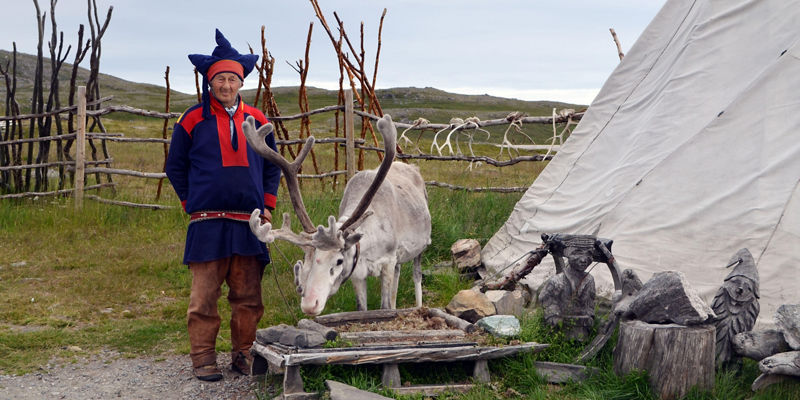
The Sámi are Indigenous people from the northernmost parts of Europe. The ancestral lands of the Sámi, known as Sápmi, stretch across the northern regions of Norway, Sweden, Finland and Russia's Kola Peninsula. There are eleven Sámi languages, nine of which are still in use.
Traditionally, Sámi culture is deeply connected to reindeer herding. For centuries, many Sámi families have followed a semi-nomadic lifestyle dictated by the seasonal migration of their reindeer herds between winter and summer pastures. In addition to being a vital source of economic activity, reindeer herding is also a cornerstone of Sámi cultural identity, embodying a profound relationship with the land, nature and seasons.
Sámi culture is also rich in artistic traditions. Duodji is the term for traditional Sámi handicrafts, which consist of functional items made from natural materials like leather, wood and bone. They are often intricately decorated with pewter thread or geometric patterns. The Sámi are also known for joik, a traditional song form. Each joik is a deeply personal and spiritual form of expression, often dedicated to a person, animal or landscape.
-
Vikings in Reykjavík
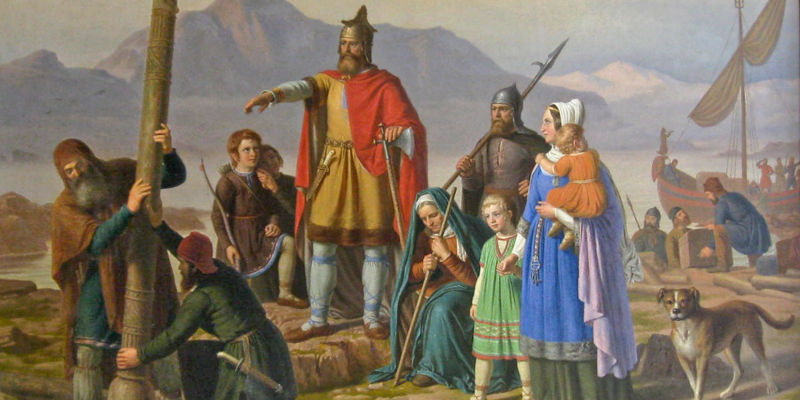
The story of Reykjavík, Iceland’s capital city, begins with the Vikings who first settled the island during the ninth century. Among these early Norse explorers, two figures stand out in Icelandic history: Ingólfur Arnarson and his wife, Hallveig Fróðadóttir. Their journey to Iceland and their decision to establish a homestead on the shores of what is now Reykjavík laid the foundation for the city that would eventually become the nation’s political, cultural and economic center.
According to the medieval Icelandic text Landnámabók (The Book of Settlements), Ingólfur Arnarson was a Norwegian chieftain who left his homeland during an era of exploration and migration to seek new opportunities across the North Atlantic. Ingólfur sailed to Iceland around the year 874, a date traditionally recognized as the beginning of permanent Norse settlement on the island.
This famous account tells how Ingólfur followed an ancient Norse custom before landing. He ordered his crew to ready his öndvegissúlur, the pair of wooden pillars that were customarily placed on either side of a chieftain’s high seat, a kind of throne. As his fleet of longships approached the shore, the poles were tossed overboard into the cold sea. As Ingólfur watched them drift toward the coast, he ordered his oarsmen to follow, believing that the gods would use the pillars to guide them to the site of their future home. When the new settlers saw the steam from hot springs rising near the bay, they named their discovery Reykjavík, meaning “Bay of Smokes.”
While Ingólfur is often remembered as Reykjavík’s founder, Hallveig Fróðadóttir also played an important role. Historical records about Viking women are less detailed than those about men, yet Hallveig is recognized in Icelandic tradition as a partner in the establishment of the homestead. Archaeological discoveries suggest that women were essential contributors to Viking communities, managing households, preserving food, producing clothing and helping create stable conditions in often challenging environments. Hallveig's presence reminds us that Iceland was not established by explorers alone but by families working together to build new lives.
The Vikings who settled Reykjavík lived in turf-roofed longhouses and relied on farming, fishing and trade. They brought with them Norse language, customs, laws and beliefs that would shape Icelandic society for centuries. Over time, additional homesteaders arrived, and Iceland developed a unique culture rooted in its Viking heritage.
Among the descendants of these settlers was Leif Eriksson, one of the most famous Vikings in history. Born in Iceland around the year 970, Leif was the son of Erik the Red, founder of the Norse settlements in Greenland. Around the year 1000, Leif led an expedition westward and is widely credited as the first known European to reach North America, nearly five centuries before Christopher Columbus. His voyages demonstrated the remarkable seafaring skills of the Norse people and highlighted Iceland’s role as an important center of Viking exploration and navigation across the North Atlantic.
Reykjavík remained relatively small for many centuries, and its origins as a Viking farm are still celebrated today. Modern visitors can explore this rich heritage at locations such as the Settlement Exhibition in central Reykjavík, where the remains of a Viking-age longhouse are preserved. Monuments throughout the city also honor Ingólfur Arnarson and the island’s first inhabitants, while a grand statue of Leif Eriksson stands in front of Hallgrímskirkja, commemorating the famed explorer and Iceland’s enduring Viking heritage. These reminders connect present-day Reykjavík with its remarkable beginnings.


Northern Lights Highlights
A journey in search of the northern lights offers the opportunity to experience the majestic beauty of one of the most pristine parts of the world during the winter. Here are some of the unforgettable highlights you may experience:
- Learn to make lefser, a traditional soft Norwegian flatbread
- See the Frostisen glacier from above during a helicopter flight
- Search the night skies for the elusive aurora borealis
- Delve into Sámi culture and traditions
- Enjoy an aquavit tasting accompanied by local snacks
- Snowmobile through the Arctic tundra
- Immerse yourself in Viking Age lore at a medieval homestead
- Discover Alta, the “City of Northern Lights”
- Embark on a whale-watching journey across the Altafjord
- Attend a private organ concert in Tromsø’s Arctic Cathedral
Northern Lights Travel FAQ
All-Inclusive Itineraries—Northern Lights
Choose one of our enriching, all-inclusive voyages and discover the many benefits of exploring in Viking comfort.