1. Rivers
  2. Oceans
  3. Expeditions
  1. Complimentary Brochures
Call Viking at 1-800-304-9616 or Contact Your Travel Advisor
Viking Viking Viking
Please fill out this field
Menu
  1. Rivers
  2. Expeditions
Please fill out this field
Use enter or spacebar key to select the link
Use enter or spacebar key to expand or collapse the menu
    • Find A Cruise
    • Destination Map
    • Special Offers
    • New Itineraries
    • Regions

      Europe

      • British Isles & Ireland
      • Mediterranean
      • Scandinavia
      • Other Destinations

      Africa & Middle East

      North America

      • Alaska
      • Canada
      • Mexico
      • United States
      • Other Destinations

      Caribbean & Central America

      South America

      Asia

      Australia & New Zealand

    • Waterways
      • Mediterranean Sea
      • North & Baltic Seas
      • Caribbean Sea
      • Panama Canal
      • Atlantic Ocean
      • Pacific Ocean
      • Indian Ocean
      • Arctic Ocean
    • Seasonal & Combination
      • Italy: Always in Season
      • Quiet Season Mediterranean
      • Northern Lights
      • Panama Canal
      • World Cruises
      • Grand Journeys
      • Ocean Crossings
      • River + Ocean Combinations
    • Other Cruise Types
      • Expeditions
      • Rivers
    • Fleet Overview
    • 360° Ship Tour
    • Ocean Ships
      • Viking Astrea
      • Viking Jupiter
      • Viking Leda
      • Viking Libra
      • Viking Lyra
      • Viking Mars
      • Viking Mira
      • Viking Neptune
      • Viking Orion
      • Viking Saturn
      • Viking Sea
      • Viking Sky
      • Viking Star
      • Viking Vega
      • Viking Vela
      • Viking Venus
      • Viking Vesta
    • The Viking Difference
    • Webinars
    • Did You Know?
    • Cultural Partners
    • Awards
    • My Viking Story
    • Community
    • News
    • Complimentary Brochures
    • One Viking
    • Pre & Post Extensions Overview
    • Shore Excursions Overview
    • My Viking Journey
    • Viking Air
    • Updates on Current Sailings
    • Travel Information
    • Travel Protection Plan
    • Frequently Asked Questions
    • Silver Spirits Beverage Package
    • Why Viking
    • Cruise Itineraries
    • Destination Insights
    • Ships
    • All
Please fill out this field
Speak with a Viking agent to get expert help in building your journey.
Call Now 1-800-304-9616
Big Ben and Westminster Bridge at sunset

Experience the history and culture of London

England’s cosmopolitan and bustling capital entices visitors with its mix of storied history, striking architecture, unique cultural traditions and tempting cuisine. Read on to learn about a beloved afternoon meal, explore the city’s expansive green spaces and delve into the history of five iconic Britons.
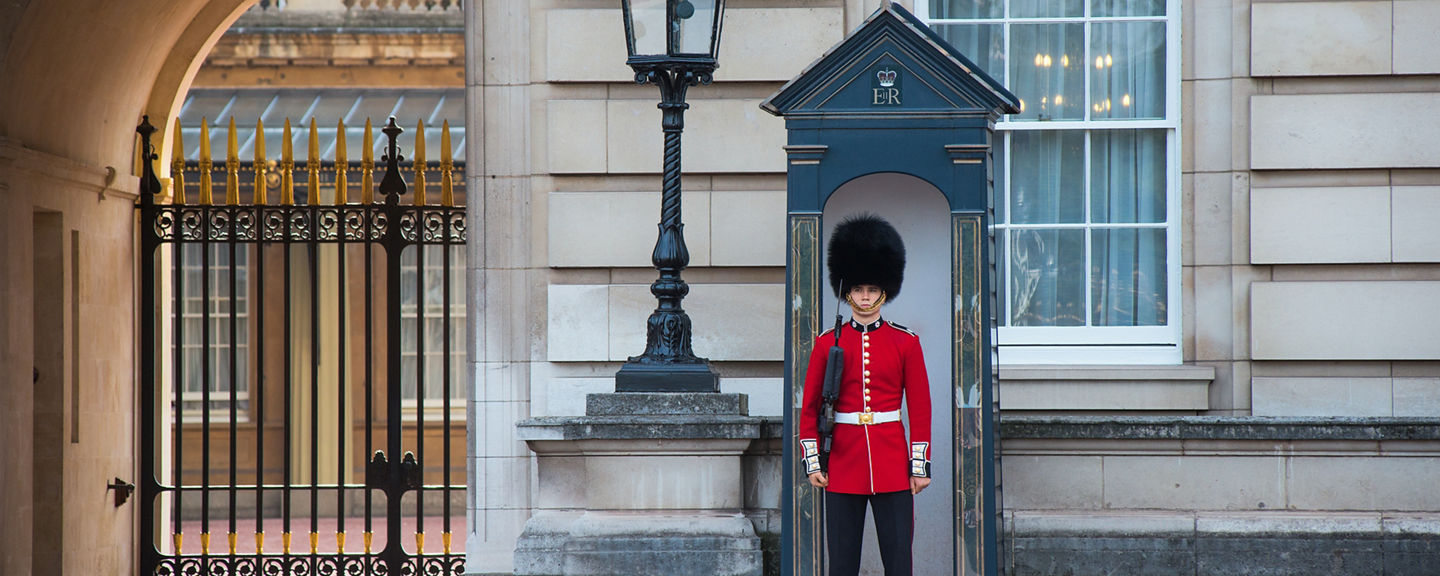
Royal guard at Buckingham Palace entrance

London

London, the capital of England, is situated on the banks of the River Thames in the southeastern part of the country. The meandering river runs from west to east through the city and has been used for trade, transport, leisure and defense over the centuries. It still defines the city’s contours to this day.

To the north, close to the river’s narrowest section, sits the City of London, the oldest part of the capital and its current financial hub. To the south lies Southwark, which grew as an industrial district and now houses several world-class cultural institutions. Further east, the river bends around the Isle of Dogs and Canary Wharf, before passing historic Greenwich.

For visitors and residents using the Underground train system, the city is divided into zones. Zone 1 comprises the central districts—including Westminster, Covent Garden and the South Bank—while Zone 2 encompasses popular neighborhoods like Shoreditch and Greenwich. Zones 3 to 9 cover loosely concentric areas progressively further out. A network of buses and river boats also provide transportation, as do the famous black cab drivers, who must undertake a rigorous exam known as “The Knowledge” to qualify for the role.

London has a temperate climate, with an annual average temperature in the lower 50s °F (around 12 °C). Gray skies are more commonplace than the rain for which the city is known, but the weather can be changeable. Snow is rare, but temperatures occasionally dip below freezing during the winter.

London’s roots date back several millennia, and archaeological evidence shows that small communities lived there from the Stone Age. The city was more formally established in approximately 50 AD, when Romans invaded Britain and founded a settlement called Londinium, which flourished as a port and trading hub.

Roman influence receded in the 5th century, and the city became an Anglo-Saxon settlement for several centuries. It was controlled by the Vikings for a short period in the 9th century before it was recaptured by King Alfred the Great and became known as Lunderburg—a key city in the Kingdom of England. William the Conqueror’s victory at the Battle of Hastings marked the Norman Conquest of 1066, ushering in an era of Norman influence in the country. Construction of the Tower of London began shortly afterward.

In subsequent centuries, London developed from a medieval city into one of the world’s leading capitals. The Tudor period of the 1500s ushered in a great deal of change. Henry VIII oversaw the dissolution of the monasteries between 1536 and 1541, with immense transfers of wealth and land from the Catholic Church to the Crown. The city expanded in both size and influence, particularly during the reign of Elizabeth I, and became a key cultural hub thanks to playwrights like Christopher Marlowe (1564–1593) and William Shakespeare (1564–1616).

The 17th century had tumultuous moments. The Gunpowder Plot (1605) saw Guy Fawkes and Catholic conspirators attempt to blow up the Palace of Westminster. They were unsuccessful, but the event is marked on November 5 annually by displays of fireworks and bonfires. In 1666, the Great Fire of London destroyed the medieval heart of the city. Sir Christopher Wren led the reconstruction; St. Paul’s Cathedral is its crowning glory.

Queen Victoria’s 63-year reign (1837–1901) coincided with the Industrial Revolution and the further expansion of the British Empire. The 20th century brought with it two world wars, and London’s landscape was altered forever by the heavy German Luftwaffe bombing during the Blitz (September 1940–May 1941).

In the years since, London has reinvented itself several times, transitioning from an industrial city to a global hub of finance, culture and technology. Its storied past and ever-evolving present are evident in its skyline, where Tudor structures and Baroque domes proudly take their place among towering glass monoliths and bold postmodern icons from international architects. Its population reflects successive waves of migration, and more than 300 languages are spoken by the residents of this cosmopolitan city.

Given London’s extensive history, it is no surprise that it is full of historic landmarks and cultural attractions. Here are some of the key destinations that you may see during a visit:

  • The Houses of Parliament—Located on the banks of the River Thames in Westminster, this seat of British legislative power comprises the House of Commons and the House of Lords. The present Gothic Revival buildings date back to 1860 and include the famous tower clock housing the bell known as Big Ben.
  • The Tower of London—This historic and imposing fortress on the northern banks of the River Thames was originally built as a royal palace by William the Conqueror in the 11th century. It has subsequently served as an arsenal, royal mint and prison. Famous inmates include Guy Fawkes and Sir Walter Raleigh.
  • Westminster Abbey—Situated on the grounds of a former Benedictine monastery, the majestic and richly detailed Westminster Abbey was founded during the 10th century and rebuilt by Henry III in the 13th century. It has hosted the crowning of almost every British sovereign since William the Conqueror and is the final resting place of both Geoffrey Chaucer and Charles Dickens.
  • Tate Modern—The building housing the Tate Modern began life as a power station, but since opening in 2000, it has established itself as an essential destination for lovers of contemporary art. Remodeled by Swiss architecture firm Herzog & de Meuron, it now houses an international collection dating from 1900 onward.
  • Buckingham Palace—Built in 1705 for the Duke of Buckingham, Buckingham Palace became a royal residence with the arrival of Queen Victoria in 1837. Today it is one of the city’s most visited landmarks, hosting regular state occasions and ceremonial events, including the famous Changing of the Guard.
  • St. Paul’s Cathedral—Since its completion in 1710, Sir Christopher Wren’s Baroque masterpiece has been one of the capital’s most recognizable landmarks. Its dome soars above the streets of London. Visitors can enjoy striking views from the outside, and the exceptional acoustics of the famous Whispering Gallery concealed within.
  • Tower Bridge—Often mistaken for London Bridge, which is further west along the River Thames, Tower Bridge is a remarkable construction dating to 1894 that comprises two towers and a drawbridge that opens to allow river traffic to pass. Glass-covered walkways between the tops of the towers offer pedestrians excellent views of the city.
  • British Museum—This national museum houses an immense collection of art and artifacts from around the world, including Egyptian mummies, the Elgin Marbles and the Rosetta Stone.
Tower Bridge over River Thames at sunrise
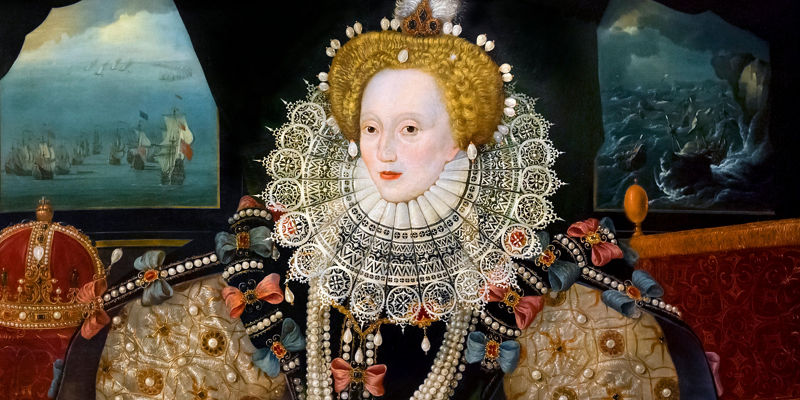
  • Elizabethan portrait with ornate attire

    5 influential London figures

    Over the centuries, London has produced a remarkable range of influential figures in the realms of art, architecture, politics and royalty. The following five individuals are renowned across the globe for their lasting place in world history.

    • Queen Elizabeth I (1533–1603)
      Queen Elizabeth I ruled for 44 years, from 1558 to 1603, one of the longest reigns in English history. During that time, she steered the country through a period of religious conflict and ushered in an era of prosperity. It was also a time of exploration and trade, driven by Sir Francis Drake and Queen Elizabeth’s backing of voyages that established the country’s maritime power. This period of history, known as the Elizabethan Golden Age, coincided with a flourishing of theater and literature as Shakespeare, Christopher Marlowe and Ben Jonson rose to prominence.
    • William Shakespeare (1564–1616)
      While he was born and died in Stratford-upon-Avon, William Shakespeare spent most of his working life in London. He moved to the capital in the late 1580s and quickly became the most feted playwright in the fertile Elizabethan theatrical scene. The Bard’s plays spanned an astonishing range, from comedies (A Midsummer Night’s Dream) to histories (Henry V) and tragedies (Hamlet)—many of which were performed at the South Bank’s Globe Theatre after it opened in 1599. The reconstruction that stands on the banks of the Thames today, known as Shakespeare’s Globe, is the only building in London permitted to have a thatched roof.
    • Sir Christopher Wren (1632–1723)
      Architect Sir Christopher Wren is best known for the remarkable St. Paul’s Cathedral, which has remained a key part of London’s skyline since it was built following the Great Fire of London in 1666. But his legacy is enshrined in more than 50 other London churches and in the very streets Londoners walk to this day. He oversaw many of the urban design plans and principles following the fire.
    • Charles Dickens (1812–1870)
      Few writers have conjured the essence of the capital—its people, places and politics—as Charles Dickens. His carefully plotted novels are populated with a host of memorable characters and highlight much of the inequality, corruption and injustice of Victorian London. He did not just write about social issues—he also campaigned for better education, housing and sanitation, and co-founded the Great Ormond Street Hospital.
    • Winston Churchill (1874–1965)
      Winston Churchill was an influential Member of Parliament and served as Prime Minister twice, but it was his crucial role as a leader and orator during World War II that cemented his legacy. His wartime speeches, delivered to Parliament and broadcast across the nation, became symbols of defiance during the Blitz. He also helped forge the Grand Alliance with the US and the then Soviet Union—and oversaw Operation Dynamo, the evacuation of Dunkirk—from the Cabinet War Rooms in Whitehall. Churchill topped a 2002 BBC poll for the “Greatest Briton” and graced the back of the £5 note for a decade from 2016.
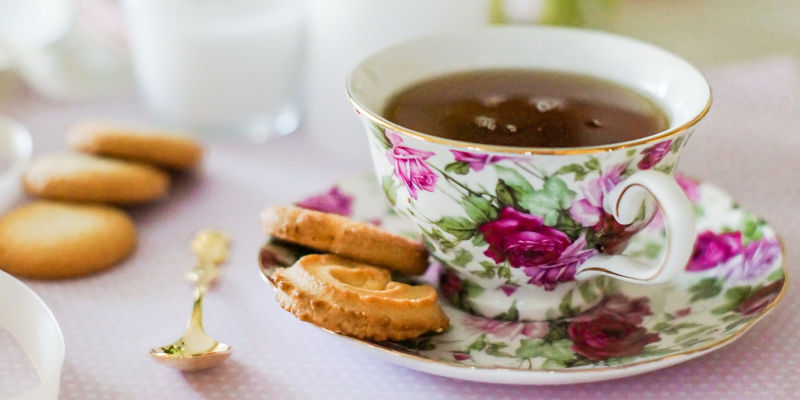
  • Floral teacup with biscuits on pastel table

    Afternoon tea

    Taking afternoon tea is a quintessential British experience. The meal usually comprises a range of finger sandwiches—with fillings including egg salad, smoked salmon and cucumber—alongside pastries, cakes and scones served with clotted cream and jam. The jam sits atop the cream according to the Devonshire tradition, while the spreads are reversed for the Cornish tradition.

    Items are often served on a three-tiered serving platter, and a range of teas, including English breakfast tea, mint tea and Earl Grey, are poured from silver teapots into fine bone china teacups. British people have enjoyed tea for centuries—the earliest record of the beverage being consumed in London dates to the 1650s, when an enterprising merchant named Thomas Garway sold it from his shop in the City of London.

    The popularity of the drink increased after Catherine of Braganza married Charles II in 1662 and brought it to the English court, but the concept of full afternoon tea didn’t take root until the 1840s, when the Duchess of Bedford requested an afternoon pick-me-up between lunch and what was, at the time, usually a late supper. By the late 1800s, afternoon tea was a staple of Victorian life, with participants dressing for the occasion—in gowns, gloves and hats—and exchanging gossip around a table in the drawing room or conservatory.

    This delightful meal is available at many hotels and restaurants in central London, including Claridge's, the Dorchester, the Savoy, Harrods and Fortnum & Mason.

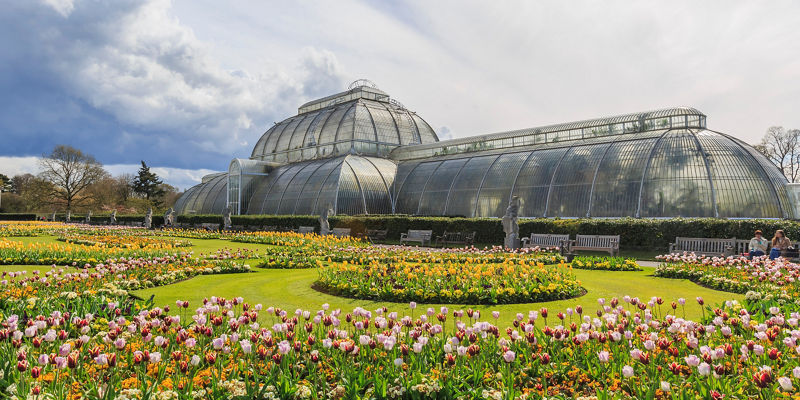
  • Historic glass conservatory with colorful flower beds

    London’s parks and gardens

    London is blessed with an abundance of outdoor space—in fact, there are some 3,000 parks in the city alongside several canals, and almost 50 percent of the city appears to be green or blue when seen from above. It was named the world’s first National Park City in 2019, and visitors are never far from a slice of verdant natural beauty.

    The capital has eight royal parks, spanning more than 5,000 acres. Several were created by Henry VIII during the dissolution of the monasteries (1536–1541). Hyde Park and Greenwich Park are among those that owe their existence to his penchant for riding and hunting.

    They are all now open to the public. King Charles I opened the first, Hyde Park, in 1637, and King Charles II opened St. James’s Park in 1660. By the 1800s, they were all accessible. These gardens have played host to several key events over the intervening centuries. Hyde Park hosted the Great Exhibition in 1851 and a quite different spectacle—the Rolling Stones—a century later in 1969. The D-Day landings were planned from an American base in Bushy Park. In 2017, the Royal Parks charity was established to ensure that the parks are preserved for generations to come.

    A walk among these expansive spaces reveals a variety of oak trees, plane trees and hawthorns—plus an abundance of birds including robins, wrens, swans and geese. Richmond Park is the largest of the royal parks and is a National Nature Reserve. It is home to some 650 roaming red and fallow deer.

    The Royal Botanic Gardens at Kew, meanwhile, have been designated a UNESCO World Heritage Site for their contribution to the study of plant diversity. Since 1759, the gardens have been home to one of the most varied botanic collections in the world. Visitors today can explore the works of famous landscape architects like Capability Brown (1716–1783), stroll along a treetop walkway and visit the Palm House, a Victorian glass structure filled with tropical plants.

    Other vast green spaces in London include Hampstead Heath, comprising 790 acres of rolling hills and forested areas that afford spectacular views of the London skyline from Parliament Hill, and Walthamstow Wetlands, a birder’s paradise in east London featuring kingfishers, kestrels and herons.
London Highlights

London is full of striking landmarks and cultural experiences for visitors to discover. Here are some highlights you may experience during your time in this historic and vibrant city:

  • Embark on an evening cruise along the River Thames
  • Explore the boutiques and market stalls of lively Covent Garden
  • Ride the London Eye for sweeping views of the capital
  • Tour UNESCO-listed Westminster Abbey
  • Take a day trip to nearby Windsor Castle
  • Stroll along London’s famous South Bank
  • Peruse artworks at the Tate Modern
  • Take a photo of the remarkable St. Paul’s Cathedral
  • Examine artifacts from around the world at the British Museum
  • Gaze at Admiral Nelson atop his column in Trafalgar Square
  • View battlements of the Tower of London
  • See a replica of Sir Francis Drake’s ship in Southwark

London Travel FAQ

London’s cultural and historic attractions are generally open throughout the year, and the city is an excellent place to visit year-round. However, crowds and temperatures do fluctuate with the seasons. Spring (April to May) and fall (September to October) offer pleasant temperatures while summer (June to August) brings extended hours of daylight perfect for sightseeing. As winter approaches, in November and December, much of the city twinkles under a canopy of Christmas lights. The capital’s reputation for rain is a little unfair; London receives some 24 in (61 cm) of precipitation per year on average—fewer than cities like New York or Rome.

London offers a host of memorable activities for every type of traveler. A sightseeing tour on a motor coach is a wonderful way to take in many of the most iconic landmarks and institutions. Or, board a vessel on the River Thames for a special perspective on St Paul’s Cathedral, Shakespeare’s Globe, the Tate Modern and other key sights in the city center. The London Eye, The Shard and the Palace of Westminster look spectacular during an early evening sunset.

For a truly singular London experience, observe the Changing of the Guard at Buckingham Palace, a tradition of pageantry that dates back to the reign of Henry VII more than 500 years ago. Alternatively, enjoy Privileged Access at the Tower of London—an after-hours tour and the chance to witness the age-old tradition of the Ceremony of the Keys.

There are several opportunities to delve into London’s role in World War II. Our shore excursion takes in the Churchill War Rooms, the subterranean complex where Winston Churchill and his cabinet directed Britain’s operations, and the Imperial War Museum, which tells the story of the country’s role in conflicts from World War I to today.

The city is also well-known for its maritime heritage, and walkable Greenwich is a delightful place to explore historic ships like the Cutty Sark, scientific institutions—including the Royal Observatory—and the extensive collections of the National Maritime Museum. The district is also home to the Prime Meridian Line, on which all global time zones are based.

Fans of gardens are spoiled for choice here—a walk through St. James’s Park or Kew Gardens will reveal springtime displays of colorful flowers and several types of mature trees, as will just about any city park or green space.

Evenings in London are best spent in a historic pub, a world-class restaurant or at the theater. Order a real ale or a cider in a pub dating back centuries while deciding where to eat—London’s multicultural offerings span everything from Peruvian to Turkish and most cuisines in between.

London’s West End is the city’s answer to Broadway. It loosely spans the region around Leicester Square, Piccadilly Circus, Shaftesbury Avenue and Covent Garden—and shows run the gamut from long-running musicals and lively family-friendly affairs to dramas, comedy and dance, all often starring world-famous performers. Shakespeare’s Globe, on the south bank of the Thames, is another popular venue to see works by the playwright and his contemporaries.

Yes. London has four UNESCO World Heritage Sites. In the borough of Richmond upon Thames in the west, the Royal Botanic Gardens at Kew are listed for their contribution to the study of plant diversity. To the east of the city, Maritime Greenwich is included for symbolizing artistic and scientific endeavors in the 17th and 18th centuries. The Tower of London and the Palace of Westminster and Westminster Abbey, including Saint Margaret’s Church, complete the set.

The South Bank is a wonderful place to get your bearings in London. The walkable riverside area is home to several cultural institutions including the Tate Modern art gallery, the Royal Festival Hall performing arts venue and Shakespeare’s Globe. Other attractions include the London Dungeon and the food stalls of Borough Market. A stroll here will offer views of many of London’s landmarks, from the Houses of Parliament to St. Paul’s Cathedral and The Shard.

London’s royal and political heart resides in Westminster and St. James’s. This district encompasses the Houses of Parliament and Big Ben, Westminster Abbey, Westminster Cathedral, 10 Downing Street—the official residence of the British Prime Minister—and several parks and palaces. The City of London, also known as the Square Mile, is the oldest part of the city but is now home to modern skyscrapers soaring above medieval alleys and Roman ruins.

For more of a village feel within the big city, head to the neighborhood of Marylebone just north of Oxford Street. Marylebone High Street is lined with independent boutiques and cafés, and Regent’s Park and the London Zoo are nearby. Similarly, Notting Hill to the west has an affluent, bohemian feel and is full of local shops and charming restaurants.

Further east along the Thames lies Greenwich. This historic neighborhood is home to the UNESCO World Heritage Site of Maritime Greenwich and several naval and scientific landmarks including the Royal Observatory, the Cutty Sark ship and the National Maritime Museum.

London is renowned for its food and drink, with most global cuisines represented alongside a generous serving of British fare.

Fish and chips is a tempting option, consisting of a hearty plateful of fried white fish (usually cod or pollock) accompanied by a serving of chips (fries). Diners often sprinkle salt on the chips and douse them with malt vinegar. Ketchup is another popular accompaniment. Many pubs in the West End serve the dish, and traditional fish and chip shops also usually serve other items, including battered sausages, mushy peas, pickled onions and fish cakes.

Other British comfort food to try in London includes cottage pie (minced beef topped with mashed potato), shepherd’s pie (the same dish but with lamb instead of beef) and toad in the hole (sausages baked in Yorkshire pudding batter).

The Sunday roast, meanwhile, is a weekly institution at pubs and restaurants across London. Diners can choose between roast chicken, beef or lamb—or a vegetarian nut roast—with “all the trimmings.” These include roast potatoes and a range of vegetables such as carrots, peas, cabbage or green beans, often accompanied by a ladle of thick gravy.

Pie and mash (a meat pie with a side of mashed potatoes) is a down-to-earth staple; ask for a side of “liquor”—parsley sauce—for a true taste of London. Indian food, including the iconic, creamy chicken tikka masala, reflects the city’s multicultural history.

If you find yourself in a London pub, many of which are centuries-old taverns steeped in character, consider ordering a real ale, a cask-conditioned beer or perhaps a gin and tonic, which can be made with London Dry Gin.

There are many ways to immerse yourself in the London food and drink scene: Sit down for a pre-theater menu in Covent Garden before a West End show; sample artisanal cheeses, meats and produce at Borough Market; or book a table at a riverside restaurant for food with a view.

All-Inclusive Itineraries—London

Choose one of our enriching, all-inclusive voyages and discover the many benefits of exploring in Viking comfort.
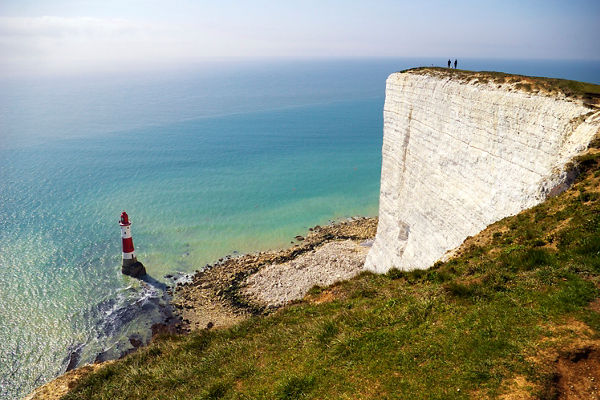
White cliffs and lighthouse by the sea
Hide map Show map

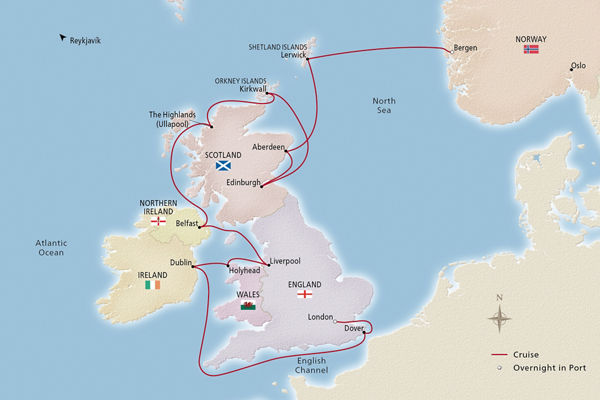
British Isles Explorer

Bergen to London (Greenwich)
Reduced Airfare | Special Fares | $25 Deposit

15 days
6 countries
$6,999 from
  • Learn More
  • PRICE & BUILD
Scenic lighthouse at sunset on rocky coast
Hide map Show map

NEW! British Isles & Ireland

London (Greenwich) to Belfast
Reduced Airfare | Special Fares | $25 Deposit

15 days
4 countries
$7,999 from
  • Learn More
  • PRICE & BUILD
Scenic fjord view at sunset with mountains
Hide map Show map

Into the Midnight Sun

Bergen to London (Greenwich)
Reduced Airfare | Special Fares | $25 Deposit

15 days
3 countries
$7,999 from
  • Learn More
  • PRICE & BUILD
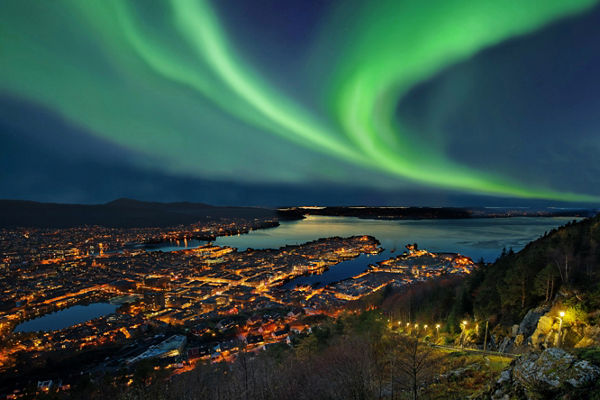
Northern Lights Over Cityscape at Night
Hide map Show map

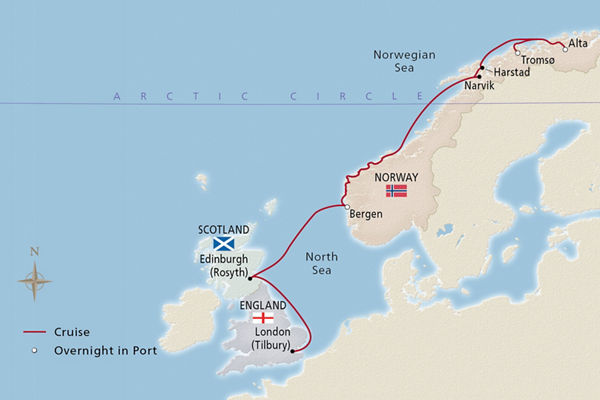
NEW! In Search of Northern Lights

London (Tilbury) to Tromsø
Reduced Airfare | Special Fares | $25 Deposit

13 days
3 countries
$5,999 from
  • Learn More
  • PRICE & BUILD
View Cruises

Sign up to receive updates from Viking

Stay current with special offers, news and destination-focused content.

SIGN UP
Call Viking at
Call Viking at 1-800-304-9616
1-800-304-9616
TAP TO CALL
Viking Cruises Viking

Footnote

*FREE airfare on select departures of Grand European Tour; Capitals of Eastern Europe; Lyon Provence & the Rhineland; London, Paris & D-Day; Pharaohs & Pyramids; European Sojourn; Christmastime in Paris & Normandy; Magnificent Mekong, Antarctic Explorer; Antarctica & South Georgia Island; Canadian Discovery; Chilean Fjords & Scenic Shores; Great Lakes Collection; Great Lakes Treasures; Into the Antarctic Circle; Niagara & the Great Lakes Treasures; Niagara & the Great Lakes; select World Cruise Products.
  • Company Information

    • Contact Us
    • Speak with a Viking Agent
    • Order a Brochure
    • Special Offers
    • Sweepstakes
    • Travel Advisors
    • FAQ
    • Media Center
    • About Us
    • Investor Relations
    • Careers
    • Site Map
    • Legal
    • Terms of Use
    • Privacy Policy
    • Cookie Policy
  • Viking River Cruises

    • Europe
    • Asia
    • Egypt
    • Mississippi
  • Viking Ocean Cruises

    • Scandinavia
    • British Isles & Ireland
    • North America
    • Caribbean & Central America
    • South America
    • Mediterranean
    • Quiet Season Mediterranean
    • Asia
    • Australia & New Zealand
    • World Cruises
    • Grand Journeys
  • Viking Expeditions

    • Antarctica
    • The Arctic
    • Great Lakes
    • North America
    • South America
    • Grand Journeys
    • Longitudinal World Cruises

© Viking Cruises, 2026. All Rights Reserved.

Footnote

*FREE airfare on select departures of Grand European Tour; Capitals of Eastern Europe; Lyon Provence & the Rhineland; London, Paris & D-Day; Pharaohs & Pyramids; European Sojourn; Christmastime in Paris & Normandy; Magnificent Mekong, Antarctic Explorer; Antarctica & South Georgia Island; Canadian Discovery; Chilean Fjords & Scenic Shores; Great Lakes Collection; Great Lakes Treasures; Into the Antarctic Circle; Niagara & the Great Lakes Treasures; Niagara & the Great Lakes; select World Cruise Products.

Company Information

  • Contact Us
  • Speak with a Viking Agent
  • Order a Brochure
  • Special Offers
  • Sweepstakes
  • Travel Advisors
  • FAQ
  • Media Center
  • About Us
  • Investor Relations
  • Careers
  • Site Map
  • Legal
  • Terms of Use
  • Privacy Policy
  • Cookie Policy

Viking River Cruises

  • Europe
  • Asia
  • Egypt
  • Mississippi

Viking Ocean Cruises

  • Scandinavia
  • British Isles & Ireland
  • North America
  • Caribbean & Central America
  • South America
  • Mediterranean
  • Quiet Season Mediterranean
  • Asia
  • Australia & New Zealand
  • World Cruises
  • Grand Journeys

Viking Expeditions

  • Antarctica
  • The Arctic
  • Great Lakes
  • North America
  • South America
  • Grand Journeys
  • Longitudinal World Cruises

Call Viking at Call Viking at 1-800-304-9616 1-800-304-9616 Viking Cruises Viking
© Viking Cruises, 2026. All Rights Reserved.

2026-2029 OCEAN CRUISE AND AIR FARES: Offer applies to bookings made from October 1-31, 2026. Terms & conditions for select promotions may vary. $25 deposit is applicable to all itineraries except World Cruise products. All prices are in US dollars and for US residents only. Additional restrictions may apply.

Save up to $8,000 per couple based on select stateroom category & select departures of British Isles & Ireland.

Airfares may vary on other gateways & departures. Airfare does not have to be purchased to get cruise\cruisetour offer. All prices are in US dollars and for US residents only. Additional restrictions may apply.

2026: Pay in full by October 31, 2026 or 120 days prior to departure (whichever comes first).
2027: Pay in full by December 17, 2026 or 120 days prior to departure (whichever comes first). 
2028: Pay in full by June 10, 2027.
2029: Pay in full by February 17, 2028.

Offer may be withdrawn at any time without prior notice. Offers Expires October 31, 2026.

$25 DEPOSIT: For itineraries 35 days or less, a $25 deposit applies to March 2027 & onward departures; for itineraries greater than 35 days, a $25 deposit applies to May 2027 & onward departures; World Cruise products excluded; call for details.

AIR UPGRADE: Upgrade to Premium Economy or Business at additional cost based on select gateways and dates. Additional airline-imposed baggage charges may apply; for more information visit Airline Luggage Restrictions. Air prices are per person based on cruise/cruisetour check-in date and include transfers plus all government taxes/fees of approximately $160 and air fuel surcharges. Air seats are limited; airfares are subject to change and are not guaranteed until full payment of air is received. For more information about customized air services and US gateways, visit the Viking Air Plus page.

GENERAL RESTRICTIONS: Cruise fares listed are cruise only in U.S. dollars, per person, based on double occupancy. Single supplement savings are off applicable rates. Cruise fares listed are valid for U.S. residents only. All fares and offers are for new bookings only and are subject to availability, may not combinable with other offers except Viking Explorer Society Travel Credits, are capacity-controlled and may be withdrawn at any time without prior notice. Special fares are based upon published full brochure fares; cruise fares do not include pre-paid charges, optional facilities, and personal charges, as defined in the terms and conditions of the Passenger Ticket Contract which may be viewed elsewhere on this website. Full brochure fares may not have resulted in actual sales in all stateroom categories and may not have been in effect during the last 90 days. Promotional fares may remain in effect after the expiration date. Air promotion applies to roundtrip flights only from select Viking Cruises U.S. gateways and includes airport-to-ship or hotel transfers, air taxes and air fuel surcharges. Roundtrip airport transfers are included when air is purchased with a cruise or cruisetour package; if air is not purchased from Viking, transfers may be purchased separately. All transfers must be in conjunction with a Viking-purchased cruise, cruisetour, land extension or extra hotel nights. Viking reserves the right to correct errors or omissions and to change any and all fares at any time. For up-to-date prices, please call Viking or your Travel Agent. Additional terms and conditions may apply. Complete terms and conditions may be found in the Passenger Ticket Contract.

NOTE: International flights depart the U.S. one day prior to check-in date. Paid Business or Premium Economy Class may require travel in economy on flights within North America or Europe. Premium economy is limited to specific airlines and we may not be able to accommodate based on aircraft type and availability. Roundtrip airport transfers are included when air is purchased with a cruise or cruisetour package; if air is not purchased from Viking, transfers may be purchased separately. All transfers must be in conjunction with a Viking-purchased cruise, cruisetour, land extension or extra hotel nights.