

Be inspired by Europe’s history & culture
Discover the storied cities and signature old-world charm of Europe. Read on to learn more about the countries that comprise this diverse region and delve into the unique experiences that await you in Italy, France, Germany and beyond. Trace the history of an iconic Swiss dish, uncover some common misconceptions about Spain’s siesta tradition and explore the powerful legacy of Normandy’s beaches.
Europe
Europe, the second smallest of the world’s continents, is a treasure trove of natural beauty and historical significance. It is bordered by the Arctic Ocean to the north, the Atlantic Ocean to the west and the Mediterranean Sea, Black Sea and Caspian Sea to the south. Europe is home to 44 countries, including England, Ireland, France, Germany, Italy, Hungary, Spain, Greece and many others. Each country offers its own rich history and unique landscapes, from the snowy peaks of Austria and Switzerland in the Alps to the sunny beaches of the French Riviera and the Adriatic Sea. The climate varies greatly, with temperate conditions in the west, Mediterranean climates in the south, and colder, more continental climates in the east and north.
Over the centuries, Europe’s rich culture has been reflected in its music, art, architecture and cuisine, which have had a profound influence on the world. The continent is known for its remarkable landmarks and ancient sites, such as:
- The Eiffel Tower—Located in Paris, France, this iconic structure is one of the most recognizable landmarks in the world.
- The Colosseum—This ancient amphitheater in Rome, Italy, is a testament to the grandeur of the Roman Empire.
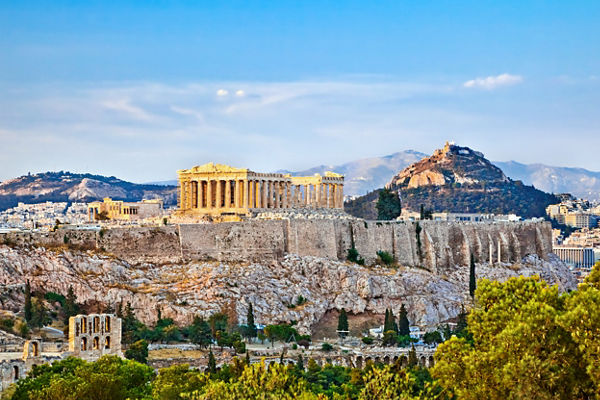
- The Acropolis—Situated in Athens, Greece, this ancient citadel is home to several significant historical buildings, including the Parthenon.
- The Alps—Stretching across several countries, including France, Switzerland and Austria, the Alps offer breathtaking natural beauty and are a popular destination for skiing and hiking.
- The Louvre Museum—Located in the heart of Paris, the Louvre is the world's largest art museum and a historic monument.
- La Sagrada Família—This large, unfinished Roman Catholic basilica in Barcelona, Spain, is a masterpiece of architect Antoni Gaudí.
- Stonehenge—This mysterious monument in Wiltshire, England, is one of the world's most famous prehistoric landmarks.
- Geirangerfjord—Norway’s stunning, UNESCO-listed fjord is one of Europe’s most cherished natural treasures and home to majestic waterfalls that can be visited even in the winter.
Europe’s diverse landscapes and climates, combined with its rich cultural heritage, make it a fascinating year-round destination for travelers from around the world. Whether exploring cosmopolitan cities, the picturesque countryside or historic landmarks, visitors are sure to be captivated by the continent's charm and beauty.

-
Dubrovačka rozata
Dubrovačka rozata is a traditional Croatian dessert that originated in Dubrovnik. Often compared to crème caramel or flan, rozata stands out for its unique flavor and cultural significance. This elegant custard has been enjoyed for centuries and remains a staple of Dubrovnik’s culinary heritage, frequently served at celebrations, family gatherings and in local restaurants.
Historically, Dubrovačka rozata reflects the influences of Dubrovnik’s past as a powerful maritime republic. The city’s trade connections with Italy, France and the Ottoman Empire introduced various culinary techniques and ingredients, which were adapted into local traditions. While similar desserts across Europe rely on vanilla or citrus, the defining ingredient that sets Dubrovačka rozata apart is rožolin, a rose liqueur that gives it its distinctive floral aroma. This delicate flavor, combined with rozata’s smooth, creamy texture, makes for a rich, indulgent treat.
The preparation of rozata involves simple yet carefully balanced ingredients: eggs, milk, sugar and rožolin. The process begins by caramelizing sugar, which is then poured into a mold to create a golden layer that will eventually form the dish’s glossy topping. A custard mixture is then poured over the caramel before the mold is placed in a water bath. Cooking the dish this way ensures a silky consistency and prevents curdling. Once cooled and inverted, the caramel flows over the custard. Rozata is commonly served chilled and is often garnished with a sprig of mint or a slice of citrus peel for an added touch of freshness. Many local chefs continue to follow traditional recipes, while some modern interpretations feature variations such as orange zest or liqueur substitutes. -
A pilgrimage to the Normandy beaches
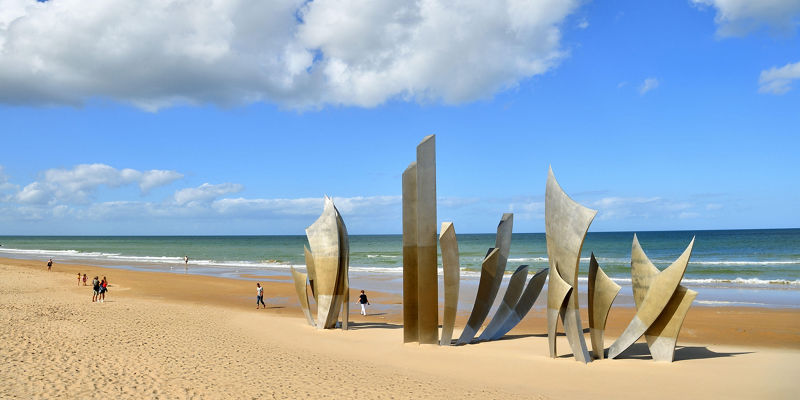
The Normandy beaches, famously etched into history on June 6, 1944, during the Allied invasion of Nazi-occupied France, hold a unique place in the hearts and minds of visitors today. Walking along the revered shores of Utah, Omaha, Gold, Juno and Sword, the remnants of D-Day serve as a powerful testament to the bravery and sacrifice of countless soldiers.
Along the beaches are poignant reminders of the monumental events that unfolded here. Among the most striking are the rusted remains of German bunkers, guns still aimed at the empty beaches and the abandoned Mulberry Harbor. A visit to these sobering sites offers travelers a rare opportunity to experience history on such a visceral level.
A short distance from the beaches, you will find the church of Sainte-Mère-Église, which served as a makeshift field hospital during the invasion. This is also where American paratrooper John Steele’s parachute was famously caught on the church’s steeple, making it a special place to remember the brave paratroopers of the Allied forces. Today, the D-Day beaches remain a storied landmark where one can reflect on the impact of this historic event on the course of world history.
-
A slice of Italian history
Seasoned flatbread has long been a staple throughout the Mediterranean region, but Italy is the cradle of pizza.
The Naples connection
In the 18th and early 19th centuries, Neapolitan peasants started using tomatoes—initially thought to be poisonous—in their dishes, including pizza. Added out of necessity, this ingredient forever altered the course of pizza history. Once local aristocrats discovered the crude peasant food sold on the streets of Naples, Italy’s national dish was on its way to becoming a global phenomenon. Antica Pizzeria Port'Alba of Naples, the first true pizzeria, opened in 1830—and has been making delicious pizzas ever since.
Margherita, pizza fit for a queen
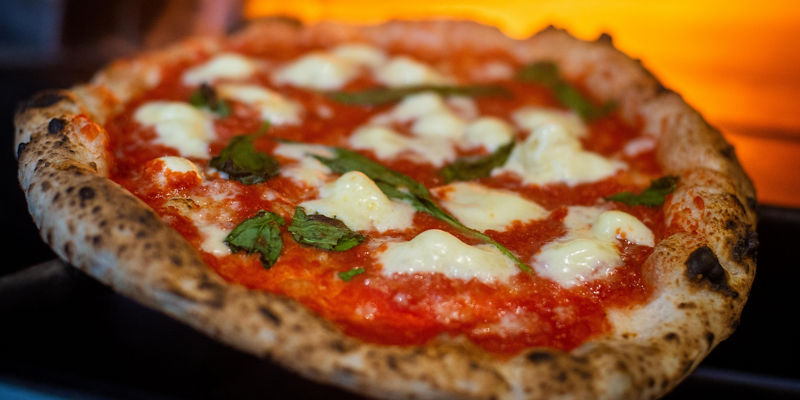
In 1889, Italy’s Queen Margherita visited Pizzeria Brandi in Naples. Using tomatoes, mozzarella cheese and fresh basil, Raffaele Esposito made a pizza for the queen that featured the three colors of the new Italian flag. She, like so many people after her, loved it.
Italians take their pizza personally
If you order pizza in an Italian pizzeria, remember that Italian pizza is usually served in one size—personal. One bite, and you will understand why Italians believe there are two kinds of pizza in the world: Italian, and everything else.
-
Amber and artistry in Gdańsk
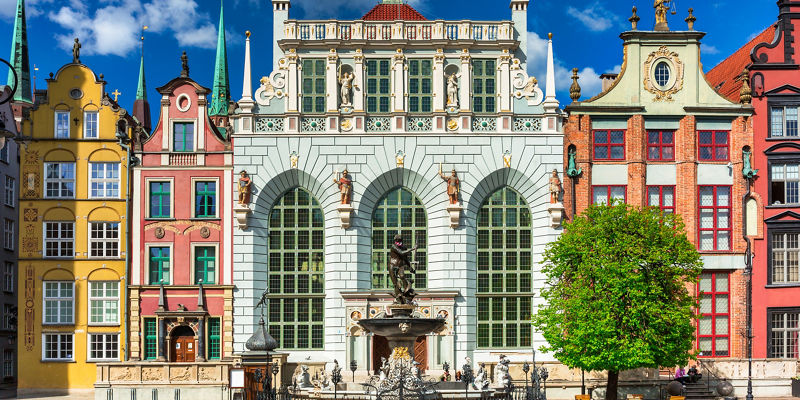
The amber craft has been cultivated in Gdańsk for centuries. The city’s first amber workshop dates back to the 10th century, and the first amber guild was established in Gdańsk in 1477.
Amber is the fossilized resin that oozes out of certain trees. Baltic amber—a type of amber found only in Northern Europe—accounts for approximately 80% of the world’s amber. And while natural forces like glaciers and rivers brought amber to Poland, commercial forces would carry the work of Gdańsk artisans throughout Europe, Asia and beyond.
Today, as it has been for centuries, Gdańsk is synonymous with this beautiful gemstone.
Gdańsk’s golden age of amber
In the late 16th and early 17th centuries, the demand for amber pieces and artifacts increased dramatically. Amber goods joined the collections of Polish royalty, aristocrats and clergy, and made their way into the courts of dukes and monarchs across Europe. Masterpieces by Gdańsk amber artists were prized by popes, tsars and sultans—even France’s “Sun King,” Louis XIV.
Demise and rebirth
World War I and World War II devastated the amber craft in Europe; in Gdańsk, not a single workshop survived. But in the decades since, artists have breathed new life into the city’s amber tradition. Today, Gdańsk amber masters and their art are appreciated around the world. The city is home to the headquarters of the International Association of Amber Masters, as well as the world’s two largest amber fairs.
-
Discover the charm of Finland’s second oldest city
Located about 30 miles from Helsinki, Porvoo is nearly two centuries older than the White City of the North. Founded nearly 800 years ago, the charming medieval town is connected to the Gulf of Finland by the “Porvoonjoki,” or Porvoo River, which winds past the city's most famous landmarks: the red shore houses. Porvoo has been the home and inspiration of many Finnish artists for centuries.
-
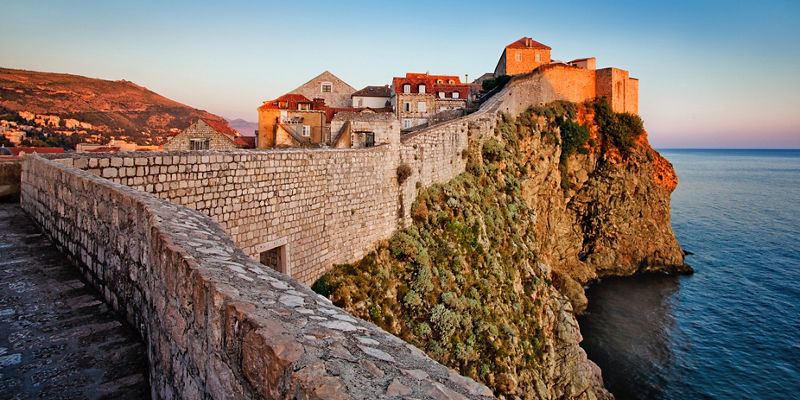
Dubrovnik’s city walls
The city walls of Dubrovnik stand among the most impressive and best-preserved fortification systems in Europe, reflecting centuries of strategic planning and architectural innovation. Encircling the historic Old Town, these formidable defenses were developed over several hundred years, beginning in the 13th century, and played a crucial role in protecting the Republic of Ragusa from both land and sea threats.
The earliest forms of Dubrovnik’s defenses date back to the early medieval period, when the settlement was still evolving from two separate communities—one on a rocky island and the other on the mainland. As the two merged, defensive walls were constructed to enclose the growing town. By the 13th century, Dubrovnik had begun building more substantial stone fortifications, replacing earlier wooden structures to better withstand attacks and natural forces.
The walls were significantly expanded and reinforced as Dubrovnik rose to prominence as a powerful maritime republic, particularly during the 15th and 16th centuries. The city’s wealth, derived from trade and diplomacy, made it a target for rival powers such as Venice and the Ottoman Empire. In response, the Republic of Ragusa invested heavily in advanced defensive systems, employing some of the finest architects and engineers of the time. These efforts resulted in a sophisticated network of walls, towers and forts that could repel both naval assaults and land-based invasions.
One of the most notable features of the walls is their scale and engineering precision. Stretching approximately 1.2 mi (1.94 km) in length, the walls reach heights of up to 82 ft (25 m). They vary in thickness, with some portions measuring up to 20 ft (6 m) deep.
Several prominent fortifications are integral to the defensive system. Minčeta Tower, located at the highest point of the walls, became a symbol of the city’s strength and resilience. Completed in the 15th century and redesigned in a circular form to improve defense against cannon fire, it offered commanding views of both the city and surrounding territory. Meanwhile, Bokar Fortress guarded the western entrance, and Fort St. John protected the harbor, ensuring the safety of Dubrovnik’s vital maritime activities.
The walls were not only defensive structures but also a reflection of the republic’s political philosophy. Dubrovnik prized its independence and maintained a strict policy of neutrality and diplomacy. Its fortifications served as a physical manifestation of this independence, deterring invasion and allowing the city to thrive without prolonged occupation by foreign powers.
Despite their strength, the walls were tested by natural disasters as well as military threats. A devastating earthquake in 1667 caused widespread damage throughout Dubrovnik, including sections of the fortifications. However, the city quickly undertook repairs and reinforcements, preserving the essential structure of the walls.
Remarkably, Dubrovnik’s city walls were never breached by hostile forces during the Republic of Ragusa’s existence. Today, they remain largely intact, offering visitors a unique opportunity to walk along a continuous circuit of medieval and Renaissance fortifications. -
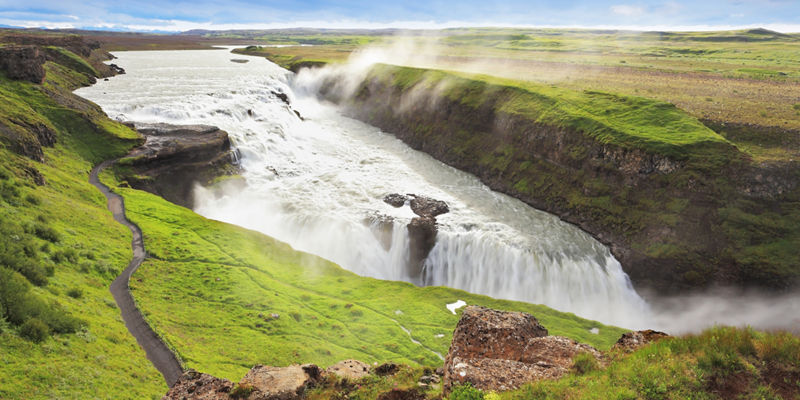
Iceland’s incredible geological wonders
A journey along Iceland’s Golden Circle delivers you to jaw-dropping vistas. The drama and power of nature are alive and well in this breathtaking corner of Iceland. Here are three highlights of this unforgettable drive:
Thingvellir National Park
Iceland’s history, culture and remarkable geology merge in Thingvellir National Park. Here, Vikings established the world’s first democratic parliament in 930 AD and met annually at encampments amid its splendid beauty. Comprising a picturesque rift valley, the park is an enormous patchwork of pastures, rivers, waterfalls and water-filled fissures marking the convergence of the North American and Eurasian tectonic plates. So central is Thingvellir to Iceland’s cultural identity that many have referred to it as a sacred church.
Gullfoss
The tiered “Golden Falls” of Iceland are perhaps the country's most majestic. This magnificent natural wonder of the Hvitá River cascades in two stages, falling 36 feet and then 69 feet into the 105-foot-deep Hvitá Canyon, which carries the voluminous water away in a roaring torrent. Rainbows play off the mist on sunny days, creating a magical atmosphere. With their breathtaking beauty, they have become a symbol of Iceland’s commitment to preserving its natural treasures.
Haukadalur
A sprawling, mountain-ringed valley, Haukadalur is home to surging geysers and other geothermal wonders. Its most visited geyser is Strokkur, which reliably erupts every six to ten minutes and sends jets of hot-spring water up to 60 feet in the air. The other notable geyser in the area, which erupts only rarely, is known simply as Geysir. This derivative of the Old Norse word for “gush” is what gave all other geysers their name. In the volcanic ecosystem of Haukadalur, hot springs, mud pools and fumaroles bubble and steam, creating an otherworldly atmosphere.
-
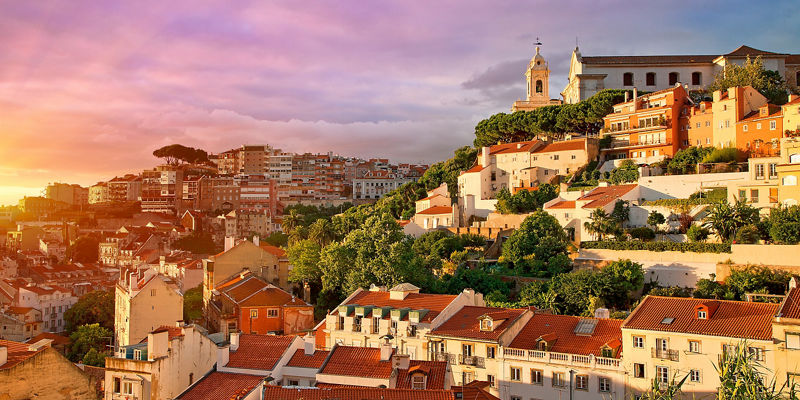
Lisbon, Portugal’s historic capital city
With a population of more than 500,000 people, Lisbon is Portugal’s largest city. It is also one of the oldest cities in Europe, boasting more than 2,000 years of continuous human habitation.
A desirable destination for centuries
Lisbon was occupied by the Romans, various Germanic tribes and the Moors before the Crusaders recaptured it in the 12th century. Lisbon’s long, eclectic history and strategic location as a seaport have contributed to its unique mix of cultures, while its Mediterranean climate and affluent lifestyle make it one of the most livable cities in the world.
Two UNESCO World Heritage Sites
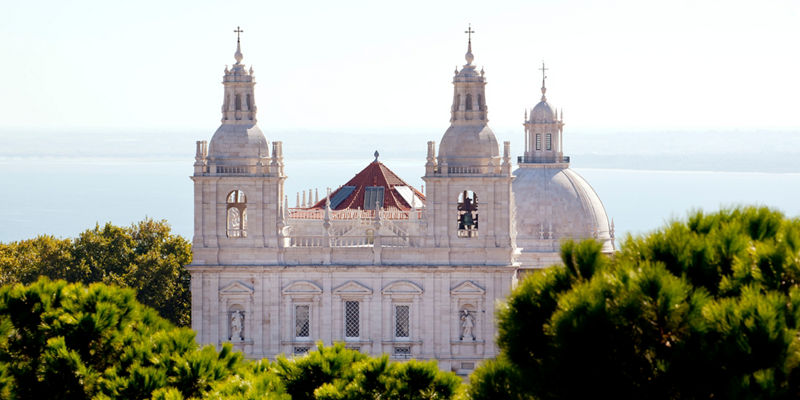
Lisbon is home to two adjacent UNESCO World Heritage Sites. The Jerónimos Monastery is one of the most prominent examples of the Portuguese late Gothic Manueline-style architecture. Not far from the monastery, the Belém Tower stands on the bank of the Tagus River. Built in the early 16th century to defend the port entrance, the tower was dedicated to St. Vincent, the patron saint of Lisbon.
Exploring Alfama
The Alfama district is one of the oldest quarters in Lisbon and still retains much of its original layout. Decorative tiled building facades line narrow medieval streets. In the evening, visitors can hear haunting strains of fado, a distinctively Portuguese style of music, emanating from the old quarter’s many cafés and restaurants.
Other delights
From history and architecture to food and wine, Lisbon has something for many appetites. You can sample the local cuisine and port wines for which Portugal is famous and visit the city’s fascinating museums and beautiful cathedrals.
-
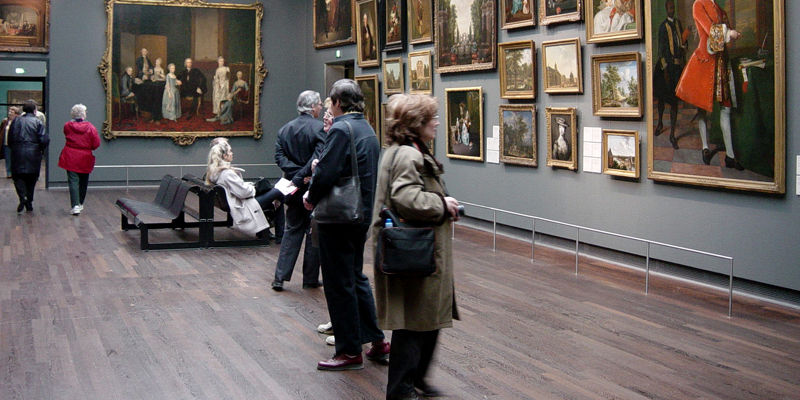
Meet the Dutch Masters
The Dutch Golden Age (17th century) was a prodigious period for Dutch trade, science and the emergence of noteworthy artists who would come to be known as the Dutch Masters. Meet five of them below and find out where you can see artwork from this celebrated era while you are visiting The Netherlands.
- Frans Hals (1583–1666) – Known as Hals the Elder, he is known for his group portraiture and painterly brushwork that helped usher in the more dynamic and lifelike Golden Age painting style.
- Rembrandt van Rijn (1606–1669) – Considered by many to be the most important painter in Dutch history, Rembrandt produced an extraordinary body of work, including both paintings and etchings. He focused on Biblical and historical subjects and created many portraits and self‑portraits.
- Aelbert Cuyp (1620–1691) – This native of Dordrecht was best known for his landscapes, particularly Dutch and Italian ones. He painted large vistas of the Dutch countryside in the early morning or late afternoon light, with particularly compelling renderings of clouds.
- Jan Steen (1629–1679) – From Leiden, Steen captured daily life in all its lusty, chaotic glory. There is even a Dutch expression, een huishouden van Jan Steen (“a Jan Steen household”), which means a messy, cluttered scene. He painted historical, mythological and religious scenes as well as portraits and still lifes—always with insight and humor.
- Johannes “Jan” Vermeer (1632–1675) – With only 34 extant works attributed to him, Vermeer may not have been the most prolific Dutch Master, but he worked with great care and his domestic scenes are beloved. Two of his best-known works are Girl with a Pearl Earring and The Milkmaid.
Works of the Dutch Masters are on display around the world. In The Netherlands, you can see them at the Rembrandt Museum, the Rijksmuseum, the Amsterdam Hermitage and the Royal Picture Gallery at The Hague.
-
Notable figures associated with Dubrovnik
Dubrovnik has been home to many remarkable individuals whose contributions to literature, science, art and public life helped shape not only the identity of the city, but also the broader cultural and intellectual landscape of Europe. Below are eight historic figures who embody the city’s rich legacy of achievement and innovation:
- Nikola Božidarević (1460–1517)
One of the most important painters of the Dalmatian Renaissance, Nikola Božidarević—also known as Nicholas of Ragusa—was renowned for his intricate altarpieces and use of gold leaf. His religious works, characterized by delicate detail and vibrant color, represent the artistic peak of Dubrovnik’s late medieval period.
- Marin Držić (1508–1567)
A leading voice of the Croatian Renaissance, Marin Držić was a brilliant playwright and satirist whose works vividly portray the social dynamics of 16th-century Dubrovnik. His comedies, such as Dundo Maroje (Uncle Maroje), are celebrated for their lively characters and sharp wit. Držić’s writing not only entertained audiences but also offered insight into the complexities of human behavior, making his plays foundational to the Croatian theatrical tradition. - Miho Pracat (1522–1607)
A successful merchant and shipowner, Miho Pracat became renowned not only for his wealth but also for his generosity. Upon his death, he donated his entire fortune to the Republic of Ragusa, earning lasting admiration. His legacy is unique—he is the only common citizen honored with a monument inside the Rector’s Palace, a distinction that underscores the value Dubrovnik placed on civic virtue and public service.
- Cvijeta Zuzorić (1552–1648)
An accomplished lyric poet and humanist, Cvijeta Zuzorić was known for her intellectual brilliance and cultural influence. Her literary salon in Dubrovnik attracted writers, philosophers and artists from across Europe, fostering an environment of creative exchange during the Renaissance.
- Ivan Gundulić (1589–1638)
A central figure of Ragusan baroque literature, Ivan Gundulić wrote poetry and dramatic works that championed justice, faith and freedom. His epic poem Osman, which was inspired by the Polish-Lithuanian Commonwealth’s defeat of Ottoman sultan Osman II at Chocim in 1621, is widely regarded as one of the greatest achievements in Croatian literature.
- Andrea Pozzo (1642–1709)
Though originally from Italy, Andrea Pozzo left a lasting legacy in Dubrovnik through his architectural and artistic contributions. A master of baroque design and perspective, he was responsible for the plans of the Collegium Ragusinum, which was constructed between 1699 and 1725. His work brought the grandeur of Roman baroque architecture to the Adriatic coast, enriching Dubrovnik’s cultural landscape.
- Luka Sorkočević (1734–1789)
A member of a prominent aristocratic family, Luka Sorkočević was both a diplomat and a composer. He is best known for writing some of the earliest symphonies in Southeastern Europe, introducing classical musical forms to the region. Today, his compositions are stored at the Franciscan Monastery of the Friars Minor.
- Ruđer Bošković (1711–1787)
One of Dubrovnik’s most distinguished figures, Ruđer Bošković was a Jesuit polymath whose work spanned physics, astronomy, mathematics and philosophy. His early atomic theory, which proposed that matter is composed of point-like particles interacting through forces, anticipated later scientific discoveries. Internationally recognized during his lifetime, Bošković’s legacy remains so significant that Dubrovnik’s international airport bears his name.
- Nikola Božidarević (1460–1517)
-
Portugal, Europe’s westernmost country
Situated in southwestern Europe on the Iberian Peninsula, Portugal is Europe’s westernmost country; it is bordered by the Atlantic Ocean to the west and south and by Spain to the north and east. The Atlantic archipelagos of the Azores and Madeira are part of Portugal. The country is named after its second largest city, Porto, whose Latin name was Portus Cale.
The lands that now comprise the Portuguese Republic have been inhabited by humans since prehistoric times, first by Celtic tribes and the related Lusitanian people. Like most of Europe, it was integrated into the Roman Empire; later it was settled by Germanic tribes and then in the 8th century it was conquered by the Moors. Portugal eventually established itself as an independent kingdom during an 800-year period called the Reconquista (“Reconquest”) during which the entire Andalusian region was wrested from Muslim control and established as a Christian area. Moorish architectural influences remain in Portugal to this day.
In the 15th and 16th centuries, Portugal joined the colonialist “Age of Discovery,” expanding its empire to include possessions in Africa, Asia, Oceania and South America. During this time Portugal was one of the world’s most powerful economic, political and military global powers. Because it started so early, the Portuguese Empire was the longest-lived of the European colonial empires, spanning almost six centuries from the capture of Ceuta just across the Strait of Gibraltar in 1415 to the handover of Macao to China in 1999. However, the country’s international status was greatly reduced during the 19th century, particularly after its largest colony—Brazil—became independent.
Portugal was a monarchy for many centuries, but this ended in a revolution circa 1910. Much of the 20th century saw political turmoil in Portugal; democracy was restored in 1974 and most of Portugal’s remaining provinces, notably Angola and Mozambique, achieved their independence.
Today, Portugal is a well-developed country with a high quality of life and a peaceful nature that makes it especially pleasant to visit. It is a member of the European Union, the United Nations and the Eurozone, among other organizations. Residents enjoy a prosperous lifestyle, a multi-party democracy with both a president and a prime minister, multiple religious traditions (81% Roman Catholic but also Mormon, Muslim, Sikh, Baha’i, Buddhist and Jewish), both traditional and high-tech career options and many cultural and artistic outlets. Its cuisine reflects its geography and history, with traditional dishes featuring fish and meats and of course the famous sweet wines like port, Madeira and Moscatel.
The Portuguese language is a relative of Spanish but with Arabic and Galician influences; at one time it was considered a lingua franca in large areas of Asia and Africa. It is still spoken in Brazil and in parts of Africa and Asia today, and it is an especially appealing language for song and poetry.
-
Portugal, the land of explorers
With its long Atlantic coastline, Portugal has a prolific seafaring past. Six centuries ago, explorers began to sail from Portugal’s shores to establish trade routes with India, Brazil and beyond, and to lay claim to new lands.
Evolution of discovery
After the bubonic plague took its devastating toll in the 14th century, King Alfonso IV ordered the first exploratory journeys to encourage maritime commerce. Over the years, Portuguese sailing ships grew larger and sturdier, adding cannons and other weaponry. Square sails gave way to the triangular sails of the double-masted caravel, which borrowed the shape from North African sailing ships. By the 15th century, Portuguese ships featured three masts so they could travel farther and accommodate more cargo. Portuguese navigators took Arabic technologies like the quadrant and the astrolabe and improved them. These navigators mapped previously uncharted territories and helped create and refine the astronomical tables used in almanacs.
Pantheon of explorers
Portugal boasts some of history’s most celebrated explorers. Infante Henry, better known as Henry the Navigator, is revered as the patron saint of Portuguese exploration. Vasco da Gama, the first European to reach India by sea, enabled Portugal to establish a colonial empire in India. Five of his six sons also ventured out to sea. Ferdinand Magellan led the expedition that resulted in the first circumnavigation of the globe in 1522. Although Magellan was killed in the Philippines, his crew successfully completed the historic expedition. Before Christopher Columbus sailed for Spain, he applied twice to sail for Portugal but was rejected both times.
Empire and influence
Because of this exploration, Portugal was able to take early possession of many colonies. Beginning in 1415 with Cueta, a small area on Africa’s north coast just across from Gibraltar, Portugal built a vast network of territories, creating wildly successful trade routes and establishing colonies in Africa, Asia and Latin America. During the 20th century, all the colonies achieved their independence, culminating with the handover of Macau in 1999. Portugal’s influence, however, is still evident. To this day, Portuguese is spoken in Brazil, Argola, Cape Verde, Guinea-Bissau, Mozambique, São Tomé, Principe and East Timor.
-
The history of Swiss fondue
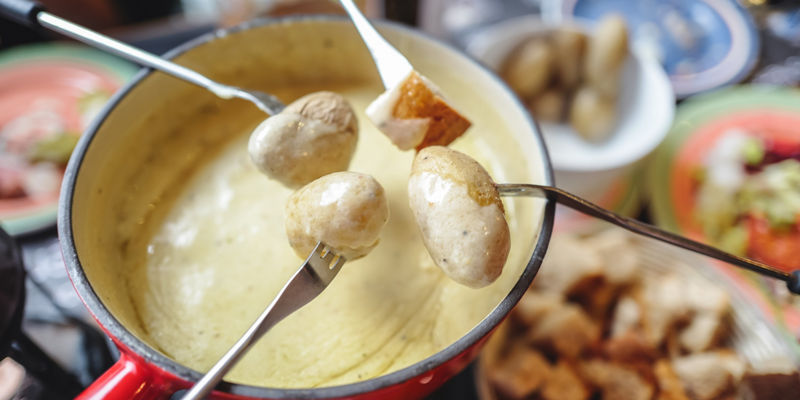
Few things are as comforting as a piping-hot meal of fondue. This deceptively simple dish of cubed bread dipped in warm, melted cheese was declared the national dish of Switzerland during the 1930s. In the years since, this culinary delight has grown from humble entrée to worldwide indulgence.
The origins of fondue can be traced to 18th-century Switzerland, when families in Alpine farm villages invented the dish to use up their stale bread, excess cheese and day-old wine. Dipping the hardened bread into the cheese made it soft and delicious once more, while heating the wine along with the cheese enhanced the flavors of both ingredients. From these unassuming origins grew a beloved winter tradition.
Throughout Switzerland, various regions boast their own favored fondue iterations. In Valais, for example, Gruyère is often mixed with raclette, whereas those in Bern prefer to blend their Gruyère with Emmental (i.e., what most Westerners call “Swiss cheese”). No matter how it is prepared, you are sure to enjoy the delicious, indulgent flavors of this classically Swiss combination.
-
The Spanish siesta tradition
Here is a scenario that might be familiar to many a traveler in Spain. Having spent the morning exploring some charming village, you decide around noon that a cool glass of sangria and a savory bocadillo sandwich may be just what you need. But none of the restaurants seem to be open. It might occur to you that things have shut down for the siesta, the traditional afternoon nap that is still observed in many parts of Spain. But, that would not be technically correct.
Most restaurants in Spain don’t open until about 2:00 PM, when businesses close for the long midday break called mediodía (midday). Spaniards usually have a light breakfast followed by a late-morning snack called an almuerzo. Around 2:00 PM comes la comida, the largest meal of the day, which can be a three-course social affair, perhaps with wine. The actual napping, the siesta, comes after this heavy meal and lasts for only about 15 minutes. Workers may return to work after their comida or siesta and finish by 8:00 PM. They may then visit a tapas bar for drinks and snacks before the last meal of the day, the light supper called la cena, served between 9:00 and 11:00 PM.
While many foreigners have uncharitably labeled the Spanish as “lazy” because of their siestas, Spaniards actually work longer hours than their European counterparts and get less sleep. In fact, midday naps have been a part of many cultures for thousands of years, particularly those in warmer climates where the populace needed rest and shelter from the noontime sun. Yet, despite ample scientific evidence that napping is good for productivity, cardiac health and emotional well-being, the siesta tradition could soon be put to permanent rest.
-
Tips for shopping in Portugal
In Portugal, particularly in the larger cities like Lisbon and Porto, you can find famous international brands as well as up-and-coming designers. There are several large shopping centers to visit, and Lisbon has an El Corte Inglês, a 9-story Spanish department store offering everything from clothing and furniture to cosmetics and groceries.
The urban Portuguese are a fashion-conscious people and make a point of wearing the best fabrics they can afford; Lisbon in particular is a great place to find sophisticated designs and especially fine leather goods like shoes and handbags. The outdoor markets have a wide variety of wares, but the quality may be better in the shops and department stores.
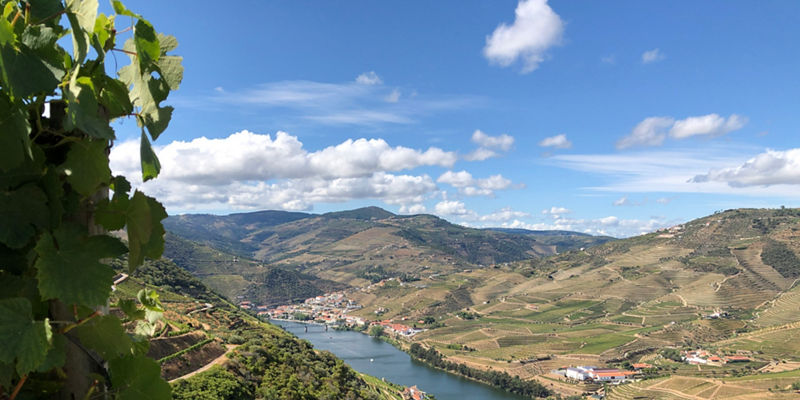
There are certain items unique to Portugal that you might want to look for. First of all, of course, there are the port wines. You can acquire these at the quintas (country villas or estates) you will be visiting—get a couple of bottles to enjoy on board your ship, or purchase some and have them sent to your home to enjoy later or to give as gifts.
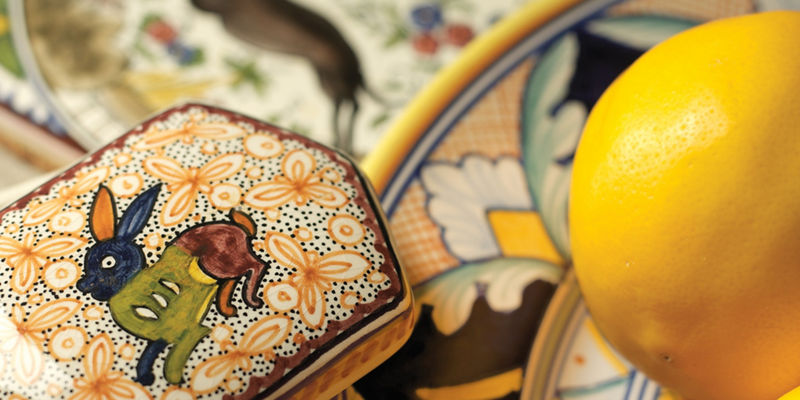
Craft treasures include glazed earthenware pottery—you can get some of Portugal’s famous tiles or colorful ceramic pieces such as trinket boxes, kitchen jars and the country’s iconic roosters. You can also look for dishes, serving pieces and cookware, including the pots used to make Frango na Púcara and other traditional dishes, and cheerful, rustic-looking plant containers for your home and garden.
The country’s seafaring past has led to the popularity of intricate model ships; you can find these either inside of bottles or on their own. They are delicate, so if you decide to purchase one make sure to get it carefully packaged for transport.
In the more crafts-oriented boutiques, you will find some products from the Portuguese archipelago of Madeira, including Madeira and port wines, handmade lace and hand-embroidered linens. You can also find some novelty items made from cork; most of the world’s cork comes from Portugal.
Portugal has a specialty in the jewelry arena: filigree. Look for intricate gold and silver filigree pieces, often heart- or leaf-shaped, including pendants, earrings and bangle or cuff-style bracelets. You can also find beautiful cross pendants, rosaries and crucifixes, both in shops and near the religious sites you will be visiting.
Europe Highlights
Europe’s treasures reveal themselves in countless ways—from the breathtaking fjords of Norway to the storied shores of antiquity along the Mediterranean. Home to iconic cities like Venice, Vienna, Copenhagen, Prague and Dublin, as well as charming medieval villages, this is a continent best explored via its waterways. Here are a few of the highlights you may experience on a European journey:
- A leisurely boat ride through Amsterdam’s famous canals
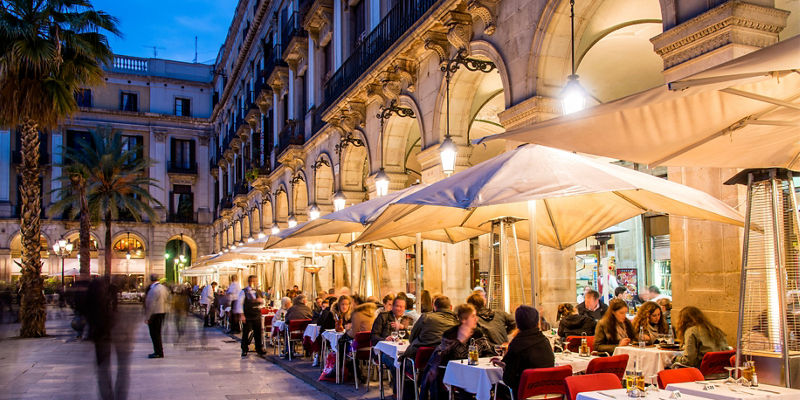
- Lively tapas bars showcasing Spain’s culinary scene
- The diverse collection of the British Museum in London
- The UNESCO-listed Palace of the Popes in Avignon
- Lisbon’s Jerónimos Monastery, a Manueline masterpiece
- The impressive collections of the Louvre Museum in Paris
- A moving visit to the Berlin Wall Memorial
- Porto’s famous ruby-colored fortified wine
Destination Insight Videos

The Impressionists (3:19)
Learn the story of how impressionist paintings by Monet, Renoir, Cézanne and Degas forever changed the face of the art world and became a symbol of modern French life. Follow these iconic artists’ footsteps on a France river cruise with Viking.

Antoni Gaudí’s Architecture (3:53)
Step into the mind of Antoni Gaudí, the colorful Barcelona artist whose passion for nature led him to create astounding biomimetic architecture and seven UNESCO World Heritage Sites.


Europe Travel FAQ
All-Inclusive Itineraries—Europe
Choose one of our enriching, all-inclusive voyages and discover the many benefits of exploring in Viking comfort.
Iconic Western Mediterranean
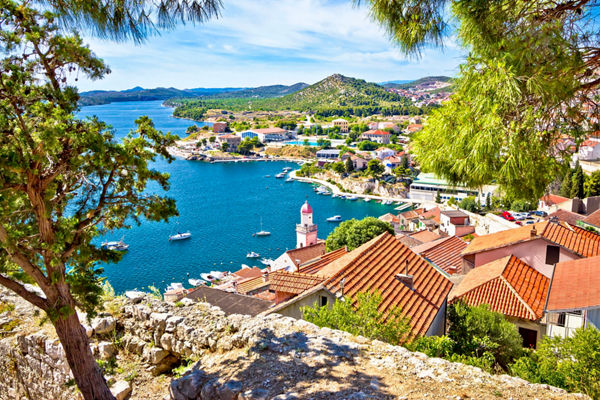
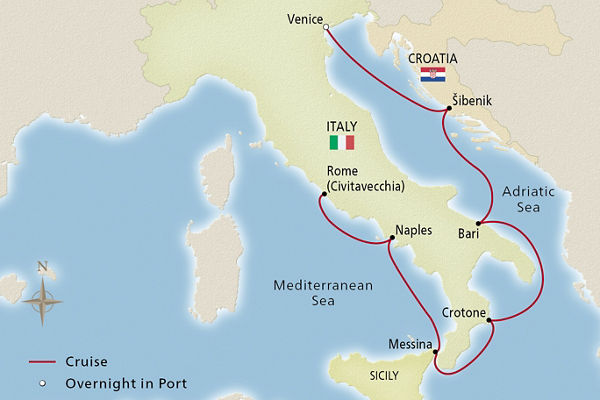
Italian Sojourn
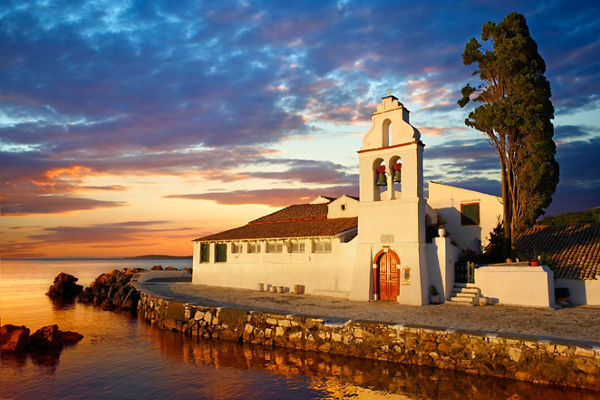
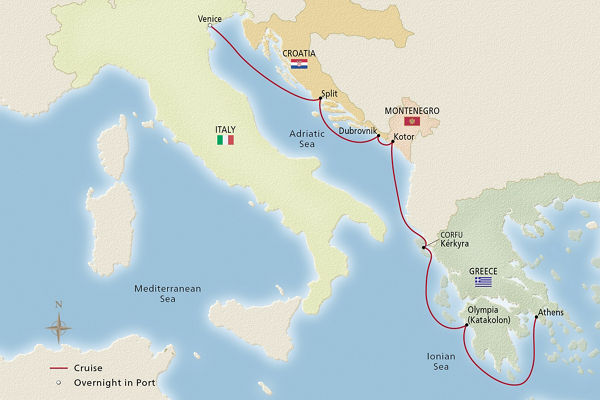
Venice, the Adriatic & Greece