1. Rivers
  2. Oceans
  3. Expeditions
  1. Complimentary Brochures
Call Viking at 1-800-304-9616 or Contact Your Travel Advisor
Viking Viking Viking
Please fill out this field
Menu
  1. Rivers
  2. Expeditions
Please fill out this field
Use enter or spacebar key to select the link
Use enter or spacebar key to expand or collapse the menu
    • Find A Cruise
    • Destination Map
    • Special Offers
    • New Itineraries
    • Regions

      Europe

      • British Isles & Ireland
      • Mediterranean
      • Scandinavia
      • Other Destinations

      Africa & Middle East

      North America

      • Alaska
      • Canada
      • Mexico
      • United States
      • Other Destinations

      Caribbean & Central America

      South America

      Asia

      Australia & New Zealand

    • Waterways
      • Mediterranean Sea
      • North & Baltic Seas
      • Caribbean Sea
      • Panama Canal
      • Atlantic Ocean
      • Pacific Ocean
      • Indian Ocean
      • Arctic Ocean
    • Seasonal & Combination
      • Italy: Always in Season
      • Quiet Season Mediterranean
      • Northern Lights
      • Panama Canal
      • World Cruises
      • Grand Journeys
      • Ocean Crossings
      • River + Ocean Combinations
    • Other Cruise Types
      • Expeditions
      • Rivers
    • Fleet Overview
    • 360° Ship Tour
    • Ocean Ships
      • Viking Astrea
      • Viking Jupiter
      • Viking Leda
      • Viking Libra
      • Viking Lyra
      • Viking Mars
      • Viking Mira
      • Viking Neptune
      • Viking Orion
      • Viking Saturn
      • Viking Sea
      • Viking Sky
      • Viking Star
      • Viking Vega
      • Viking Vela
      • Viking Venus
      • Viking Vesta
    • The Viking Difference
    • Webinars
    • Did You Know?
    • Cultural Partners
    • Awards
    • My Viking Story
    • Community
    • News
    • Complimentary Brochures
    • One Viking
    • Pre & Post Extensions Overview
    • Shore Excursions Overview
    • My Viking Journey
    • Viking Air
    • Updates on Current Sailings
    • Travel Information
    • Travel Protection Plan
    • Frequently Asked Questions
    • Silver Spirits Beverage Package
    • Why Viking
    • Cruise Itineraries
    • Destination Insights
    • Ships
    • All
Please fill out this field
Speak with a Viking agent to get expert help in building your journey.
Call Now 1-800-304-9616
Edinburgh Castle with historic architecture

Experience the delights of Edinburgh

Scotland’s historic capital captivates visitors with its medieval streets, striking landmarks, world-famous festivals and rich literary heritage. Read on to discover the traditions behind Scotland’s national drink, explore Edinburgh’s vibrant festival culture and delve into the lives of seven influential figures who helped shape the city.
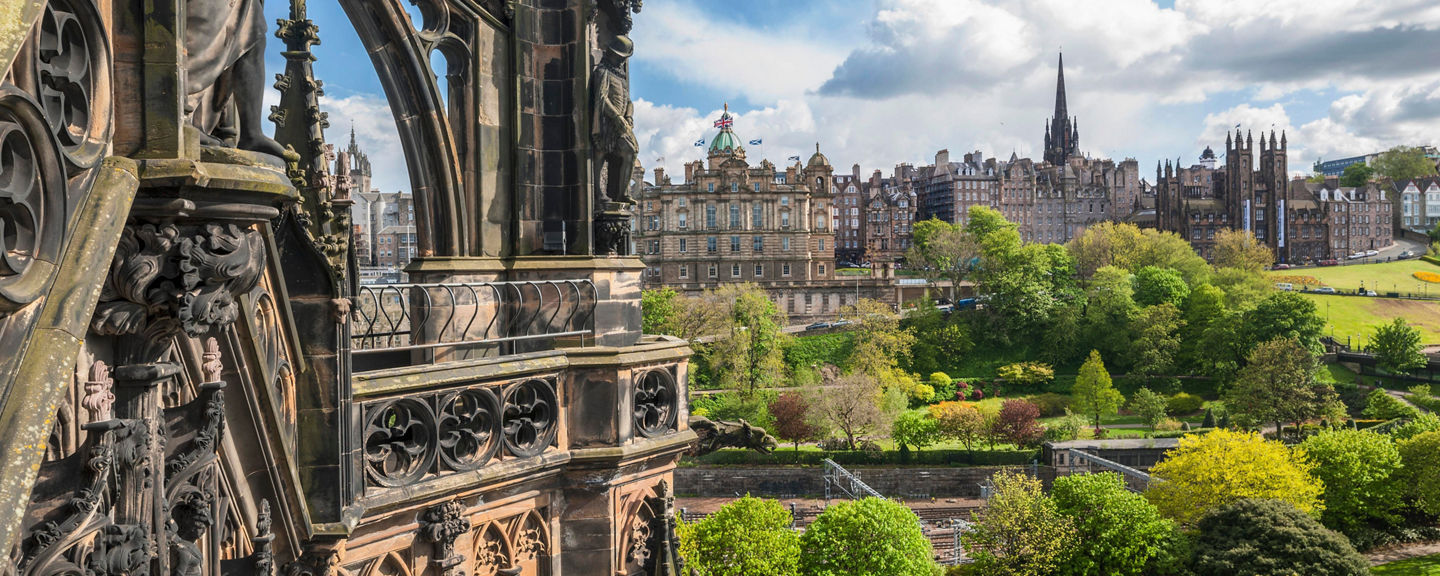
Historic Gothic Monument Overlooking City Park

Edinburgh

Edinburgh, the capital of Scotland, is situated along the southern shore of the Firth of Forth in the country’s east-central Lowlands. The city is shaped by a dramatic landscape of volcanic hills, ridges and valleys, with the Water of Leith winding through its western and northern districts on its way to the sea. Historic and modern neighborhoods sit among parks and green spaces, giving Edinburgh a distinctive blend of urban life and natural scenery.

At the heart of the city lies the Old Town, which stretches along a ridge from Edinburgh Castle to the Palace of Holyroodhouse. Adjacent to it is the Georgian New Town, renowned for its elegant grid of streets and squares. An extensive network of buses provides transportation across the city, complemented by a tram line linking the city center with Edinburgh Airport and Leith, a nearby historic port district.

Edinburgh has a cool temperate climate, with an annual average temperature in the upper 40s °F (around 9 °C). Weather conditions can change quickly, with sunshine, clouds and rain often occurring within the same day. Winters are generally brisk and may bring short-lived snowfall.

Edinburgh’s history stretches back thousands of years, with evidence of human settlement in the area dating to prehistoric times. The city’s strategic position atop volcanic ridges and defensible hills made it an important stronghold long before it became Scotland’s capital. By the early Middle Ages, Edinburgh had emerged as a royal and military center, with Edinburgh Castle occupying the prominent rock that still dominates the city's skyline.

During the 12th century, King David I established Edinburgh as one of Scotland’s principal royal burghs, encouraging trade and urban development. The settlement expanded along the ridge below the castle, forming what is now known as the Old Town.

Edinburgh became the capital of Scotland in 1437, replacing Scone. The city was profoundly shaped by the Scottish Reformation of the 16th century and by the turbulent relationship between Scotland and England. In 1603, the Union of the Crowns brought Scotland and England under a single monarch when James VI of Scotland became James I of England. Although political power increasingly shifted southward, Edinburgh remained the intellectual and administrative heart of Scotland.

The 18th century marked a period of extraordinary cultural achievement known as the Scottish Enlightenment. Philosophers, economists and scientists such as David Hume (1711-1776), Adam Smith (1723-1790) and James Hutton (1726-1797) helped make Edinburgh one of Europe’s leading centers of learning and innovation. During the same period, the city commissioned the construction of the New Town, whose elegant Georgian streets and squares relieved overcrowding in the medieval Old Town and transformed Edinburgh’s appearance.

The 19th century brought industrial growth and urban expansion, while Edinburgh simultaneously cultivated a reputation as a center of education, publishing and medicine. Much of its historic core remained intact, preserving a remarkable collection of medieval, Georgian and Victorian architecture.

Today, Edinburgh reflects the many layers of its past. The contrasting characters of the Old Town and New Town, together designated as a UNESCO World Heritage Site, illustrate the city’s evolution over several centuries. Historic landmarks, universities, cultural institutions and annual events continue to reinforce its status as one of Europe’s most influential cultural capitals.

Here are some of the key landmarks and cultural destinations you can encounter during a visit to the city:

  • Edinburgh Castle—Perched atop an ancient volcanic rock, Edinburgh Castle is Scotland's most iconic fortress. It has played a central role in the nation's history for centuries and is home to the Scottish Crown Jewels and the 12th-century St. Margaret's Chapel, the oldest building in the city. Visitors can also see the Stone of Destiny, the historic coronation stone used in the inauguration of Scottish kings and queens, explore royal apartments and enjoy panoramic views across Edinburgh.
  • Royal Mile—Running through the heart of Edinburgh's Old Town, the Royal Mile is a series of streets comprising the main thoroughfare that links Edinburgh Castle with the Palace of Holyroodhouse. Lined with historic buildings, museums, shops, and hidden closes, it offers a fascinating glimpse into the city's past.
  • Palace of Holyroodhouse—Situated at the foot of the Royal Mile, the Palace of Holyroodhouse serves as the official royal residence in Scotland. Visitors can explore its historic state apartments, beautiful gardens and the ruins of Holyrood Abbey. Mary, Queen of Scots, lived here during the 16th century.
  • St. Giles’ Cathedral—Located on the Royal Mile, St. Giles' Cathedral has been a focal point of Scottish religious life for more than 900 years. The cathedral is renowned for its distinctive crown steeple, magnificent stained glass and richly decorated Thistle Chapel. Its historic interior reflects the pivotal role it played during the Scottish Reformation.
  • Scott Monument—Dedicated to Sir Walter Scott (1771-1832), one of Scotland's most celebrated authors, this striking Gothic monument dominates Edinburgh's city center. Visitors can climb a series of narrow staircases to enjoy panoramic views across the city.
  • The Real Mary King’s Close—Hidden beneath Edinburgh's Old Town, the Real Mary King's Close preserves a network of historic streets and spaces buried beneath the modern city. Guided tours reveal stories of everyday life in Edinburgh from the 17th century onward. Costumed guides bring the city's past to life.
  • National Museum of Scotland—The National Museum of Scotland showcases collections spanning Scottish history, science, world cultures, design and natural history. Its striking architecture combines a grand Victorian hall with contemporary gallery spaces. Highlights include the world-famous Lewis Chessmen, 12th-century carved gaming pieces linked to Norse culture that are among Scotland's most important archaeological discoveries.
  • Scottish National Gallery of Modern Art—Set within a neoclassical building surrounded by landscaped grounds, this museum houses one of the finest collections of modern and contemporary art in Scotland. Works by artists including Pablo Picasso, Henri Matisse and Andy Warhol are among its highlights. The galleries are complemented by outdoor sculptures and peaceful walking paths within the surrounding parkland.
  • Royal Yacht Britannia—Permanently moored in Leith, the Royal Yacht Britannia served the British royal family for more than four decades. Visitors can explore the elegant state rooms, crew quarters and royal apartments aboard this former floating residence. Retired from royal service in 1997, it offers a fascinating glimpse into life at sea for both the royal family and crew.
  • Surgeons’ Hall Museum—One of the oldest surgical museums in the world, this fascinating institution documents the evolution of medical science through extensive instrument collections and professional history exhibits.
Colorful historic street with painted shopfronts
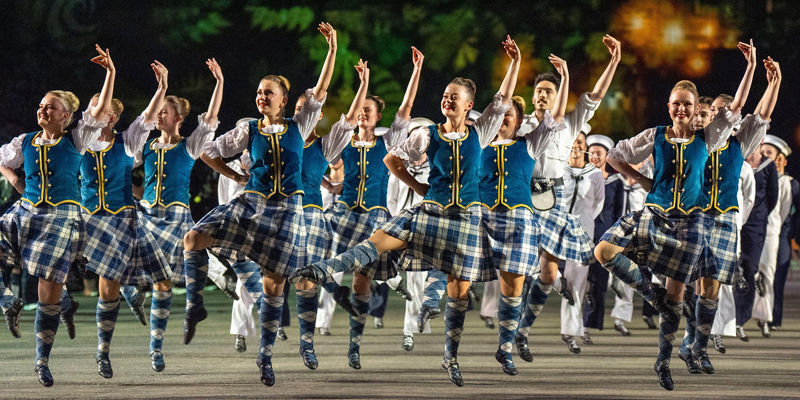
  • Energetic group performance in tartan costumes

    Festivals

    Edinburgh is renowned for its rich calendar of festivals, which take place every month of the year and include Hogmanay over New Year, the Edinburgh Jazz & Blues Festival in July and the Edinburgh Magic Festival in October. August is the prime month, however, when the city hosts the famous Edinburgh Fringe comedy and performing arts festival, the Edinburgh International Festival and the Royal Edinburgh Military Tattoo—alongside three additional events celebrating books, art and film.

    Edinburgh's festival history dates to 1947 when the Edinburgh International Festival was founded as a "celebration of the flowering of the human spirit" in the aftermath of World War II. The program included music, theater, opera and dance. That same year, several theater groups arrived uninvited and staged their own performances, creating what later went on to become the Edinburgh Festival Fringe.

    The Edinburgh Film Festival was also inaugurated in 1947 and is the world's oldest continually running film festival. The Royal Edinburgh Military Tattoo began in 1950, with the Jazz & Blues Festival following in 1978, the Book Festival in 1983, the Science Festival in 1989 and the Art Festival in 2004.

    The Fringe, as it is often known, has become the largest arts festival in the world, with performances famously taking place anywhere from a theater or concert hall to a hotel, pub, library, church hall, public square, garden or pop-up venue. Its sprawling and inclusive approach makes the arts accessible to anyone.

    Tickets are often reasonably priced or free, allowing visitors to sample a range of performances while exploring the capital. They may also immerse themselves in the excitement by strolling among the city's streets and taking in al fresco shows. Many comedians and artists perform along the Royal Mile in particular.

    Whether visitors enjoy comedy, music, literature or spectacle, Edinburgh's festivals offer a memorable way to experience the city's creativity, culture and community spirit.

  • Pouring whiskey into a glass on table

    Scotch whisky

    With a history dating back centuries and more than 150 distilleries across the country making the iconic drink, Scotch whisky is Scotland’s quintessential spirit. The earliest known mention of distilling in Scotland dates to the 15th century, where the practice is mentioned in the Exchequer Rolls of 1494. The record notes that one Friar John Cor received malt to make aqua vitae, or water of life. The word whisky derives from the Gaelic word for this term: uisge beatha.

    At first, whisky was produced for medicinal purposes, by monks and apothecaries alike, before it became a popular drink among the general public. It began to be taxed in the 17th century, which led some producers to distill it illicitly. With the introduction of the 1823 Excise Act, which made legal distilling more financially viable, an industry was born. Technological innovations, including the Coffey still (named after its Irish inventor, distiller Aeneas Coffey), enabled widespread production, and the beverage quickly became one of Scotland’s most important exports.

    Edinburgh became a key city for the whisky trade during the 19th century, thanks to a number of factors, including railway connections and new laws allowing different whiskies to be blended. Ballantine’s was founded by George Ballantine in the 1820s, and the North British Distillery opened in 1885. The port of Leith was a key hub for blending, storage and export.

    Today, the drink is part of Scotland’s national identity, enjoyed across the country in pubs, distilleries and restaurants. Regional varieties, such as those concocted in Speyside and Islay, have become renowned worldwide.

    Travelers to Edinburgh may tour distilleries and taste a wee dram, enjoying the drink’s unique flavor profiles that can run from smoky to peaty, spicy or smooth while taking part in a culinary tradition that dates back centuries. Holyrood Distillery, Johnnie Walker Princes Street, the Scotch Whisky Experience and Port of Leith Distillery all offer a chance to raise a glass to this rich heritage.

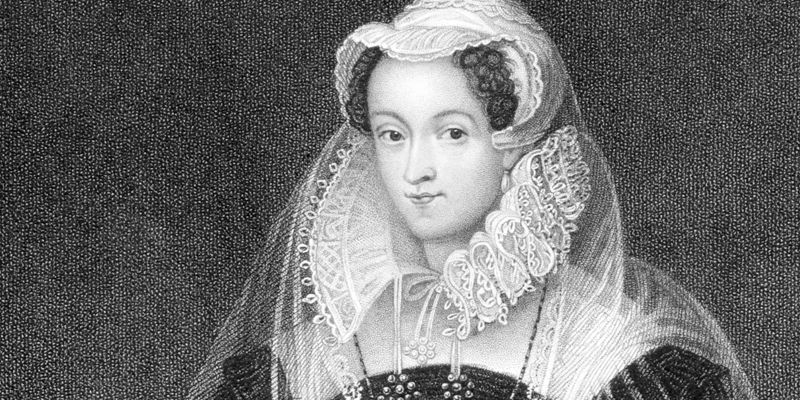
  • Engraved portrait of noblewoman in veil

    Seven influential Edinburgh figures

    Edinburgh has produced a host of remarkable individuals who have shaped art, politics, science and literature on a global scale. The following seven figures represent different eras and fields, but each left an enduring mark on Scottish identity and history.

    • Mary, Queen of Scots (1542-1587)
      Crowned Queen of Scotland at just six days old, Mary, Queen of Scots ruled for 24 years before she was forced to abdicate in 1567. She was eventually imprisoned and executed by order of Elizabeth I. A key part of the city's historic identity, she lived at Holyroodhouse on the Royal Mile.
    • David Hume (1711-1776)
      David Hume was a leading thinker of the Scottish Enlightenment and one of the most influential philosophers in history. His writings on empiricism, skepticism and human nature challenged conventional thinking and helped shape modern philosophy, economics and psychology. Hume was born in Edinburgh and spent much of his life there, a key part of the city's vibrant intellectual community. He is remembered by a bronze statue on the Royal Mile; many visitors rub his toe for good luck.
    • Adam Smith (1723-1790)
      A key figure of the Scottish Enlightenment, Adam Smith is widely regarded as the father of modern economics. His landmark work The Wealth of Nations, published in 1776, transformed economic thought by advocating free markets, competition and the division of labor. Although born in Kirkcaldy, Smith helped establish Edinburgh as one of Europe's great intellectual capitals. His ideas continue to influence governments, businesses and economic policy around the world, more than two centuries after their publication.
    • Sir Walter Scott (1771-1832)
      Born in Edinburgh, Sir Walter Scott was a poet, novelist and historian whose works helped define Scotland's image around the world. Through novels such as Ivanhoe, Rob Roy and the Waverley series, he popularized the historical novel and brought Scottish history, folklore and culture to an international audience. Edinburgh's iconic Scott Monument stands as a tribute to his enduring legacy.
    • Alexander Graham Bell (1847-1922)
      Alexander Graham Bell became one of the world's most influential inventors after developing and patenting the first practical telephone in 1876. His interest in communication stemmed from family work in speech and deaf education, fields he pursued throughout his life. Bell's invention laid the foundations for the modern telecommunications industry. Beyond the telephone, he also contributed to advances in aviation and optical communications.
    • Robert Louis Stevenson (1850-1894)
      Robert Louis Stevenson is one of Scotland's most celebrated literary figures. Despite lifelong health challenges, he produced a remarkable body of work that includes the children's adventure stories Treasure Island and Kidnapped as well as the timeless tale of a physician and his murderous alter ego, The Strange Case of Dr. Jekyll and Mr. Hyde. His stories of adventure, mystery and psychological conflict have captivated readers for generations and inspired several adaptations.
    • Arthur Conan Doyle (1859-1930)
      Born in Edinburgh and educated at the University of Edinburgh Medical School, Sir Arthur Conan Doyle created one of literature's most enduring characters: Sherlock Holmes. Through four novels and 56 short stories, Holmes became the prototype for the modern detective and transformed crime fiction. Doyle was also a physician, historian and prolific writer whose works extended far beyond detective stories. His Edinburgh education, particularly the influence of medical professor Joseph Bell, helped inspire Holmes's famous powers of observation and deduction.

Edinburgh Highlights

Traveling to Edinburgh provides the opportunity to discover a range of striking landmarks and cultural experiences. Here are some highlights you may enjoy during your time in this historic city:

  • Tour Edinburgh Castle, home of the Scottish Crown Jewels
  • Admire the architectural gems of the Royal Mile
  • Peruse the exhibits at the National Museum of Scotland
  • Take a motor coach tour through the Georgian-style New Town
  • Stroll among the medieval streets of the Old Town
  • Take a day trip to the historic Stirling Castle
  • Immerse yourself in the history of the Royal Yacht Britannia
  • Indulge in a whisky tasting and join a bagpipe workshop
  • Sample Scottish produce on a walking tour of the city
  • Visit the historic town of St. Andrews

Edinburgh Travel FAQ

With its rich history, striking architecture, and vibrant cultural scene, Edinburgh is an inspiring destination year-round. Spring and autumn offer a more relaxed atmosphere, with crisp weather and fewer crowds at the city's iconic attractions. Summer (June through August) brings long daylight hours perfect for enjoying outdoor dining, scenic walks, and world-famous events such as the Edinburgh Festival Fringe. Winter adds its own magic, as festive lights, Christmas markets, and cozy pubs create a warm and welcoming atmosphere amid the city's historic streets.

Exploring Edinburgh's UNESCO-listed Old and New Towns is a popular activity in the city. Together, they span centuries of history and architectural styles from the 16th to the 19th century. The capital is also renowned for its festivals, which take place across the year but particularly during the summer months, showcasing comedy, drama, books, film and more.

Edinburgh is a city steeped in literature, numbering among its luminaries Sir Walter Scott (Ivanhoe), Robert Louis Stevenson (Treasure Island) and Arthur Conan Doyle (The Hound of the Baskervilles and other Sherlock Holmes mysteries). Many visitors enjoy tracing their fictional worlds across the city.

Contemporary literature is well represented, too. The atmospheric cobblestone streets and striking Gothic architecture inspired author J.K. Rowling during the creation of the Harry Potter books. Another blockbuster book and film adaptation, Dan Brown's The Da Vinci Code, leans on the city's heritage. Rosslyn Chapel, which dates back to 1446 and has ties to the Knights Templar, features prominently in the story. Edinburgh also provided a memorable setting for David Nicholls' bestselling book (and movie) One Day.

There are also abundant opportunities for a stroll. Princes Street Gardens, which runs along Edinburgh Castle, is an expansive public park separating the Old and New Towns, with winding paths, pristine floral displays and the famous Ross Fountain. Calton Hill on the eastern end of Princes Street, meanwhile, is renowned for its Athenian-style monuments and spectacular views of the Old Town.

Just outside the city center, Holyrood Park offers dramatic hiking opportunities. It is home to Arthur's Seat, an ancient, extinct volcano that rises dramatically above the city and offers 360-degree views. The Water of Leith Walkway is a peaceful river path that passes through Dean Village, a historic riverside enclave; Stockbridge, a lively village-style neighborhood; and Leith, Edinburgh's vibrant waterfront district. The Royal Botanic Garden Edinburgh encompasses 70 acres of beautifully landscaped grounds just north of the city center. It is home to giant redwood trees, thousands of exotic plant species and other horticultural highlights.

Yes. The Old and New Towns of Edinburgh were inscribed as a UNESCO World Heritage Site in 1995, recognizing the city’s unique combination of medieval and Georgian urban design. UNESCO notes that the city’s unique character is a result of “the harmonious juxtaposition of these two contrasting historic areas.”

The Old Town stretches from Edinburgh Castle to the Palace of Holyroodhouse and incorporates a number of 16th - and 17th-century merchants’ and nobles’ houses and historic buildings such as the Canongate Tollbooth and St Giles Cathedral. It is characterized by its narrow closes and courts that lead off from the main High Street. The New Town was laid out in a more orderly, neoclassical fashion during the 18th and 19th centuries and features several large green spaces.

The Forth Bridge, an iconic red cantilevered railway bridge spanning the Firth of Forth, was completed in 1890 and designated a UNESCO World Heritage Site in 2015. It is 9 mi (14 km) west of the city center and is considered a masterpiece of Victorian engineering.

Edinburgh also became the first UNESCO City of Literature in 2004, in honor of the city’s literary pedigree past and present. Celebrated authors associated with the city include Sir Walter Scott, Robert Louis Stevenson, Arthur Conan Doyle and J.K. Rowling.

One of the most rewarding neighborhoods to explore is the Old Town, the medieval heart of the city and a district characterized by cobblestone streets and narrow, winding passageways known as “closes.” Old Town is also home to the storied Edinburgh Castle and the famous Royal Mile, which stretches from the castle to the Palace of Holyroodhouse. It is lined with shops, museums and remarkable buildings, including St. Giles’ Cathedral.

New Town, on the other hand, was built in the 18th century and is renowned for its elegant Georgian architecture, stylish squares and ample shopping opportunities along George Street and Princes Street.

Leith is Edinburgh’s vibrant waterfront district, famous for its maritime heritage, creative spirit and thriving food scene. Here, you will find historic docks and trendy modern developments. It is also close to the Royal Yacht Britannia.

Dean Village, meanwhile, is a tranquil former milling community on the Water of Leith. It is home to beautiful 19th-century architecture and offers a peaceful contrast to the city center, just a few minutes away. Stockbridge is another former village that is favored for its independent boutiques, weekly market and bohemian charm.

Edinburgh offers a range of food and drink for travelers to try. A dish of haggis, neeps and tatties is a typical favorite: Haggis is a traditional savory pudding made from minced sheep's offal (heart, liver and lungs), oats and spices; neeps refers to root vegetables such as turnips or swedes boiled and mashed; and tatties are potatoes, also mashed.

Other comfort food choices include Cullen Skink, a rich smoked haddock chowder served with potatoes and cream that originates from the town of Cullen in Moray, and stovies, a savory stew made up of beef or lamb, potatoes and onion, which is served with oatcakes. For a handheld option, try Scotch pie. The small, double-crusted meat pie is filled with minced mutton, lamb or beef seasoned with spices and is often enjoyed at football (soccer) matches or as street food on the go.

Cranachan is a popular dessert, a tempting mélange of whipped cream, raspberries, toasted oats, honey and often a splash of whisky. Scottish shortbread is a world-renowned rich and buttery biscuit (cookie) with origins traceable to the 12th century. Tablet is another centuries-old confection that bears a resemblance to fudge but with a crumblier texture. It is comprised of sugar, butter and condensed milk. Afternoon tea is an elegant dining ritual comprising tiered stands of finger sandwiches, pastries and scones served with clotted cream and jam.

You may also choose to try a sip of single malt Scotch, which is made across the country and exhibits noticeable regional characteristics, from the smoky, peaty malts of Islay to the more floral Speyside drams. Guided tastings provide an excellent primer on the distillation process and various flavor profiles.

Edinburgh gin is renowned and often combines traditional juniper with native elements, including heather or milk thistle. Drambuie is a Scottish liqueur reputedly dating back to the days of Bonnie Prince Charlie. It is a complex blend of aged Scotch whisky, heather honey, herbs and spices. It is usually consumed neat over ice. The iconic soft drink Irn-Bru, meanwhile, is instantly recognizable for its bright orange appearance.

All-Inclusive Itineraries—Edinburgh

Choose one of our enriching, all-inclusive voyages and discover the many benefits of exploring in Viking comfort.
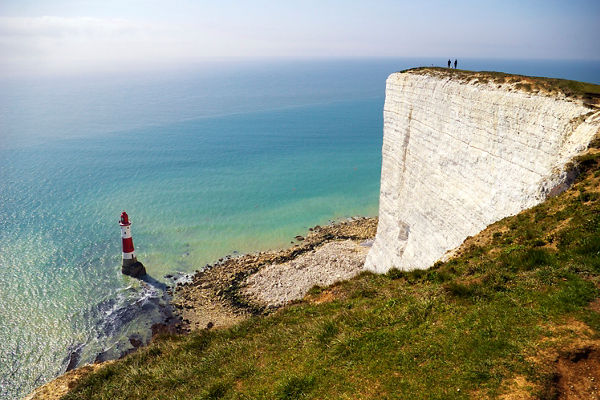
White cliffs and lighthouse by the sea
Hide map Show map

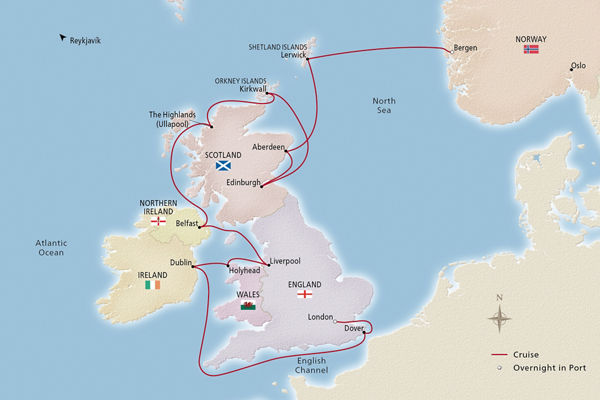
British Isles Explorer

Bergen to London (Greenwich)
Reduced Airfare | Special Fares | $25 Deposit

15 days
6 countries
$7,299 from
  • Learn More
  • PRICE & BUILD
Scenic fjord view at sunset with mountains
Hide map Show map

Into the Midnight Sun

Bergen to London (Greenwich)
Reduced Airfare | Special Fares | $25 Deposit

15 days
3 countries
$7,999 from
  • Learn More
  • PRICE & BUILD
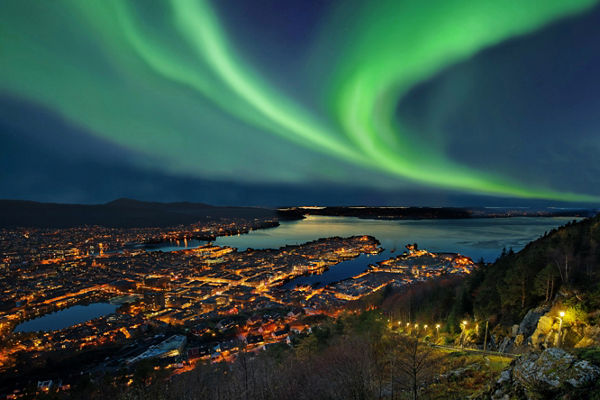
Northern Lights Over Cityscape at Night
Hide map Show map

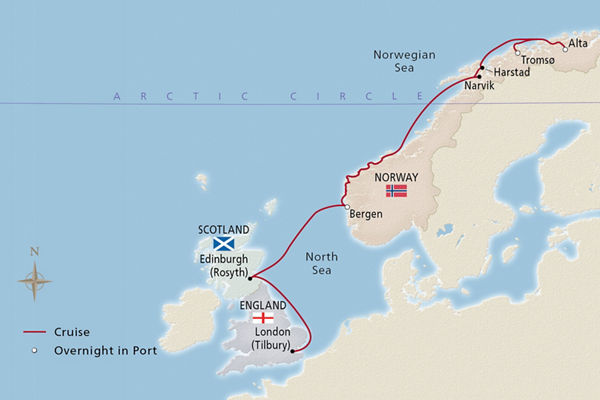
NEW! In Search of Northern Lights

London (Tilbury) to Tromsø
Reduced Airfare | Special Fares | $25 Deposit

13 days
3 countries
$5,999 from
  • Learn More
  • PRICE & BUILD
Northern Lights Over Arctic Coastline
Hide map Show map

NEW! From Iberia to the Northern Lights

Barcelona to Tromsø
Reduced Airfare | Special Fares | $25 Deposit

20 days
4 countries
$8,598 from
  • Learn More
  • PRICE & BUILD
View Cruises

Sign up to receive updates from Viking

Stay current with special offers, news and destination-focused content.

SIGN UP
Call Viking at
Call Viking at 1-800-304-9616
1-800-304-9616
TAP TO CALL
Viking Cruises Viking

Footnote

Ocean Cruising - Up to 35% off cruise price based on select departures and categories of Iberian Explorer; Iconic Western Mediterranean; Italian Sojourn; Mediterranean Antiquities; Trade Routes of the Middle Ages; Venice, the Adriatic & Greece.

River Cruising - Up to 35% off cruise price based on select departures and categories of Lyon & Provence, Paris & the Heart of Normandy, Holland & Belgium and other itineraries, dates and categories may vary.

Expedition Cruising - Up to 15% off cruise price based on select departures and categories of Antarctic Explorer and Panama Canal & the Americas.
  • Company Information

    • Contact Us
    • Speak with a Viking Agent
    • Order a Brochure
    • Special Offers
    • Sweepstakes
    • Travel Advisors
    • FAQ
    • Media Center
    • About Us
    • Investor Relations
    • Careers
    • Site Map
    • Legal
    • Terms of Use
    • Privacy Policy
    • Cookie Policy
  • Viking River Cruises

    • Europe
    • Asia
    • Egypt
    • Mississippi
  • Viking Ocean Cruises

    • Scandinavia
    • British Isles & Ireland
    • North America
    • Caribbean & Central America
    • South America
    • Mediterranean
    • Quiet Season Mediterranean
    • Asia
    • Australia & New Zealand
    • World Cruises
    • Grand Journeys
  • Viking Expeditions

    • Antarctica
    • The Arctic
    • Great Lakes
    • North America
    • South America
    • Grand Journeys
    • Longitudinal World Cruises

© Viking Cruises, 2026. All Rights Reserved.

Footnote

Ocean Cruising - Up to 35% off cruise price based on select departures and categories of Iberian Explorer; Iconic Western Mediterranean; Italian Sojourn; Mediterranean Antiquities; Trade Routes of the Middle Ages; Venice, the Adriatic & Greece.

River Cruising - Up to 35% off cruise price based on select departures and categories of Lyon & Provence, Paris & the Heart of Normandy, Holland & Belgium and other itineraries, dates and categories may vary.

Expedition Cruising - Up to 15% off cruise price based on select departures and categories of Antarctic Explorer and Panama Canal & the Americas.

Company Information

  • Contact Us
  • Speak with a Viking Agent
  • Order a Brochure
  • Special Offers
  • Sweepstakes
  • Travel Advisors
  • FAQ
  • Media Center
  • About Us
  • Investor Relations
  • Careers
  • Site Map
  • Legal
  • Terms of Use
  • Privacy Policy
  • Cookie Policy

Viking River Cruises

  • Europe
  • Asia
  • Egypt
  • Mississippi

Viking Ocean Cruises

  • Scandinavia
  • British Isles & Ireland
  • North America
  • Caribbean & Central America
  • South America
  • Mediterranean
  • Quiet Season Mediterranean
  • Asia
  • Australia & New Zealand
  • World Cruises
  • Grand Journeys

Viking Expeditions

  • Antarctica
  • The Arctic
  • Great Lakes
  • North America
  • South America
  • Grand Journeys
  • Longitudinal World Cruises

Call Viking at Call Viking at 1-800-304-9616 1-800-304-9616 Viking Cruises Viking
© Viking Cruises, 2026. All Rights Reserved.

2026-2029 OCEAN CRUISE AND AIR FARES: Offer applies to bookings made from November 1-30, 2026. Terms & conditions for select promotions may vary. $25 deposit is applicable to all itineraries except World Cruise products. All prices are in US dollars and for US residents only. Additional restrictions may apply.

Airfares may vary on other gateways & departures. Airfare does not have to be purchased to get cruise\cruisetour offer. All prices are in US dollars and for US residents only. Additional restrictions may apply.

2026: Pay in full by November 30, 2026 or 120 days prior to departure (whichever comes first).
2027: Pay in full by December 17, 2026 or 120 days prior to departure (whichever comes first). 
2028: Pay in full by June 10, 2027.
2029: Pay in full by February 17, 2028.

Offer may be withdrawn at any time without prior notice. Offers Expires November 30, 2026.

$25 DEPOSIT: For itineraries 35 days or less, a $25 deposit applies to April 2027 & onward departures; for itineraries greater than 35 days, a $25 deposit applies to June 2027 & onward departures; World Cruise products excluded; call for details.

AIR UPGRADE: Upgrade to Premium Economy or Business at additional cost based on select gateways and dates. Additional airline-imposed baggage charges may apply; for more information visit Airline Luggage Restrictions. Air prices are per person based on cruise/cruisetour check-in date and include transfers plus all government taxes/fees of approximately $160 and air fuel surcharges. Air seats are limited; airfares are subject to change and are not guaranteed until full payment of air is received. For more information about customized air services and US gateways, visit the Viking Air Plus page.

GENERAL RESTRICTIONS: Cruise fares listed are cruise only in U.S. dollars, per person, based on double occupancy. Single supplement savings are off applicable rates. Cruise fares listed are valid for U.S. residents only. All fares and offers are for new bookings only and are subject to availability, may not combinable with other offers except Viking Explorer Society Travel Credits, are capacity-controlled and may be withdrawn at any time without prior notice. Special fares are based upon published full brochure fares; cruise fares do not include pre-paid charges, optional facilities, and personal charges, as defined in the terms and conditions of the Passenger Ticket Contract which may be viewed elsewhere on this website. Full brochure fares may not have resulted in actual sales in all stateroom categories and may not have been in effect during the last 90 days. Promotional fares may remain in effect after the expiration date. Air promotion applies to roundtrip flights only from select Viking Cruises U.S. gateways and includes airport-to-ship or hotel transfers, air taxes and air fuel surcharges. Roundtrip airport transfers are included when air is purchased with a cruise or cruisetour package; if air is not purchased from Viking, transfers may be purchased separately. All transfers must be in conjunction with a Viking-purchased cruise, cruisetour, land extension or extra hotel nights. Viking reserves the right to correct errors or omissions and to change any and all fares at any time. For up-to-date prices, please call Viking or your Travel Agent. Additional terms and conditions may apply. Complete terms and conditions may be found in the Passenger Ticket Contract.

NOTE: International flights depart the U.S. one day prior to check-in date. Paid Business or Premium Economy Class may require travel in economy on flights within North America or Europe. Premium economy is limited to specific airlines and we may not be able to accommodate based on aircraft type and availability. Roundtrip airport transfers are included when air is purchased with a cruise or cruisetour package; if air is not purchased from Viking, transfers may be purchased separately. All transfers must be in conjunction with a Viking-purchased cruise, cruisetour, land extension or extra hotel nights.